Judge Says California Inmate on Death Row for 33 Years Must Be Released or Retried
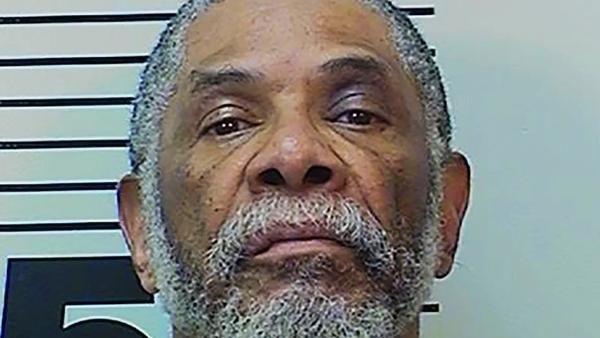
Nationwide — A federal judge has mandated the release or retrial of Curtis Lee Ervin, a convicted murderer who has spent 33 years on California’s death row. This decision follows California Attorney General Rob Bonta’s request due to prosecutorial misconduct in jury selection decades ago. The Alameda County prosecutor’s office now has 60 days to retry the 71-year-old Ervin or release him. Ervin was convicted for a 1986 murder-for-hire case.This ruling is part of an ongoing review of numerous death penalty cases by Alameda County District Attorney Pamela Price. Price contends that former prosecutors systematically excluded Black and Jewish jurors, a practice dating back to the 1980s. The review has unveiled deliberate exclusion of these jurors in many cases, including Ervin’s, leading to the current legal actions.
According to CNN, Ervin’s conviction stemmed from the murder of Carlene McDonald, the ex-wife of his co-defendant, Robert McDonald. Both men were found guilty in 1991, with Robert McDonald dying in prison. Despite the significant judgment, there is uncertainty about how Ervin’s case will proceed. The Alameda County prosecutor’s office has until September 30 to make a decision. The office has not yet disclosed its plans.
Ervin’s attorney, Pamala Sayasane, expressed her client’s disbelief and joy at the ruling. Having been incarcerated for 38 years, Ervin is thankful to those who supported him. Sayasane highlighted that such concessions from the state attorney general are rare and significant, with potential implications for other death row inmates. She pointed out that all six Black women and three Black men were excluded from Ervin’s jury, a clear violation of the 14th Amendment’s Equal Protection Clause.
Price’s investigation into jury selection misconduct also covers the case of Ernest Dykes, convicted in 1993. Evidence of racial bias in jury selection has been uncovered, leading to plans for resentencing Dykes and another death row inmate. Price’s office discovered notes from former prosecutors indicating deliberate exclusion of Black and Jewish jurors. These notes are part of the ongoing settlement negotiations involving the California Attorney General’s Office and lawyers representing death row inmates.
Legal experts suggest that retrying such old cases would be challenging. Defense attorney Linda Kenney Baden noted that witness deaths and reliance on transcripts would complicate retrials. She also mentioned that new prosecutors might be reluctant to risk their reputations on controversial cases. The Alameda County DA’s office has shared notes from the Dykes case, revealing biases against Jewish and Black jurors, with some jurors’ race and religion explicitly marked as reasons for exclusion.
Pamela Price, facing a recall, has stated that racial profiling in jury selection was likely widespread and known under her predecessors. Studies indicate racial bias patterns in jury selections across various states, not just California. Price’s office continues to negotiate settlements for inmates whose cases are under review, aiming to rectify the injustices of unconstitutional trials.
The Angel in Leather Who Laid Down Beside My Screaming Son! - Daily Stories
The waiting room was not peaceful. It was only quiet in that strained way public places get when everyone is trying to hold themselves together. I was already doing the kind of mental math parents learn to do without thinking: how long we had been there, how close my six-year-old son Marcus was to sensory overload, and whether I had enough tools left to help him through the next few minutes.
Then the fire alarm went off It was not just loud. It was sharp, relentless, and impossible to escape. Marcus dropped to the floor as if his whole system had short-circuited at once. The scream that came out of him was not defiance, not misbehavior, not a tantrum. It was the sound of complete overwhelm, the kind that happens when the body goes into distress faster than words can catch up.
I moved on instinct.
Headphones. Weighted blanket. Soft voice. Familiar steps. The same steps I had recommended to other families countless times over the years.
None of it worked.
I have been a pediatric nurse for more than twenty years. I have helped parents through sensory overload, autism-related meltdowns, anxiety spirals, and those painful public moments that leave families feeling exposed and misunderstood. But when it is your own child, all that knowledge does not protect you from the helplessness. It does not stop the ache of watching the person you love most disappear into distress while you stand there unable to reach him.
And of course, people were watching.
Some looked concerned. Some looked uneasy. A few had that unmistakable look of quiet judgment that hurts even when no one says a word.
For a moment, I felt like I was failing in every role that mattered most to me. Not just as a mother, but as a nurse too.
That was when I noticed him.
He was a big man in heavy boots and a worn leather jacket, the sort of presence that usually makes a waiting room grow more cautious, not less. He stopped at the doorway, took in the scene, and I braced myself for what usually comes next: unwanted advice, nervous stares, or the painful performance of pretending not to notice us.
Instead, he did something so unexpected that at first I almost did not understand it.
He walked over, but not too close. He stopped a few feet away from Marcus, then slowly lowered himself to the floor and lay flat on his back.
He said nothing.
No “Hey buddy, calm down.”
No instructions.
No questions.
No pressure.
Just stillness.
Marcus was still screaming at first. A meltdown does not end because someone wants it to. But after a minute, something changed. He noticed the man—not as another adult trying to manage him, but as something his nervous system could recognize. Something calm. Something predictable.
His breathing shifted.
Then shifted again.
Slowly, Marcus moved closer until he was lying on the floor across from him, mirroring the same position. I did not tell him to do that. I could not have planned it if I tried. It was instinctive, as though his body had finally found something it could understand in the middle of the chaos.
Then the man began to hum.
It was low and steady, more vibration than song.
Marcus, still shaky and raw, began to match the rhythm in his own way. He was not suddenly okay. He was not “fixed.” But he was beginning to regulate. Beginning to find his way back.
Only after Marcus had calmed enough to sit up did the man speak.
He told me his grandson was autistic too. He said he had learned that in moments like this, trying to pull a child out too quickly can make the storm worse. Sometimes, he said, the best thing you can do is meet them where they are without adding more demands to what their body is already fighting.
His name was Bear.
He did not say any of it like he was giving a speech. He did not act proud of himself. He simply spoke with the grounded ease of someone who had learned the lesson the hard way and carried it with humility.
Once Marcus could tolerate a little more, Bear gently shifted the moment. He showed him pictures on his phone—his motorcycle, long roads, ordinary snapshots from daily life. Then he played the sound of the engine.
I expected Marcus to recoil. Loud sound had just unraveled him.
But this was different. The engine was steady, controlled, rhythmic. Marcus leaned in with cautious curiosity, as if his mind had sorted it into a different category entirely: not danger, but pattern.
Bear asked if we wanted to step outside.
Not insistently. Just as an option.
Out by the motorcycle, Marcus changed even more. He reached out and touched the metal carefully, tracing its lines with a focus I had not seen in weeks. And then, so softly it nearly undid me, he reached for Bear’s hand.
Before he left, Bear gave me his number.
No drama. No expectation. No need to be thanked.
He simply said, “Someone helped my grandson once. They told my daughter to pass it on. So I’m doing the same.”
Then he walked away.
Months have passed since that day, but what happened in that waiting room has stayed with me. Bear still checks in from time to time, often with his grandson, Tyler. Marcus and Tyler do not play in the usual way people imagine children playing. They sit near each other. Sometimes they are silent. Sometimes they share sounds, motions, little rituals that seem small from the outside and mean everything from within.
And when Tyler begins to struggle, Marcus does something I never formally taught him.
He gets low.
He gets still.
He offers calm without demanding calm.
Not perfectly. Not expertly.
But in the same spirit as the man who once lay down on a waiting room floor and gave my son a bridge back to himself.
I used to think support had to look like a strategy, a method, a plan with all the right tools and timing. But that day taught me something deeper.
Sometimes real help is quiet.
Sometimes it is wordless.
Sometimes it is simply a person choosing patience when everyone else chooses distance.
Bear did not fix our lives. He gave us something more lasting than that: a living example of what compassion looks like when it is grounded, unforced, and real.
And in a world that often rushes past discomfort, that kind of steady kindness leaves a mark that does not fade.


0 comments:
Post a Comment