Top Ad 728x90

Monday, April 6, 2026

How Much to Tip at the Nail Salon and Why It Matters So Much

by


Wondering How Much to Tip at the Nail Salon and Why It Matters So Much: A Complete, Thoughtful Guide to Manicures, Pedicures, Advanced Nail Services, Salon Etiquette, Cultural Expectations, and How Gratuity Reflects Respect for Skilled Personal Care Professionals

Over time, tipping has become an unspoken language within salons, one that builds trust and continuity. Clients who tip thoughtfully often notice warmer service, greater care, and a sense of mutual respect that transforms a routine appointment into a comfortable ritual. Understanding this deeper context reframes tipping not as an obligation or burden, but as a practical and human way to honor skilled labor in an industry built on personal care.

One common source of uncertainty is whether tipping applies equally to all nail services or only to more elaborate treatments. In modern salons, offerings range from basic manicures and pedicures to gel applications, acrylic sets, intricate hand-painted designs, extensions, and spa-style add-ons. While it may seem intuitive to reserve tipping for complex or time-consuming services, industry norms generally support tipping for every service received. Even a simple manicure requires sanitation, shaping, cuticle work, and careful polish application, all performed with attention to detail and client comfort.

The question of how much to tip is where most hesitation arises. While there is no universal rule, a general guideline of 15 to 20 percent of the service cost is widely accepted across many regions. This range aligns nail salon tipping with other personal care industries, such as hairstyling and massage therapy. Services that demand more time, creativity, or technical complexity often merit tipping at the higher end. What matters most is that the tip reflects an awareness of effort and an honest assessment of satisfaction, rather than rigid adherence to numbers.

Several factors can help guide a more personalized tipping decision, making the process feel fair rather than awkward. Service quality, time investment, and complexity all play important roles. Client behavior matters as well; last-minute requests or changes may increase the technician’s workload, and a higher tip can acknowledge that extra effort. Viewing tipping as a spectrum rather than a binary choice allows for nuance, fairness, and respect.

Ultimately, tipping at the nail salon reflects broader values about respect for labor, appreciation for skill, and awareness of shared humanity. While percentages and guidelines provide structure, the spirit of tipping lies in recognition rather than calculation. A thoughtful tip reinforces professionalism, encourages high standards, and contributes to a healthier salon culture where technicians feel valued. For clients, it fosters trust, continuity, and a sense of participation in a respectful exchange that defines a truly good salon visit.

My son called me on a quiet afternoon....

by

 My son called me on a quiet afternoon, his voice softer than usual. He didn’t ask for anything, didn’t rush the conversation—he just said he loved me. It caught me off guard.


He had always been independent, the kind of young man who handled things on his own and rarely paused to express emotions like that.

When the call ended, I sat there for a long time, replaying his words. Something in his tone stayed with me—not fear, not urgency, but something deeper.

That night, without overthinking it, I booked a flight. I didn’t tell him I was coming.

Part of me didn’t want to make a big deal out of it, and another part of me simply wanted to see him—to be sure he was okay.

The next day, I stood outside his dorm room, my heart beating faster than it should have. When his roommate opened the door and saw me, his expression shifted instantly, like he hadn’t expected anyone—especially me. He stepped aside without saying much, and I walked in, feeling a mix of hesitation and certainty.

My son was sitting by the window, surrounded by books and notes, looking thinner than I remembered.

When he saw me, he stood up quickly, surprise crossing his face before it softened into something else—relief. We didn’t speak right away.

I just walked over and held him. In that quiet moment, I understood everything I needed to know.

He hadn’t called because something dramatic had happened.

He had called because he was overwhelmed, adjusting to a new life, carrying more than he let on, and needed to hear a familiar connection. We spent the rest of the day together, talking about classes, routines, and small details that suddenly felt important. I didn’t try to fix anything or ask too many questions.

I just listened.

Before I left, he smiled in a way I hadn’t seen in months—lighter, steadier. On the flight home, I realized something simple but powerful: sometimes love doesn’t need a reason or an explanation.

Sometimes, showing up quietly, without being asked, is enough to remind someone they’re not alone.

An ultrasound left a family speechless after what appeared to be a “hand of God” was seen as the mother prayed for her baby’s well-being 😮 Even doctors were stunned by the powerful image 👶 (Check In First comment👇)

by


Miraculous Image Appears in Ultrasound, Mom Sees Something Incredible

In what many are calling a modern-day miracle, Kentucky mother Amanda Foster says her unborn baby was touched by the “hand of God,” and she shared an ultrasound image that she believes proves it.

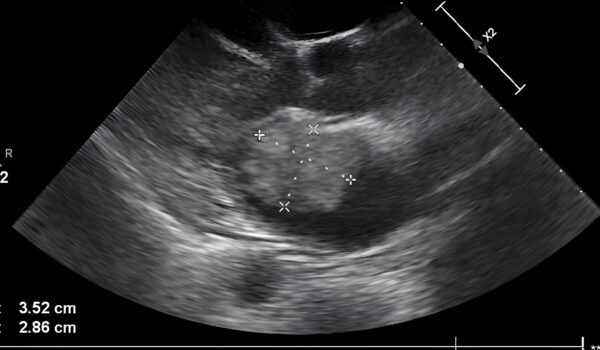
In April 2022, Amanda, now 33, posted the ultrasound image on Facebook, announcing that her unborn son, Jay, had “healthy kidneys, no cysts, and perfect blood flow to and from,” relieving her long-standing fears.

She added that her son was “Potter syndrome free,” referring to a rare condition that affects kidney In what many are calling a modern-day miracle, Kentucky mother Amanda Foster says her unborn baby was touched by the “hand of God,” and she shared an ultrasound image that she believes proves it.

In April 2022, Amanda, now 33, posted the ultrasound image on Facebook, announcing that her unborn son, Jay, had “healthy kidneys, no cysts, and perfect blood flow to and from,” relieving her long-standing fears.

She added that her son was “Potter syndrome free,” referring to a rare condition that affects kidney development and other internal organs, often resulting in life-threatening complications and low survival rates for infants.

According to the Cleveland Clinic, Potter syndrome primarily affects males and can result in kidney failure, low amniotic fluid, and underdeveloped lungs, making early detection critical for ensuring a baby’s survival and proper growth.

Amanda’s fears began at just 17, when she tragically lost her first child at 20 weeks. That early loss left a lasting impact and shaped her views on motherhood and faith for years.
“My thought at that time was, ‘If God is going to take my son, He will take me too,’” Amanda wrote on Facebook, describing her grief after losing her first son, Xavier, so unexpectedly.

She admitted that losing Xavier led to a period of anger and resentment toward God, particularly after doctors warned her that having a healthy baby boy was unlikely due to Potter syndrome’s prevalence in males.

Despite these fears, Amanda and her husband Kyle went on to have two healthy daughters, each bringing joy and stability into their lives, demonstrating their resilience and commitment to building a loving family.

In August 2022, Amanda and Kyle welcomed their first son, Jay, who was born healthy and strong, helping to heal some of the emotional wounds left by their earlier loss and giving them renewed hope.

Fast forward to her most recent pregnancy, Amanda became pregnant again with another boy, whom the family named Kyler. This pregnancy, however, brought new challenges, including concerns over a serious heart defect detected early by doctors.

Medical scans revealed an aortic septum abnormality, a rare condition that could threaten Kyler’s life if not closely monitored. Amanda’s anxiety grew, prompting her to rely heavily on prayer for comfort and guidance during the pregnancy.

Before each prenatal appointment, Amanda writes that she would drop to her knees right in the doctor’s office to pray for Kyler, asking God to protect him and help her trust in His plan for her baby.
Her devotion and faith became a cornerstone of her experience, providing strength in the face of uncertainty and helping her remain positive despite the medical challenges her unborn son faced.

Joining her for one of these appointments was her youngest daughter, Bailey. Amanda hoped her presence would help ease the tension that often accompanied these high-risk scans and provide emotional support for the family.

During the appointment, Bailey noticed something unusual in the ultrasound image. She asked her mother whose hand appeared to be cradling the baby’s head, prompting Amanda to examine the image closely herself with a mixture of shock and awe.

Amanda shared the image on Facebook, describing it as showing the divine presence of a hand gently holding her son’s head. She expressed profound gratitude for what she perceived as God’s protective touch over Kyler.

In her post, Amanda wrote, “In one of his pictures it has the appearance of a hand holding his head,” adding that the sight brought her to tears, reflecting on all God has done for her family.

The mother of three explained that the image gave her a renewed sense of peace and reassurance, reminding her of the power of faith and the possibility of miracles even after previous losses and medical fears.

Amanda described the ultrasound as more than a simple scan. For her, it was a spiritual moment, an affirmation of hope and healing, and a tangible reminder of divine presence during a pregnancy fraught with anxiety.

By June 20, Amanda shared another update, announcing that Kyler, at 36 weeks, had grown to over seven pounds, making him her largest baby to date and a healthy, thriving newborn despite earlier medical concerns.

She wrote, “Our chunky boy is going to be the biggest baby I’ve officially ever had. Today they monitored his practice breathing, and his measurements are ahead of schedule, which is exciting news.”
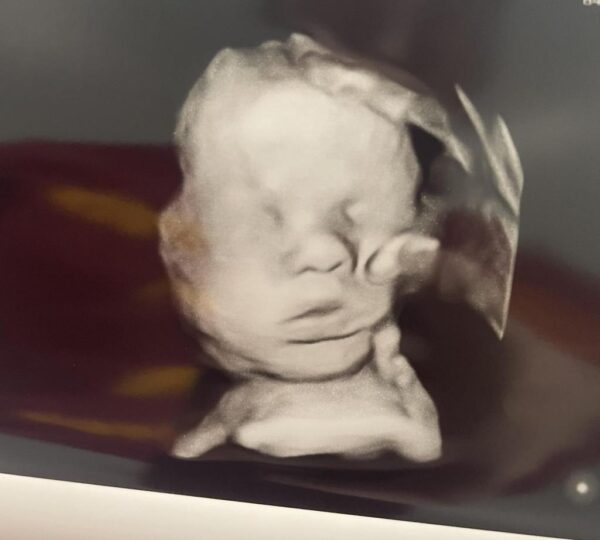
During that appointment, medical staff recorded Kyler’s heart rate at 132 beats per minute, confirming stable cardiac function. Amanda described his face as “sweet” and shared her excitement to finally hold him in her arms.

For Amanda, the ultrasound image is more than a medical snapshot; it symbolizes hope after grief, demonstrating that healing and reassurance are possible even following past loss and the uncertainty that accompanies high-risk pregnancies.

Her story has resonated with countless people online, many commenting on the miraculous appearance of the “hand” and sharing personal experiences of hope, prayer, and faith in the face of difficult circumstances.

Amanda’s experience underscores the importance of both medical care and emotional support during high-risk pregnancies, highlighting the value of prayer, family involvement, and the emotional connection parents form with their unborn children.

The image has sparked discussions on social media about faith, miracles, and the role of spirituality in moments of fear and uncertainty, with many people inspired by Amanda’s perspective and positive outlook.

Amanda also emphasizes the importance of support from loved ones. Her daughter Bailey noticing the “hand” in the ultrasound was a poignant reminder of family involvement and the way children can help parents see hope and joy.

Medical professionals caution that while unusual shapes may appear in ultrasound images, Amanda’s interpretation is a personal and meaningful reflection of her faith and emotional journey throughout pregnancy.

For Amanda, the experience represents more than faith alone; it is a testament to resilience, hope, and the human capacity to find comfort and reassurance even in challenging and high-risk pregnancies.

Her story also provides a lens into the emotional journey of mothers who have experienced loss, showing that new pregnancies can be both a source of anxiety and profound hope simultaneously.

Amanda’s candid social media posts invite others to reflect on their own experiences, fostering conversations about miracles, prayer, healing, and the ways families navigate uncertainty while maintaining faith and optimism.

Kyler’s healthy growth and development are also evidence of attentive prenatal care, demonstrating that medical monitoring, combined with emotional and spiritual support, can contribute to positive pregnancy outcomes.

The story encourages parents and caregivers to find moments of joy and gratitude even amidst medical concerns, emphasizing the importance of celebrating small milestones and recognizing progress along the way.

Amanda’s reflections on past losses, including her first son Xavier, highlight how grief can shape perspectives on faith, resilience, and the joy found in subsequent pregnancies, reinforcing the significance of emotional healing.

Her message to followers emphasizes gratitude for support, the importance of prayer, and trust in God’s plan, sharing a deeply personal narrative that intertwines faith with the tangible realities of pregnancy and childbirth.

By sharing Kyler’s ultrasound, Amanda fosters connection and conversation, allowing others to witness her journey and reflect on their own experiences with hope, fear, and the mysteries of pregnancy.

The image has become a symbol for many online viewers, representing comfort, reassurance, and a reminder that even in difficult circumstances, unexpected moments of joy and faith can emerge.

Amanda’s story also emphasizes the importance of family participation in pregnancy experiences, showing that children can play a vital role in observing, interpreting, and celebrating moments of significance in their siblings’ lives.

Through her posts, Amanda reminds others that faith, emotional resilience, and family support are powerful tools for navigating challenging pregnancies, particularly for parents who have experienced prior loss or high-risk conditions.

The couple’s prior experiences, including two healthy daughters and son Jay, demonstrate their ability to overcome adversity and maintain hope, reinforcing that positive outcomes are possible even after medical complications or previous heartbreak.

Amanda’s journey with Kyler illustrates the intersection of medical care and spiritual belief, highlighting how faith can provide comfort and perspective without replacing necessary medical attention and monitoring during high-risk pregnancies.

Her story encourages other parents to celebrate milestones, from healthy ultrasounds to steady growth metrics, emphasizing that each small sign of health is meaningful and can reinforce hope and trust in the process.

Finally, Amanda’s experience reminds readers that miracles, faith, and gratitude can coexist with medical science, providing reassurance, hope, and inspiration to those navigating the complex emotional landscape of pregnancy and parenthood.

😳😳 If you have these two holes in your back, it means you don’t…,.See more

by


The Fascinating Significance of the Small Dimples Found on the Lower Back, Commonly Known as Venus Dimples or Apollo Holes, Revealing Their Anatomical Origins, Genetic Determination, Associations with Beauty and Symmetry, Possible Links to Circulation and Nerve Function, and Cultural Interpretations That Have Inspired Admiration and Curiosity Across History

The small indentations located just above the buttocks on the lower back—commonly referred to as “dimples of Venus” in women and “Apollo holes” in men—have long captured human attention for their understated yet striking appearance. At first glance, they may seem like a minor detail, easily overlooked among the many features of the human body. Yet for those who notice them, they often stand out as a subtle marker of symmetry, balance, and natural elegance. These dimples have become widely admired not because they are dramatic or exaggerated, but precisely because of their quiet presence, gently shaping the contours of the lower back in a way that feels both natural and aesthetically pleasing.

Unlike many physical features that can be influenced or altered through exercise, diet, or lifestyle, these dimples are entirely determined by genetics. They are not the result of muscle tone, fat distribution, or physical conditioning, and they cannot be intentionally created or enhanced through training. This aspect gives them a unique status among physical traits—they are simply present or absent, inherited as part of an individual’s natural anatomical structure. Because of this, they tend to remain consistent throughout a person’s life, unaffected by changes in weight or fitness. This permanence adds to their intrigue, as they represent a fixed point in an otherwise ever-changing body.

From an anatomical perspective, the formation of these dimples is both simple and fascinating. They occur at a specific location on the lower back, where the posterior superior iliac spine—the uppermost part of the pelvic bone—lies close to the surface of the skin. In this region, a ligament connects the skin directly to the underlying bone. This connection creates a slight inward pull, forming the characteristic indentation that is visible from the outside. Because there is minimal muscle and fat covering this area, the dimples remain clearly defined and are not easily obscured. Their symmetry often mirrors the natural alignment of the pelvis, contributing to their visual appeal.

The presence of these dimples has often been associated with balance and proportion, qualities that have been valued in human aesthetics across cultures and throughout history. The name “dimples of Venus” itself reflects this long-standing association with beauty. Venus, the Roman goddess of love and beauty, symbolizes ideals of harmony and attraction, and the naming of these dimples suggests that they have been admired for centuries as a subtle yet meaningful feature. Similarly, the term “Apollo holes” for men draws on the figure of Apollo, often associated with physical perfection and artistic representation in classical mythology.

Art and sculpture provide further evidence of this enduring fascination. Throughout history, artists have paid close attention to the human form, seeking to capture not only its overall shape but also its finer details. In many classical works, the lower back is depicted with careful attention to contour and symmetry, sometimes subtly emphasizing the presence of these dimples. Their inclusion in art reflects a broader appreciation for the natural lines and proportions of the body, where even the smallest features contribute to the overall sense of harmony.

Despite their aesthetic appeal, it is important to understand that these dimples do not serve a known functional purpose. They are not indicators of strength, fitness, or health, nor do they provide any confirmed physiological advantage. Some theories have suggested that their location—near important nerves and blood vessels—might be associated with improved circulation or sensitivity in the pelvic region. Others have speculated about possible links to physical responsiveness or vitality. However, these ideas remain largely anecdotal and are not supported by strong scientific evidence. From a medical standpoint, these dimples are simply a structural feature, a natural result of the body’s anatomy rather than a marker of function.

The persistence of such theories, however, highlights an interesting aspect of human perception. People often seek deeper meaning in physical traits, especially those that are visually distinctive or culturally associated with beauty. The dimples of Venus are a perfect example of this tendency. Because they are relatively uncommon and visually appealing, they invite interpretation and speculation, becoming more than just a physical characteristic. They become symbols—of attractiveness, of uniqueness, and sometimes even of hidden qualities that go beyond the visible.

In modern culture, these dimples continue to hold a certain allure. They are often noticed in contexts where the lower back is visible, such as in fashion, photography, or fitness imagery. Their presence can draw attention not through boldness, but through subtlety, enhancing the natural lines of the body in a way that feels organic rather than imposed. This subtlety is part of what makes them so compelling—they are not designed to stand out, yet they often do.

At the same time, it is important to recognize that the absence of these dimples is just as natural as their presence. Because they are determined by genetics, they vary widely among individuals, reflecting the diversity of human anatomy. Their presence does not imply superiority, just as their absence does not imply deficiency. They are simply one of many ways in which bodies differ from one another, each variation contributing to the richness of human diversity.

This perspective is particularly important in a world where physical appearance is often subject to comparison and judgment. Features like the dimples of Venus can sometimes become idealized, leading to unrealistic expectations or unnecessary pressure. Understanding that they are purely genetic and not linked to effort or lifestyle can help shift the focus away from comparison and toward appreciation. It reinforces the idea that beauty is not a single standard, but a collection of diverse traits that vary from person to person.

The fascination with these dimples also speaks to a broader human tendency to notice and value detail. In a world filled with constant visual input, small features can take on significant meaning, capturing attention in ways that larger or more obvious elements do not. The dimples of Venus exemplify this phenomenon, showing how even the most subtle aspects of the body can inspire curiosity and admiration.

Their continued presence in cultural conversations, whether in art, media, or everyday observation, reflects their enduring appeal. They are not a passing trend, but a feature that has been recognized and appreciated across different eras and societies. This continuity suggests that their appeal is rooted in something fundamental—perhaps an appreciation for symmetry, or a recognition of the natural patterns that shape the human body.

Ultimately, the dimples of Venus offer a compelling example of how anatomy, culture, and perception intersect. They are a physical feature shaped by genetics and structure, yet they carry meanings that extend far beyond biology. They have been interpreted as symbols of beauty, admired as artistic details, and discussed as points of curiosity, all while remaining a simple and natural part of the body.

In this way, they remind us that the human body is not just a collection of functional parts, but also a source of aesthetic and cultural significance. Every feature, no matter how small, contributes to the overall picture, shaping how we see ourselves and how we are seen by others. The dimples of Venus, with their quiet presence and enduring appeal, illustrate how even the simplest details can hold lasting fascination, bridging the gap between physical form and human perception.

Whether viewed as a genetic trait, an artistic detail, or a subtle marker of individuality, these dimples continue to captivate attention. They do so not through exaggeration or spectacle, but through their natural integration into the body’s design. In a world that often emphasizes change and transformation, they stand as a reminder of the beauty that exists in what is simply given—unchanged, unforced, and quietly enduring.

14 hits from 70 years ago that marked your childhood | 1955. 🤔🤯... See more

by


The year 1955 delivered 14 unforgettable hits that defined a generation, blending rhythm and blues with emerging rock and roll, shaping youth culture, influencing fashion and dance, and setting the stage for the explosive musical revolution that followed worldwide.

There was a time when music wasn’t just something you heard—it was something you felt deeply, almost as if each note carried a piece of your own story. In the mid-1950s, as the world slowly healed from years of uncertainty, a remarkable wave of songs emerged that would go on to define an entire generation. These melodies weren’t just popular—they became woven into everyday life, accompanying quiet evenings, long dances, and moments of discovery. They echoed through radios in small homes and lively diners, creating a shared emotional language that people from all walks of life could understand. Even today, those songs remain vivid, like snapshots of a simpler yet deeply meaningful time.

At the heart of this era were artists who brought something entirely new to the world of music. When Elvis Presley released “Love Me Tender,” audiences discovered a softer, more vulnerable side of a performer already known for his charisma. In contrast, The Platters offered smooth, heartfelt harmonies with “Only You (And You Alone),” capturing the essence of sincere romance. Then came Little Richard with “Tutti Frutti,” a song that shattered expectations with its electrifying energy and fearless style. These artists didn’t just perform—they transformed music into a powerful emotional experience that resonated far beyond the stage.

As the sound of the decade evolved, more voices joined in to shape its identity. Paul Anka brought tenderness with “Put Your Head on My Shoulder,” a song that perfectly captured the innocence of young love. Meanwhile, Chuck Berry told stories of ambition and possibility in “Johnny B. Goode,” inspiring listeners to dream bigger. Buddy Holly added a bright and relatable charm with “Peggy Sue,” while Ray Charles pushed musical boundaries with “I Got a Woman,” blending gospel and rhythm into something entirely fresh. Each song added a new layer to the growing soundscape of the time.

The richness of the era also came from its diversity of styles and influences. Fats Domino delivered warmth and nostalgia through “Blueberry Hill,” a tune that still feels comforting decades later. Jerry Lee Lewis brought explosive energy with “Great Balls of Fire,” embodying the rebellious spirit of rock and roll. At the same time, Ritchie Valens introduced a vibrant cultural fusion with “La Bamba,” blending Latin rhythms with modern sounds and opening new musical pathways. These songs proved that music could cross boundaries, bringing together different traditions into something universally loved.

Not all the era’s classics were loud or rebellious—some carried a quiet sophistication that left an equally lasting impact. Frank Sinatra embodied elegance in “I’ve Got You Under My Skin,” delivering emotion with effortless control and depth. Patti Page offered a tender story of love and loss in “Tennessee Waltz,” while Nat King Cole created a timeless expression of devotion with “Unforgettable.” These songs spoke to more mature emotions, showing that the music of the 1950s could be both youthful and deeply reflective at the same time.

And then there was “Jailhouse Rock,” where Elvis Presley once again changed everything. More than just a hit song, it became a cultural moment that redefined entertainment, blending music, movement, and personality into something unforgettable. Together, these 14 songs represent more than just a collection of hits—they are a living legacy of emotion, creativity, and transformation. To truly appreciate them, it helps to listen without distraction, letting each melody unfold naturally. Using good headphones or speakers can reveal details often missed, while sharing these songs with others—especially those who lived through the era—can bring new meaning to every note. Creating your own playlist of these classics is more than an exercise in nostalgia; it’s a way to reconnect with a time when music spoke directly to the heart.

"My sister and I were separated in an orphanage—thirty-two years later, I saw the bracelet I once made for her on a little girl’s wrist. My younger sister, Mia, and I grew up in an orphanage. We never knew our biological parents. We were brought there when we were so young that I can’t even remember their faces. All I ever had… was Mia. Until the day we were separated. I was eight when a family came to adopt me. They didn’t want two children—just one. And for years, no one was willing to take both of us together. So I was the one who left. I still remember the last moment I held her. She cried, clinging to me, begging me not to go. I promised her I would come back for her someday. But I didn’t have a choice. When I got older, I tried to find her. The orphanage told me she had been adopted too—but her name had been changed completely. After that, every search led nowhere. Years passed. Thirty-two of them. I built a life—family, career, responsibilities—but I never stopped thinking about Mia. Then last week, during a business trip in another city, everything changed. After a long day, I stopped at a supermarket. A little girl—maybe nine or ten—stood nearby, reaching for a pack of cookies. That’s when I saw it. The bracelet on her wrist. I knew it instantly. Before Mia and I were separated, I had made that bracelet myself—braided from thread, tied with a small twisted knot. The same colors. The same pattern. My heart skipped. Without thinking, I stepped closer and asked softly, “That’s a beautiful bracelet. Did you make it?” She smiled. “No, my mom gave it to me. It used to be hers, and now it’s mine. She says it’s very special, so I have to keep it safe.” My hands began to shake. “Is your mom here with you?” I asked. She nodded and pointed toward the next aisle. “Yes, she’s right over there.” My heart was pounding as I watched the girl’s mother walk toward us…Full story in 1st comment ⬇️"

by


My name is Elena. When I was eight years old, I promised my little sister I would find her.


Then I spent thirty-two years failing.

Mia and I grew up in an orphanage. We had no parents, no photos, no comforting story about someone coming back for us.

Just two narrow beds in a crowded room and a thin file with barely any information.

So we became each other’s whole world.

She followed me everywhere—gripping my hand in hallways, panicking if she woke up and couldn’t see me. I learned how to braid her hair using my fingers.

I learned how to sneak extra bread rolls without getting caught. I learned that if I smiled politely and answered questions the right way, adults treated us both better.

We didn’t dream big.

We only dreamed of leaving together.

Then one day, a couple came to visit.

They walked through the orphanage with the director, smiling and nodding, the kind of people you’d see in adoption brochures.

They watched children play. They watched me reading to Mia in the corner.

A few days later, the director called me into her office.

“Elena,” she said, smiling too brightly, “a family wants to adopt you. This is wonderful news.”

Her smile faltered just slightly.
“They’re not ready for two children.

She’s still young.

Another family will come for her. You’ll see each other someday.”

“I won’t go,” I said.

“Not without her.”

“You don’t have a choice,” she replied gently. “You have to be brave.”

That word—brave—meant do as you’re told.

The day they took me away, Mia wrapped herself around my waist and screamed.
“Don’t go, Lena!

Please!

I’ll behave, I promise!”

I held her so tightly that a staff member had to pry her from my arms.

“I’ll find you,” I kept whispering. “I promise.”

She was still calling my name as they put me in the car.

That sound stayed with me for decades.

My adoptive family lived in another state. They weren’t cruel.

They gave me food, clothes, and my own bed.

They called me lucky.

They also hated talking about my past.

“You don’t need to think about the orphanage anymore,” my adoptive mother would say. “Now we’re your family.”

So I learned to stop mentioning Mia out loud.

But in my mind, she never disappeared.

When I turned eighteen, I went back to the orphanage.

New staff. New children. 

Same peeling walls.

I gave them my old name, my new name, my sister’s name.

A woman returned with a thin folder.

“She was adopted shortly after you,” she said. “Her name was changed. Her file is sealed.”

I tried again years later.

Same answer.
Sealed file.

No details.

Life went on. I studied, worked, married too young, divorced, moved, got promoted.

From the outside, I looked like a normal adult woman with a stable, slightly boring life.

Then, last year, everything changed.

I was on a short business trip to another city—nothing special. One evening, I stopped by a supermarket.

I was tired, distracted, heading toward the cookie aisle.

That’s when I saw her.

A little girl stood there, carefully comparing two boxes of cookies.

As she lifted her arm, her jacket sleeve slipped back.

On her wrist was a thin, crooked bracelet—red and blue.

I froze.

When I was eight, I had stolen red and blue yarn from the craft box and made two matching bracelets. One for me. One for Mia.

“So you won’t forget me,” I’d told her.

She wore it the day I was taken away.

I approached the girl.
“That’s a beautiful bracelet,” I said.

“My mom gave it to me,” she replied proudly.

“She said someone special made it.”

A woman walked toward us with a box of cereal.

I knew her the moment I saw her.

Her eyes.

Her walk. The way her brows tilted as she read labels.

The girl ran to her.
“Mom, can we get the chocolate ones?”

I stepped forward before I could lose my nerve.

“Excuse me,” I said.

“May I ask—did someone give you that bracelet when you were a child?”

Her face changed.

“Yes,” she said slowly.

“In an orphanage?” I whispered.

She went pale.
“How do you know?”

“I made two bracelets like that,” I said. “One for me.

One for my little sister.”

She stared at me.
“My sister’s name was Elena.”

We stood there, stunned, in the middle of the cookie aisle, while life moved on around us.

We went to a small café next door.

Her daughter—Lily—ordered hot chocolate. We ordered coffee we barely touched.

Up close, there was no doubt. She was Mia.

Just older.

“I thought you forgot me,” she said through tears.

“Never,” I replied.

“I thought you had forgotten me.”

We laughed—the kind of laugh that comes with pain and relief at the same time.

She told me she’d kept the bracelet in a box for years. When Lily turned eight, she gave it to her.

“I didn’t want it to disappear,” she said.

Before we left, she looked at me and said,
“You kept your promise.”

I hugged her.

After thirty-two years, I had finally found my sister.

We didn’t pretend time hadn’t passed.

We started slowly—messages, calls, visits. Stitching two lives together carefully.

I searched for her for decades.
I never imagined I’d find her like this.

And yet—it was exactly right.

Top Ad 728x90