Top Ad 728x90

Monday, June 1, 2026

Izraeli's president is confir....see more.

by


Tel Aviv on Edge, Verified Details Emerge Amid Rapidly Escalating Regional Conflict

The images and posts flooding social media can create the illusion that news is happening instantly, but when conflict escalates quickly, verifying facts becomes critical. In recent days, posts claiming immediate developments in Tel Aviv and surrounding areas have circulated widely, many citing unnamed officials or rapid “just now” updates. While these posts capture attention, it’s essential to separate viral claims from confirmed information and ongoing uncertainties. Doing so ensures accurate reporting and prevents the spread of misinformation, particularly during volatile events.

One of the central points of concern has been the Beit Shemesh incident. According to multiple credible sources, the area experienced a direct ballistic impact linked to Iranian launches. The attack, which occurred on March 1, 2026, resulted in nine confirmed fatalities and numerous injuries. Many victims were inside public shelters at the time, highlighting both the risks of attacks and the importance of civil defense infrastructure. Avshalom Peled, Deputy Commissioner and Jerusalem District Police Chief, provided detailed accounts of the sheltering procedures, emphasizing how these measures mitigated casualties despite the severity of the impact. Follow-up reports and official visits by Israeli authorities on March 2 have reinforced the verified nature of these accounts.

While some viral posts suggested that a synagogue collapsed onto a shelter beneath it, reporting from reputable outlets such as The Times of Israel indicates damage to the area, but structural conclusions remain unconfirmed. The safest summary, based on verified information, is that the strike affected a synagogue area and nearby shelter spaces, with many people inside, without asserting precise collapse details.

The broader context of this incident is a rapid escalation between Israel, the United States, and Iran. Military activity continues across the region, coupled with diplomatic maneuvers and humanitarian concerns. Israeli officials, including President Isaac Herzog, have underscored alignment with U.S. efforts to prevent Iran from advancing nuclear capabilities. Simultaneously, international humanitarian agencies and the United Nations have emphasized the importance of civilian protection, particularly for children, in areas of conflict.

Civil defense and shelter effectiveness have been a key part of the conversation. While shelters significantly reduce exposure to blasts and debris, their protective capacity depends on construction quality, location, and proximity to impacts. Officials note that no shelter can entirely eliminate risk, particularly under heavy bombardment, but their presence undeniably saves lives. Recent assessments of warning systems and interception capabilities are ongoing, aimed at reducing casualties in future incidents.

Social media continues to be a double-edged sword in this environment. Posts formatted to appear urgent often lack verification and may mix recycled content with new reports. Users are encouraged to rely on official statements from the Israeli presidency, major wire services such as Reuters, and established national outlets with on-the-ground correspondents. Named spokespeople and verifiable quotes remain the gold standard for confirming events.

In terms of reporting practices, news outlets and content creators should maintain a neutral tone, use phrasing such as “officials reported” or “according to sources,” and avoid speculative or emotionally charged language. Highlighting the role of shelters, civil defense preparedness, and ongoing verification processes helps readers understand the real risks and protective measures without sensationalism.

Verified developments from Beit Shemesh emphasize the human cost of the conflict. Nine confirmed fatalities, dozens of injuries, and widespread community disruption illustrate the severity of the situation. While uncertainty remains regarding some structural details, the consensus among major sources confirms that civilians were harmed while attempting to shelter, underscoring the unpredictable and dangerous nature of the attacks.

The rapid spread of information on social media underscores the challenge of distinguishing fact from rumor. Posts claiming “just minutes ago” updates or citing unidentified officials can amplify fear and confusion. Verification requires cross-referencing official government releases, statements from primary sources, and credible news outlets with established on-site reporting.

As the situation unfolds, public attention has rightly focused on the immediate humanitarian impact, the strategic implications of the attacks, and the broader regional tensions. The escalation between Israel and Iran, amplified by U.S. involvement, has implications not only for local populations but also for international security, diplomatic relations, and global attention.

In summary, verified reports confirm that:

  • President Isaac Herzog visited impacted sites, including Beit Shemesh, reinforcing official information and providing firsthand assessments.
  • Multiple credible outlets report nine fatalities and numerous injuries, with many victims sheltering during the attack.
  • Damage occurred in a synagogue area and connected shelter spaces, though structural collapse remains unconfirmed.
  • The Beit Shemesh incident is part of a broader Israel–U.S.–Iran escalation involving military, diplomatic, and humanitarian dimensions.

For those following updates, the guiding principles remain: prioritize verified information, understand the limits of civil defense measures, and interpret social media posts cautiously. Responsible reporting ensures public understanding of real risks, ongoing developments, and humanitarian considerations while avoiding the spread of unverified claims.

This conflict serves as a reminder that rapid, real-time updates, while compelling, must always be measured against credible evidence. The situation in Tel Aviv and Beit Shemesh illustrates how quickly circumstances can escalate, the critical role of shelters and civil defense, and the need for clear, verified information to navigate crises safely .

He gave up everything to take care of the love of his life in a vegetative state... See more

by


Her Husband Called Her Plain But Tonight She Owns His Entire Empire

The full-length mirror in the hallway offered a quiet, uncompromising reflection of a life carefully kept within boundaries. Anna stood perfectly still, smoothing the fabric of her modest gray dress. It was a garment she had owned for years, chosen not to capture attention, but for the predictable comfort it provided. The cloth was worn softly at the seams, a symbol of the unassuming existence she had cultivated, where reliability trumped all else.

Behind her, the sharp, rhythmic sound of Dmitry adjusting his cufflinks cut through the silence. His shirt was a dazzling, crisp white, tailored to perfection to project an image of absolute control. He exuded a manufactured aura of success, spending years carefully curating every detail of his public persona.

“Are you ready?” he asked, his back turned, not bothering to look her way as he smoothed his expensive lapels.

Anna paused, letting her gaze linger on her own reflection one final time before meeting his in the glass.

“Yes,” she replied, her voice steady and soft. “We can go.”

When Dmitry finally turned to inspect her, the expression on his face was a familiar, quiet disappointment he had long since stopped trying to hide. His eyes swept over her shoulders, down to her simple leather shoes, and lingered with barely concealed disdain.

“Don’t you have anything better to wear?” he asked, his voice dripping with condescension masked as casual inquiry.

The words were delivered with a calm cadence, yet they landed with the weight of an anchor. Anna took a measured breath, refusing to let the familiar sting of his judgment break her composure.

“This dress is perfectly fine for the evening,” she answered evenly.

Dmitry let out a heavy, dramatic sigh, as if the very effort of the conversation had utterly exhausted him. He adjusted his silk tie one last time, checking his reflection with deep satisfaction.

“Alright,” he muttered, waving a dismissive hand. “Let’s just try not to attract any attention.”

Their marriage had not always been defined by this vast, unbridgeable chasm. Five years prior, when they exchanged their vows, Anna had just completed her rigorous studies in economics, brimming with passion and intellect. Dmitry, at the time, was merely a junior manager at the beginning of his career path. He had been driven, hungry for success, and overflowing with ambitious plans for their future.

In those early days, Anna had admired his drive. He spoke of their life to come with absolute certainty, making every challenge seem like a temporary stepping stone. But as the years passed, that once-endearing confidence metastasized into something much darker and more abrasive. Dmitry climbed the corporate ladder with ruthless efficiency. As his promotions came and his responsibilities expanded, so did his expectations—not only for his own life, but for the people orbiting him, including his wife.

He came to believe that success was worthless unless it was loudly and visibly displayed. Expensive, custom-tailored suits replaced his ordinary work clothes. High-end luxury watches became status symbols rather than mere timepieces. Their dinner conversations increasingly revolved around status, strategic connections, and the perception of wealth.

“People will only ever judge what they see,” he would preach to her, pouring himself a glass of expensive scotch. “If you look successful, they treat you like success is already yours.”

Anna, on the other hand, chose a completely different path. She worked quietly and steadily at a boutique consulting firm, finding deep fulfillment in the substance of her work rather than its superficial appearance. She prized stability over spectacle. But as Dmitry transformed into a corporate climber, the gap between their worldviews widened until they were speaking entirely different languages.

At social and corporate events, he would introduce her with a sharp, cutting humor that felt less like affection and more like an insult wrapped in a smile.

“This is my wife,” he would announce with a smirk. “My quiet one.”

The crowds would laugh politely, and Anna would offer a placid, controlled smile. At first, she dismissed these comments entirely. She convinced herself that it was just a harmless quirk of his growing ambition. But as the years progressed, the patterns became impossible to ignore. Dmitry began to evaluate every single person around him—colleagues, clients, and even their shared friends—purely based on their utility or social standing.

Behind closed doors, his public charm evaporated, leaving behind a man who was endlessly critical and constantly impatient. Sometimes, in unguarded moments, he would hint at the darker side of corporate advancement.

“It is never just about the official deal,” he once let slip, a knowing glint in his eyes. “There are always arrangements made in the shadows.”

Anna never pressed for the sordid details. Her intuition warned her that the reality would only bring her pain. Instead, she chose the safety of silence, retreating into her own world while Dmitry drifted further away.

Then, three months before the night that would alter the trajectory of both their lives, Anna received a phone call that shattered her quiet existence. The call was from an elderly, formal notary, delivering news that was nearly impossible to process.

Her biological father had passed away. He was a man she barely knew, having walked out of her life when she was just a small child. For decades, he had existed only as a distant ghost from another era. And yet, the notary revealed that he had left his entire estate to her.

At first, the news felt surreal, like a script from a bizarre film. But as the legal documents were presented and the signatures verified, the undeniable truth emerged. Her estranged father had built a vast, formidable business empire, comprising real estate holdings, venture capital portfolios, and substantial shares in numerous corporations.

Among those assets was a controlling stake in a massive holding company called TradeInvest. The very same company where Dmitry was currently employed as a mid-level executive.

For weeks, Anna struggled to fully comprehend the sheer magnitude of the change. Her life, once modest and predictable, now carried immense weight and responsibility. She chose not to disclose the full truth to Dmitry, fearing his reaction and wanting time to understand the landscape before making any moves. She simply told him that she had transitioned to a new consulting role.

Dmitry barely registered the news, too absorbed in his own ambitions to ask meaningful questions. That omission spoke volumes.

As she began reviewing the assets, her formal background in economics proved to be an invaluable asset. She pored over financial statements, met with wealth managers, and slowly painted a clear picture of the vast wealth she had inherited. One company stood out among the rest: TradeInvest.

She requested a private meeting with the CEO of TradeInvest, a seasoned, sharp executive who treated the conversation with profound respect and caution.

“The company is incredibly stable,” he explained during their briefing, sliding a dossier across the polished mahogany table. “However, we have been encountering concerning irregularities within the sales department.”

Anna listened with intense focus.

“There is one specific employee whose performance looks brilliant on paper, but the profitability of his deals is wildly inconsistent,” he continued, pausing to look her in the eye. “We are actively investigating potential misconduct.”

Anna maintained her composure, hiding her sudden realization. She did not reveal her personal connection to the man in question. Instead, she simply requested a thorough, uncompromising internal review of the department’s records.

The findings arrived weeks later, detailed, heavily documented, and absolutely impossible to ignore. There were clear irregularities, questionable side deals, and massive financial discrepancies. The employee at the center of the storm was Dmitry.

Anna read through the report several times, letting the ink-stained reality sink into her mind. Surprisingly, there was no burst of anger, no sudden urge to scream. There was only a profound, crystalline clarity. Every piece of the puzzle fell into place: his arrogance, his fixation on appearances, his casual remarks about bending the rules. He had been doing exactly that, all while looking down on her.

During the weeks of the investigation, Anna began making intentional, quiet changes in her own life. She did not make dramatic, flashy alterations, but rather subtle improvements born of self-respect. She updated her wardrobe, not to flaunt wealth, but to embrace her own sense of style. She chose quality over visibility, elegance over ostentation.

Interestingly, Dmitry was so blinded by his own hubris that he completely failed to notice the shift. To his limited worldview, value had to be loud and flashy. Anna’s quiet, refined transformation was invisible to him. And for the first time in their marriage, Anna felt truly aligned with who she was.

One evening, Dmitry bounded into the home office, looking unusually excited about an upcoming corporate gala.

“It is a major event,” he said, adjusting his watch. “Senior leadership and key investors will be attending. It is going to be spectacular.”

Anna looked up from her paperwork and nodded slowly.

“What time should I be ready?” she asked calmly.

Dmitry looked surprised, then an amused, condescending smile played on his lips.

“You are not coming,” he said plainly. “It is not that kind of event. It is… important.”

Anna held his gaze, a quiet smile touching the corners of her mouth.

“I understand,” she said softly. And she truly did, though not in the way he assumed.

The night of the gala arrived. The event was held at one of the city’s most prestigious and exclusive venues, a towering glass palace filled with chandeliers and the clinking of champagne glasses. Anna arrived independently, turning heads without seeking to. She wore a deep blue, backless gown that was simple, refined, and quietly striking.

At the grand entrance, she was greeted with immense deference by the CEO and the senior leadership board. She moved through the room with the grace of someone who finally knew her own worth. She spoke with executives, listened intently to discussions, and observed the dynamics of the room with a sharp eye.

Then, Dmitry entered the room. He was confident, composed, and completely unaware of the reality of the room. He navigated the crowd, laughing with colleagues, until his eyes swept across the room and locked onto her.

For a brief moment, his brain refused to process what he was seeing. Then, the realization set in, and the color drained from his face. He rushed over to where she stood, his voice tight and frantic.

“What in the world are you doing here?” he hissed under his breath.

“Good evening to you too, Dmitry,” Anna replied, her voice smooth and entirely calm.

His tone grew sharper, laced with rising panic.

“You do not belong here. You need to leave before you embarrass us.”

Before Anna could respond or the situation could escalate further, the CEO stepped forward, joining their small circle. He looked at Dmitry briefly, then addressed Anna with unmistakable respect.

“Anna is here as the primary shareholder and the new chairwoman of the board,” the CEO stated, his voice ringing clearly over the ambient music.

The silence that followed was suffocating. Dmitry’s expression shifted through stages of shock, profound confusion, and finally, a terrifying realization. The ground beneath his feet completely dissolved. The evening continued, but for Dmitry, the illusion was shattered. The hollow confidence he had carried for years evaporated, replaced by a sudden, paralyzing uncertainty about his entire future.

Later that evening, the conversation they had been avoiding for half a decade finally took place. Anna sat at the dining table in their home, and spoke with calm, measured words. She laid out the investigation, the undeniable findings of his embezzlement, and the options available to him. Her tone was completely devoid of emotion or malice. It did not need to be. The power dynamic had shifted irrevocably.

That night, Anna walked away from the life she had known. She did not leave out of anger, but out of a deep sense of clarity. She stepped into a future designed by her own decisions, free from the heavy, suffocating expectations of a man who never truly understood her.

The city outside looked the same, but the world felt entirely different. Because she was different. She was no longer the quiet shadow in the corner. She was the one holding the pen.

This journey was never truly about wealth, status, or superficial success. It was a journey back to her own self-worth. For years, she had been viewed through the distorted lens of someone who needed to diminish her to feel tall. But the truth had always been there, quiet, steady, and unshaken.

She had never been small. She had simply been waiting to realize her own power. And sometimes, the most magnificent transformations do not require a roar. They happen in the quiet moments, in decisions no one else sees, until the day arrives when everything changes and you finally understand who you are.

Admits What We All Suspected...See more

by


Beyond the Gilded Cage, Why Barron Trumps 18th Birthday Revelation Has Shattered Every Conspiracy Theory and Left Washington Speechless

For nearly two decades, Barron Trump has existed as the ultimate enigma of American political life. While his siblings navigated the relentless glare of the spotlight—managing businesses, speaking at conventions, and battling on the front lines of social media—the youngest Trump remained a silhouette in the background. He was the tall, silent figure walking across the White House lawn, the face shielded by security details, and the subject of endless speculation, projection, and digital debate. But as he reaches the pivotal milestone of eighteen, the silence that defined his childhood has finally been broken. What Barron has revealed isn’t the dramatic political manifesto or the scandalous confession many expected; instead, it is a calm, unsettlingly precise declaration of independence that has fundamentally shifted the public’s understanding of his journey.

The world has spent years attempting to draft a script for Barron Trump. Some imagined him as the reluctant heir to a real estate empire, others as a future political heavyweight, and many more as a young man trapped by the gravity of a legacy he never chose. However, in a rare and deliberate moment of openness, Barron has pulled back the curtain just enough to expose the reality of growing up as a national symbol rather than a son. He describes a life lived as a headline instead of a human being, where every growth spurt and wardrobe choice was dissected by millions of strangers. In this environment, he reveals that silence wasn’t a lack of personality or a sign of shyness; it was his primary form of armor. Choosing to stay quiet allowed him to exist in a private world, even while standing under the most intense floodlights on the planet.

Barron’s admission highlights a level of self-awareness that is rare for any eighteen-year-old, let alone one raised in the center of a global hurricane. He explains that while the public was busy arguing about his future, he was busy watching, listening, and thinking. He allowed himself to grow in the shadows of a family that is constantly under microscopic scrutiny, developing a perspective that is distinctly his own. His refusal to be defined by his father’s shadow or his family’s reputation is perhaps the most shocking revelation of all. He is not promising a grand entrance into the family business or a familiar path toward political office. Instead, he is demanding the right to be uncertain, to explore, and to change his mind as he navigates the complexities of early adulthood.

As he steps into the world as a legal adult, Barron is drawing a clear, uncompromising boundary between his public persona and his private self. He has made it clear that his future will not be a public project for the masses to monitor. Whether his path leads him into corporate boardrooms, scientific laboratories, athletic stadiums, or a field that no one has yet predicted, it will be a decision made behind closed doors. He is reclaiming the agency that was taken from him the moment he became a public figure as a child. This stance is a direct challenge to the modern “influencer” culture that often consumes the children of the elite, signaling a preference for substance over optics and privacy over performance.

The psychological weight of his upbringing is a recurring theme in his recent reflections. To be a Trump is to be a person of interest to half the world and a person of disdain to the other half, often before you have even spoken a word. Barron acknowledges this polarization with a maturity that suggests he has spent a long time processing the unique pressures of his position. He understands that for many, he is a blank canvas upon which they paint their own political hopes or fears. By speaking out now, he is effectively taking the brush back. He is informing the world that he is not a character in a reality show or a chess piece in a political game, but an individual with a future that remains entirely unwritten.

This new chapter for Barron Trump comes at a time when the American public is increasingly fascinated by the private lives of political dynasties. Yet, Barron seems uniquely disinterested in the typical trappings of fame. His revelation suggests that he values the power of the “unseen” life. While his peers might chase viral moments and digital engagement, he is signaling a retreat toward intellectual and personal rigor. He is essentially admitting what many suspected: that beneath the quiet exterior was a sharp, observant mind that was carefully calculating its own exit from the expectations of the masses.

The significance of his words lies in their precision. He doesn’t offer the loud, aggressive rhetoric that has become a hallmark of contemporary political discourse. Instead, he uses a calm, measured tone that commands a different kind of attention. It is the voice of someone who knows exactly who they are because they have spent years protecting that identity from outside interference. He is not asking for permission to be himself; he is stating it as an immutable fact. This has left pundits and observers on both sides of the aisle scrambling to adjust their narratives. The “silent son” is gone, replaced by a young man who understands that the most powerful thing you can do in a world that demands everything from you is to keep your true self for yourself.

Ultimately, Barron Trump’s admission is a masterclass in boundary-setting. He is a young man who has lived through historical events that most people only read about in textbooks, and he has emerged with a desire for a life that is authentically his. He is promising a journey of exploration that may take him far from the familiar towers and podiums of his youth. By choosing to reveal himself only on his own terms, he has ensured that when he does speak again, the world will have no choice but to listen. His future is no longer a matter of public debate; it is a private venture, and he is the only one with the key. In the end, Barron Trump has proven that the most radical thing a member of a famous family can do is to insist on being a person first, and a legacy second.

I TOOK IN THE 6-MONTH-OLD BOY LEFT BESIDE MY ROSE BUSHES — THE CHILLING SECURITY FOOTAGE I WATCHED ONE DAY LATER RUINED MY FAMILY FOREVER. My rose bushes are my pride and joy. I spend hours out there, pruning and tending to them. Two days ago, I stepped onto my porch and saw a bundle of faded blue blankets nestled in the dirt beside the thorns. My heart stopped when the bundle squirmed. I sprinted over. Inside the blankets was a beautiful, rosy-cheeked baby boy, no older than six months. He was shivering, staring up at me with wide, terrified eyes. Pinned to his blanket was a hastily scribbled note on torn loose-leaf paper: "Please give him a good life. I can't." I brought him inside immediately, my maternal instincts kicking into overdrive. My husband of twenty years, Mark, came rushing down the stairs. When he saw the baby in my arms, all the color drained from his face. He started pacing, panicking, insisting we call the authorities and hand the baby over to child services right that second. He wouldn't even look at the boy. I argued that we needed to make sure he was healthy first, feed him, get him warm. Mark was completely irrational, almost furious, which was so unlike the calm man I married. I spent the entire day cuddling this precious angel, feeling an inexplicable bond forming. By the next morning, I realized I had the power to help the police find whoever abandoned him. We had installed a security camera facing the front yard just last month. Mark had gone to work, so I sat down at my laptop, pulled up the app, and scrubbed back to the middle of the night. I watched the timestamp tick closer to 3:00 AM. A shadow moved across the lawn. My breath hitched in my throat as I leaned closer to the screen. The figure stepped into the glow of the streetlamp, carrying the blue bundle. I recognized the gait, and my blood ran cold. ⬇️

by


I Took In A Baby Left In My Yard And My Husband Acted Weird So I Checked The Security Camera And Found A Dark Family Secret

I always believed that tending to a garden was much simpler than understanding the complex nature of human beings. When a rose bush is thirsty, its leaves droop. When a stem is diseased, you prune it away to save the rest. People, however, are far more complicated. They can be starving for love while smiling warmly across a morning breakfast table. That unsettling realization was weighing on my mind early one spring morning as I stepped outside with my pruning shears and a warm cup of coffee. The air carried a crisp chill, and my prized yellow rose bush was in full, magnificent bloom. I had affectionately named the bush Sunny. As I leaned in to snip a dead leaf, I noticed a strange blue bundle resting near the edge of the porch light.

At first, I assumed a neighbor had accidentally dropped a package. But as I drew closer, I realized the bundle was moving. My coffee mug slipped from my grasp, shattering against the wooden boards. I dropped to my knees and pulled back the faded blue blankets to reveal a tiny baby boy, no older than six months. His cheeks were flushed pink, and his tired cries tore right through my heart. Pinned to the carrier was a small, torn piece of loose-leaf paper. The note simply begged me to give the child a good life because the writer could no longer care for him. Without hesitation, I lifted the infant carrier and rushed inside, shouting for my husband, Mark, to come downstairs.

A Husband’s Cold Response

Mark hurried down the stairs, tying his robe, a look of utter confusion on his face. But the moment his eyes landed on the baby, all the color drained from his skin. He did not look like a man witnessing a miracle; he looked terrified.

Where did you get that baby, he demanded, his voice trembling slightly.

I found him beside our roses. Call 911 right now, Mark, I pleaded.

No, Lynn, listen to me, Mark said, stepping back. We need to hand him over and stay completely out of this. Don’t get attached.

He is an innocent baby, Mark, I said, incredulous at his callousness. Attachment is the least he deserves.

Mark refused to move or help me warm a bottle. I made the emergency call myself, and within minutes, an officer and a paramedic arrived to examine the infant. The paramedic confirmed the child was cold but stable, and they prepared to take him to the hospital for a full checkup. When Officer Hayes asked if we had any idea who might have left the child, Mark immediately jumped in, claiming we had no connection to the child. The choice of words struck me as unnaturally defensive. When asked about security cameras, Mark lied, stating we didn’t have any, while I simultaneously revealed we had installed a camera the previous month.

I followed the ambulance to the hospital, ignoring Mark’s text messages demanding that I drop the matter and come home. At the hospital, the nurses assured me the baby was going to be fine. Someone had wanted him found, and he was clearly loved. When I returned home that afternoon, I confronted Mark about his lie regarding the security camera. He stammered, claiming he was just stressed, but I knew the truth. Another crack had appeared in our twenty-year marriage.

The Security Footage

That night, sleep eluded me. Mark lay beside me, his breathing unnaturally controlled. In the early hours of the morning, I heard the faint creak of the floorboards as he slipped away to his office before sunrise, leaving a cold note on the counter. I sat at the kitchen table, opened the camera application on my laptop, and began to review the footage from the previous morning.

At 6:11 a.m., a car rolled slowly past our house. Three minutes later, a young woman in a dark hoodie crossed the lawn carrying the blue bundle. She knelt by the roses, whispering to the baby, calling him Ollie. She kissed his forehead, looked up at our bedroom window, and whispered the word Dad. My blood ran cold.

Suddenly, the front door opened, and Mark stepped out. He was not shocked; he was furious. He hissed at the young woman, calling her Gabrielle, and demanded to know why she was there. She held out a note, crying that he was her father and that the child was his grandson. Mark snatched the paper, completely ignoring the baby’s mother, and told her that I knew nothing and that it was going to stay that way. Mark then took the baby inside, hiding the truth from me. The baby had been left alone on my porch for thirteen long minutes while Mark went upstairs.

Uncovering the Secret

Overwhelmed by the betrayal, I checked Mark’s office drawers, something I had never done in two decades of marriage. Hidden beneath old files, I found bank statements and an email trail revealing a secret life. He had been paying rent, tuition, and medical bills for a woman named Susan and their daughter Gabrielle. Mark had known about this child and his grandson all along, choosing to keep his image intact while abandoning his own flesh and blood.

By the time Mark returned that evening, I was waiting with the footage loaded on my laptop. When I pressed play and filled the room with the sounds of their voices, the man who had maintained an illusion of control for twenty years completely shattered. He tried to defend his actions, claiming he was just trying to keep the peace and that the child’s mother did not want him involved. But the excuses rang hollow. I picked up my phone and called Gabrielle directly. She answered, expecting more hostility, but broke down in tears when she heard my voice. I reassured her that her son Oliver was safe, and we arranged to meet.

A New Beginning

I found Gabrielle at a local diner, exhausted and terrified. I promised to support her, assuring her that she did not have to abandon her son. A few days later, Mark gathered his family, intending to spin a false narrative about the situation. I let him speak for five minutes before I opened the front door, allowing Gabrielle and little Oliver to walk into the room.

The shock on the faces of Mark’s family was absolute. I played the security footage for them, exposing his deception and cruelty. They backed away in disgust, realizing he had lied to them for years. Officer Hayes and social services helped Gabrielle secure the support she needed, and I filed for separation from a man who cared more about his image than his family.

Months later, while watching little Oliver reach out toward my yellow roses, I knew that the truth had not ruined our family. It had only exposed what was already rotten, allowing us to bloom anew.

Certain scents are known to repel snakes due to their sensitive olfactory systems. We will explore 7 scents that snakes hate and how you can use them to keep these slippery creatures away from your home….😨🐍👇

by


The Ultimate Household Secret To Keeping Snakes Out Of Your Yard Forever

The sudden appearance of a snake near the home is enough to send even the bravest homeowners into a state of sheer panic. Despite the fact that these slithering creatures play a crucial role in controlling populations of pesky rodents and destructive insects in our local ecosystems, most people prefer to keep their distance. When a snake slides too close to the patio or the front porch, the immediate instinct is to find a way to make the area less inviting without causing harm to the animal. Finding a safe, humane, and non-lethal method becomes a top priority for families who want to protect their yards. Because snakes rely heavily on a highly specialized sensory organ to interpret their environment, experts and homeowners alike frequently turn to strong, pungent smells as a natural deterrent.

One of the most frequently recommended household remedies for repelling snakes is ammonia. Known for its sharp, overwhelmingly irritating odor, this common cleaning agent is often believed to drive the reptiles away from entry points and garden beds. However, relying on ammonia comes with significant drawbacks. First and foremost, the pungent smell dissipates incredibly quickly, especially when exposed to the open air and the heat of the sun, requiring constant reapplication to maintain even a minimal level of effectiveness. Furthermore, ammonia carries very real safety and environmental concerns. It can be hazardous to pets, curious children, and the delicate foliage of your garden plants. If not used with extreme caution, the chemical can cause respiratory irritation and leave harmful residues in the very soil you are trying to protect.

Moving away from harsh industrial chemicals, many homeowners look to the power of nature through essential oils. Cinnamon and clove oils are frequently suggested as potent, natural alternatives. The science behind this approach lies in the intense, concentrated aroma of the oils, which can easily overwhelm a snake’s highly sensitive chemical receptors. When a snake encounters the strong scent of cinnamon or clove, the sensory overload often encourages them to turn around and seek out a different, more comfortable path. While this method is entirely natural and much safer than using harsh chemicals, the effects are highly temporary. The essential oils evaporate within a short period, particularly after a rain shower or during the hot, dry hours of the afternoon, meaning you would need to reapply the solution frequently to maintain a secure barrier around the perimeter of your home.

In addition to essential oils and cleaning agents, a wide variety of household plants and culinary ingredients are used for very similar reasons. Garlic and onions, for instance, release potent sulfur compounds that snakes find deeply unpleasant to be around. Planting marigolds around the perimeter of your flower beds can also help, as the distinct fragrance acts as a natural pest deterrent, reducing the population of insects and rodents that would otherwise attract snakes to your property in the first place. Other everyday options, such as using regular white vinegar or planting citrus-based vegetation, can disrupt the way snakes navigate their surroundings by masking the natural environmental cues they rely upon to hunt and move. However, just like the other methods, these solutions require regular upkeep, monitoring, and frequent replacement to remain effective.

When you strip away the temporary fixes and the old wives’ tales, it becomes abundantly clear that scent deterrents are simply not a permanent solution to a snake problem. Relying on sprays and plants alone will never guarantee complete safety from unexpected encounters. True, long-term prevention requires a much more comprehensive approach to property management and yard maintenance. The first line of defense is ensuring that your yard is not an attractive habitat for the creatures. This means keeping your lawn mowed short, clearing away piles of leaves, wood, and heavy yard debris, and keeping vegetation cut back so there are fewer places for them to hide. Sealing potential entry points around the foundation of the house, the garage, and crawl spaces is equally critical to keeping them from coming inside. Finally, addressing the food source is essential. By taking steps to reduce rodents and insects on your property, you naturally make your home far less attractive to snakes.

Understanding and respecting the role that snakes play in the ecosystem is an important part of coexisting with the wildlife that surrounds us. They help maintain a healthy balance in nature by keeping the population of destructive pests under control. While it is perfectly understandable to want to keep them at a safe distance from your living spaces, using non-lethal, natural methods shows a balanced approach to wildlife management. By combining routine yard maintenance with a thoughtful application of natural deterrents, homeowners can effectively protect their families and pets without resorting to dangerous chemicals or lethal measures. The key is consistency, awareness, and a deep appreciation for the natural world that exists right outside our doors.

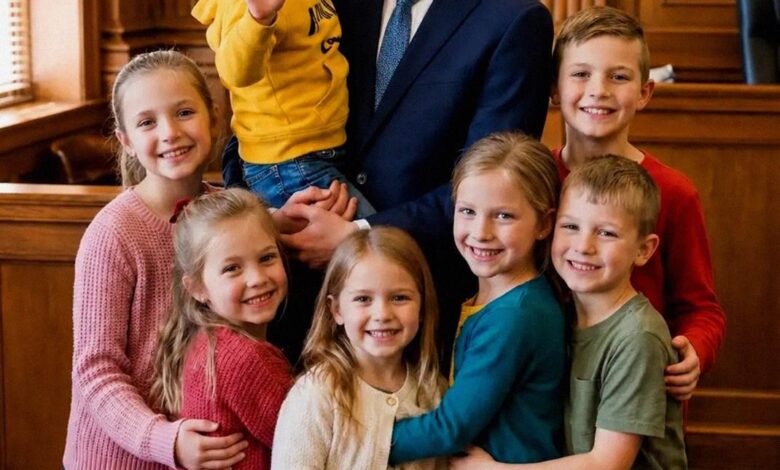
I adopted my 7 siblings when I was 18 so they wouldn’t be separated — three years later, my youngest brother handed me a photo revealing what really happened to our parents. 🔽🔽🔽

by


The Shocking Secret Hidden Behind A Dusty Ornament Box That Saved Eight Siblings

The profound silence following the harsh slamming of the car doors was the most deafening noise Rowan had ever endured. At just eighteen years old, his entire existence was defined by the chaotic, rhythmic symphony of a massive household of eight. It was a world filled with the morning clatter of cereal bowls, the endless, good-natured screeching of siblings arguing over misplaced hoodies, and the consistent, comforting thud of Benji dragging his favorite blanket across the hallway. But in a matter of ten seconds, when two stoic police officers stood on his porch with grim, rehearsed expressions, all that noise was violently stripped away. Rowan transitioned overnight from a carefree teenager anxious about upcoming community college finals into a desperate man holding the shattered fragments of a beloved family in his calloused hands.

His parents were gone, taken instantly in a devastating accident that left absolutely no room for tearful goodbyes. The sheer agony of the tragedy was compounded almost immediately by the cold, bureaucratic arrival of the state. Ms. Hart, a caseworker from child services, sat at their kitchen table, her eyes darting between Rowan’s youthful face and the thick manila folder that seemed to dictate their family doom. Her final verdict was delivered with clinical precision: the eight siblings would be separated and placed into different foster homes. The family house was significantly behind on its mortgage, Rowan had no steady income, and the logistical nightmare of keeping seven children under the roof of a teenager was deemed entirely impossible by the state.

Rowan looked across the table at Tommy, who was only six years old and still clutching their mother’s worn keychain, and felt a burning surge of protective fury. He refused to let his brothers and sisters become mismatched socks scattered throughout a broken foster system. He made a vow to work day and night, to learn whatever was necessary, and to fight for their unity. However, the legal system demands far more than just a big heart. It requires undeniable stability and financial security.

The threat to their family did not only come from the cold hand of the state; it also emerged from the shadows of their own family tree. Aunt Denise arrived at the very first court hearing draped in expensive pearls and smelling heavily of designer perfume. She presented herself to the court as the gracious savior the orphaned children desperately needed. Of course, she had no intention of taking all eight of them. She only wanted the youngest two, treating them like fashionable accessories she could easily curate to fit her lavish lifestyle, while ruthlessly abandoning the older siblings to fend for themselves in the world. In a quiet, bitter aside, she whispered to Rowan that he was being selfish and foolish, claiming that love alone could never pay the monthly bills.

Against monumental odds, the judge granted Rowan temporary guardianship. The decision was swayed by the boy’s intimate, day to day knowledge of his siblings’ lives. He knew exactly who needed an inhaler during the night, who hid food in their pockets when scared, and who absolutely required the hallway light to be left on to fall asleep. For the next three long years, Rowan endured a grueling life of brutal sacrifice. He dropped out of college and worked exhausting triple shifts across various warehouses and grocery stores. He taught himself how to sleep while standing up and how to navigate the endlessly complex bureaucracy of health insurance, school districts, and utility companies. His sole ally in this exhausting battle was Mrs. Dalrymple, their elderly neighbor who constantly provided warm casseroles and free childcare, fiercely refusing every cent Rowan tried to offer in return.

Despite his heroic efforts, the walls were continuously closing in around them. Three years following the tragedy, the house was beginning to fray at the edges, and the bank was looming with foreclosure threats. Sensing blood in the water, Aunt Denise returned to finish what she started. She did not bring groceries or support; instead, she brought harsh criticism, mocking the taped bedsheet they used as a movie screen and attacking the undeniable instability of their daily lives. She waited anxiously for the estate to settle, her greedy eyes firmly fixed on the life insurance payout and the mounting equity of the family home. She filed for a formal legal review, intending to prove that Rowan was an unfit guardian so that she could seize absolute control of the children and the financial assets.

The breaking point occurred on a quiet, freezing midnight in April. Benji, now nine years old, appeared in Rowan’s doorway with his face streaked with dust and tears. He had been rooting through the dark attic in search of the old Christmas lights, a desperate attempt to feel close to the mother he missed so terribly. Instead of lights, he stumbled upon a heavy, dusty ornament box. Tucked securely behind it was a single, faded photograph.

The image captured their parents standing outside a local courthouse years before. They looked incredibly strained, with their father’s arm wrapped tightly around their mother’s waist. In the background, Aunt Denise and Uncle Warren were visible, wearing dark, predatory smiles. When Rowan flipped the photograph over, the handwriting on the back hit him like a physical blow. It was his mother’s handwriting, hurried but firm. It was a chilling warning from beyond the grave: “If anything happens to us, don’t let Denise take the kids. Our eldest, Rowan, will know what to do.”

The revelation acted as a powerful catalyst. Rowan immediately took the photograph to Mrs. Dalrymple, whose shocked reaction confirmed his darkest suspicions. She revealed that on the very day the photograph was taken, his parents had been desperately fighting off a legal attempt by Denise to gain power of attorney. Their mother had been so terrified of Denise’s greed and manipulation that she had secretly left a safety deposit folder with Mrs. Dalrymple.

Inside that hidden folder lay a treasure trove of undeniable evidence. There were email chains documenting Denise’s aggressive attempts to manipulate the parents, and copies of a revoked guardianship agreement that Denise was now trying to pretend was still completely valid. It turned out that Rowan’s parents had not been careless or unprepared at all. They had been fighting a silent, terrifying war for years to protect their children’s future from the very woman now claiming to be their loving benefactor.

The atmosphere at the final court hearing was tense and transformative. Aunt Denise sat confidently in her tailored navy suit, speaking softly to the court about the best interests of the children and Rowan’s incapacity to maintain a roof over their heads. She painted a vivid picture of a failing, impoverished household that only her substantial wealth could fix.

Rowan did not shout, nor did he cry out in anger. He simply stood up, walked to the judge’s bench, and placed both the photograph and the hidden folder down. He explained to the court that his mother’s greatest fear was not poverty, but her own sister. He presented the printed emails where Denise had explicitly outlined her calculated plan to sell the family home and disperse the older children into group homes, all while keeping the insurance money to care for only the youngest ones.

The temperature in the courtroom seemed to drop. Mrs. Dalrymple took the stand as a crucial witness, testifying to the decades of manipulation and cruelty she had personally witnessed. Uncle Warren, who had been a quiet and compliant partner in Denise’s malicious schemes, finally broke down. Overwhelmed by guilt, he admitted he had been deliberately lied to about the true wishes of the deceased parents.

The judge’s gavel fell with a booming finality that echoed through the marble halls. Denise’s petition was not just denied; it was entirely dismissed with prejudice. The court officially recognized the emergency folder as a legal extension of the parents’ final will. Furthermore, Mrs. Dalrymple was officially named the emergency caregiver for the household, providing the necessary legal adult safety net that the state required to keep the children together.

That evening, the eight siblings gathered together in their warm kitchen. They were no longer just a group of struggling orphans fighting to survive in an uncaring world. They were a living, breathing legacy. Rowan walked to the refrigerator and taped the new emergency contact list to the door. Under the section for relationship, he didn’t write neighbor. He wrote family. In that quiet moment of realization, he understood that for three long years, he had been trying to prove he was enough, but his mother had already known he was. She had trusted him long before he ever trusted himself. The photograph was not merely a warning; it was a sacred commission. They were still standing, the roof over their heads was still theirs, and for the first time since the tragic accident, the house was filled with the beautiful, chaotic noise of a family that simply refused to be broken.

Willow Smith, daughter of Will Smith, painfully announced that her father had

by


Willow Smith Breaks Silence, The Emotional Family Announcement That Could End Will Smiths Marriage

In a stunning and emotional update that spread rapidly across the internet, Willow Smith revealed that her father, Will Smith, has made the painful decision to move toward divorce from Jada Pinkett Smith. The announcement, shared only minutes after the decision became known within close circles, immediately sent shockwaves through fans and media alike.

For decades, Will and Jada were seen as one of Hollywood’s most recognizable and resilient couples. Their relationship wasn’t just a marriage—it was a cultural fixture, often discussed, analyzed, and admired for its openness and longevity. That’s why this moment feels different. Not like gossip, but like the closing of a long, complicated chapter that many believed would never truly end.

Willow’s message was brief, but it carried weight far beyond its words. She didn’t dramatize the situation or invite speculation. Instead, she spoke with a calm honesty that reflected both maturity and emotional strain.

“This is one of the hardest things I’ve ever had to say,” she shared. “My dad has decided to separate from my mom. We are still a family, but everything is changing. Please respect our space.”

Within minutes, the post was flooded with reactions—messages of support, disbelief, and quiet sadness. Fans who had grown up watching the Smith family felt personally connected to the news. Many praised Willow for addressing the situation directly, choosing clarity over silence in a moment that could easily have been hidden behind vague statements or media spin.

Behind that short announcement, however, lies a much longer story—one that has been unfolding in public view for years.

Although Will and Jada often presented a united front at events and interviews, they were also unusually transparent about the challenges in their relationship. They didn’t pretend perfection. In fact, they often leaned into vulnerability, discussing struggles that most couples keep private.

Their appearance on Red Table Talk in 2020 became a defining moment. During that conversation, they openly addressed past issues, including Jada’s widely discussed “entanglement” with August Alsina. The discussion went viral, not just because of the topic, but because of how raw and unfiltered it felt.

At the time, many saw it as proof that their relationship could withstand anything—that honesty and communication would keep them together no matter how complicated things became. But others wondered if that level of exposure came at a cost.

Over the years, subtle signs suggested that things were not as stable as they appeared. Interviews hinted at emotional distance. Public appearances sometimes felt more like obligation than connection. Both Will and Jada spoke about growth, independence, and redefining what partnership meant to them.

According to sources close to the family, the decision didn’t come suddenly. It was the result of long-term reflection rather than a single breaking point. Will, in particular, is said to have been grappling with the emotional weight of maintaining a relationship under constant public scrutiny.

“He loves his family deeply,” one insider shared, “but he’s been exhausted—mentally and emotionally. This wasn’t impulsive. It’s something he’s been thinking about for a long time.”

That exhaustion, reportedly, played a major role in his decision. Living in the spotlight while navigating a complex personal life created a kind of pressure that doesn’t easily fade. Over time, it builds. And eventually, something has to give.

For Will, stepping away appears to be less about walking out and more about reclaiming a sense of personal balance—something he’s spoken about more openly in recent years.

The impact on the family is already being felt.

Will and Jada share two children, Jaden and Willow, both of whom have grown up in the public eye but have become increasingly private as adults. In recent months, fans noticed a shift—fewer shared moments, less visible interaction as a family. At the time, it wasn’t clear what it meant. Now, it seems those changes were part of a larger reality unfolding behind the scenes.

Willow’s announcement confirmed not just the decision itself, but the emotional weight it carries. This isn’t just a legal process—it’s a deeply personal transition affecting every member of the family.

As for Jada, she has not yet released an official statement. However, just days before the news broke, she posted a message on social media that now feels far more significant in hindsight.

“Sometimes growth requires goodbye.”

At the time, it was interpreted as a general reflection. Now, it reads like a quiet acknowledgment of what was coming.

For many, that line captures the essence of this moment. Not anger. Not scandal. Just change—difficult, inevitable, and deeply human.

Will and Jada’s marriage began in 1997, spanning nearly three decades. During that time, they built not just a family, but a shared identity that blurred the lines between personal and public life. They faced controversies, supported each other through career highs and lows, and repeatedly insisted that their bond was stronger than traditional definitions of marriage.

That’s what makes this moment so striking. It challenges the idea that longevity alone defines success. Sometimes, endurance isn’t the same as fulfillment. And sometimes, even the most visible partnerships carry invisible fractures.

Public reaction has been immediate but mixed. While many express sadness, others have responded with understanding, recognizing that relationships—no matter how strong they appear—are still shaped by individual needs, growth, and limits.

Friends and fellow celebrities have begun voicing their support, urging fans and media outlets to respect the family’s privacy during this transition. That request, echoed in Willow’s original message, underscores the reality that this is not just a headline—it’s a family navigating a deeply personal shift under a global spotlight.

What happens next remains uncertain.

Divorce, especially at this level of visibility, is rarely simple. It brings legal complexities, emotional adjustments, and a redefinition of identity—not just as individuals, but as a family unit that will continue to exist in a different form.

But one thing is clear.

This moment marks more than the end of a marriage. It signals a shift in how people understand relationships in the public eye. It reminds us that even the most admired unions are not immune to change. And it highlights something often overlooked in celebrity narratives—the reality that behind fame, success, and image, there are still human beings trying to navigate life the best they can.

For years, Will and Jada represented a version of love that was unconventional, resilient, and openly imperfect. Now, their story is entering a new phase—one defined not by partnership, but by separation.

And through it all, Willow’s voice remains the clearest reflection of what truly matters.

Not the headlines. Not the speculation.

Just a family, changing—and asking for space to do so.

My husband received this photo from me, then immediately wants a divorce😱 - Ca… See more

by


I Sent My Husband A Photo Of A Horse Saddle But A Hidden Detail Destroyed My Marriage

The afternoon was meant to be nothing more than a quiet, restorative escape from the relentless pace of daily life. The trail stretched out before me, a ribbon of earth framed by towering trees and bathed in the warm, golden light of the afternoon sun. The rhythm of the ride was steady and calming, offering a kind of peace that does not ask for anything, demanding only that you exist in the moment. It was a beautiful, serene day, and I felt a brief surge of gratitude for the simplicity of the outdoors. Wanting to share a slice of that tranquility with my husband, I pulled out my phone and snapped a quick picture of the scenery, focusing on the foreground with the worn leather of the saddle resting against the horse. There was absolutely nothing hidden in that image, nothing malicious, and certainly nothing designed to cause conflict. At least, that was how it appeared to me. I sent the image with a light heart, expecting nothing more than a casual exchange about the beautiful weather or the peaceful ride.

His reply, however, did not mention the view, the weather, or the serene landscape. Instead, it was an abrupt question that instantly stripped the warmth from the afternoon. The message asked simply, What are the initials on the saddle? A cold feeling washed over me as I stared at the screen. I had to zoom in on the photograph on my device to see what he meant. And there, pressed faintly into the weathered, worn leather near the horn of the saddle, were two small letters: A.M. They were faint enough to be easily missed by the casual observer, yet clear enough to be unmistakable once they were pointed out.

Those two letters, inconsequential as they seemed, were a direct link to a name and a chapter from my distant past. They belonged to someone I had not thought about, let alone spoken to, in years. To me, the discovery was nothing more than a strange coincidence. After all, horse tack changes hands constantly. Saddles pass from one rider to another over the years, and marks remain long after the original stories and relationships have ended. It was a simple, physical artifact of the sport, carrying no modern emotional weight for me. But what felt simple and ordinary to me did not remain simple for him.

The moment the initials were identified, they transformed in his mind into something entirely different. They were no longer just random marks on old leather; they were a question he could not set aside, a mystery that began to consume his thoughts. I tried to explain the situation to him, doing my best to remain calm and clear. I laid out the facts, hoping to dissolve the sudden tension that had bloomed between us. However, I quickly learned that reassurance does not always settle doubt once that doubt has taken root in a suspicious mind. In fact, the more I tried to clarify and explain the innocence of the situation, the more it seemed to him that something significant was being hidden.

Suspicion operates under its own dark logic. It does not wait for concrete evidence or logical explanations; instead, it builds its own narrative, twisting innocent details into proof of deception. What I saw as an ordinary, meaningless mark on a secondhand saddle, he began to read as an intentional, clandestine message. Before long, our conversation had completely drifted away from the photograph, the trail, and the peaceful afternoon. The argument shifted not because of what had actually happened in the real world, but because of what was being believed in his imagination.

Trust does not usually shatter in a single, dramatic moment. Rather, it tilts, slipping away slowly, like sand through an hourglass. The process is subtle at first. A small, insignificant detail becomes a symbol of something larger and more sinister. The symbol then evolves into a fully formed story, and before long, that story feels far more real and compelling than the mundane truth it replaced. The initials on the leather never changed, but what they represented in our marriage shifted dramatically. The foundation of our relationship began to crack under the weight of an assumption.

In the end, I found myself reflecting on the fragility of the human mind and the delicate nature of love. Not every doubt deserves to be nurtured and allowed to grow. Some questions do need to be asked and answered honestly, but others need to be held lightly, examined just long enough to see whether they actually carry any real weight or if they are simply the product of an overactive imagination. A relationship does not stay steady and strong by constantly proving every single detail of one’s life or by accounting for every mark on a piece of leather. It stays steady by consciously choosing where to place trust, and by knowing when to stop the mind from filling in the dark spaces with what simply is not there.

That afternoon on the trail had started as a moment of pure peace. The photo I sent was intended to be a simple offering of connection. But what followed was entirely dependent on the lens through which it was seen. It was a painful lesson in how quickly the narrative we choose to believe can reshape the world around us, turning a beautiful, quiet memory into the starting point of a storm.

Top Ad 728x90