Getting older often brings challenges like reduced energy, joint discomfort, and a general sense of slowing down that many of us dread. It’s easy to feel overwhelmed when you see how quickly vitality can fade, leaving you wondering if there’s anything practical you can do to maintain your well-being longer. Fortunately, a recent study examining the life of a woman who reached the remarkable age of 117 provides some encouraging clues about everyday choices that may play a role in supporting healthy aging. But what were the three surprisingly simple habits she followed that researchers believe contributed to her exceptional cellular and gut health?

Meet Maria Branyas Morera, the Woman Who Lived to 117
Maria Branyas Morera was born in San Francisco in 1907 and passed away in Spain in August 2024 at the age of 117 years and 168 days. For much of her later life, she was recognized as the world’s oldest verified living person. Scientists had the rare opportunity to study her before her death, analyzing her DNA, epigenetic markers, metabolism, and gut microbiome in detail. Led by researchers including University of Barcelona genetics professor Manel Esteller, the study offered a rare window into what may support exceptional longevity.
The Study’s Most Surprising Discovery: Cells That Acted 17 Years Younger
What stood out immediately was how Maria’s cells appeared to function. Multiple epigenetic clocks — sophisticated tools that measure biological age through DNA methylation patterns — consistently showed her cells behaving as if they were about 17 years younger than her actual chronological age.
Even more remarkable, her gut microbiome looked strikingly similar to that of a much younger person — some reports described it as resembling that of an infant. It was especially rich in Bifidobacterium, beneficial bacteria known for their anti-inflammatory properties and links to better digestion, immune function, and overall metabolic health.
Here’s the thing: while genetics played a role (she had what researchers called a “privileged genome” with protective variants), her daily habits appeared to work hand-in-hand with those genes. The study highlighted three simple, consistent practices that were part of her routine for decades.
Habit #1: Eating Yogurt Three Times a Day
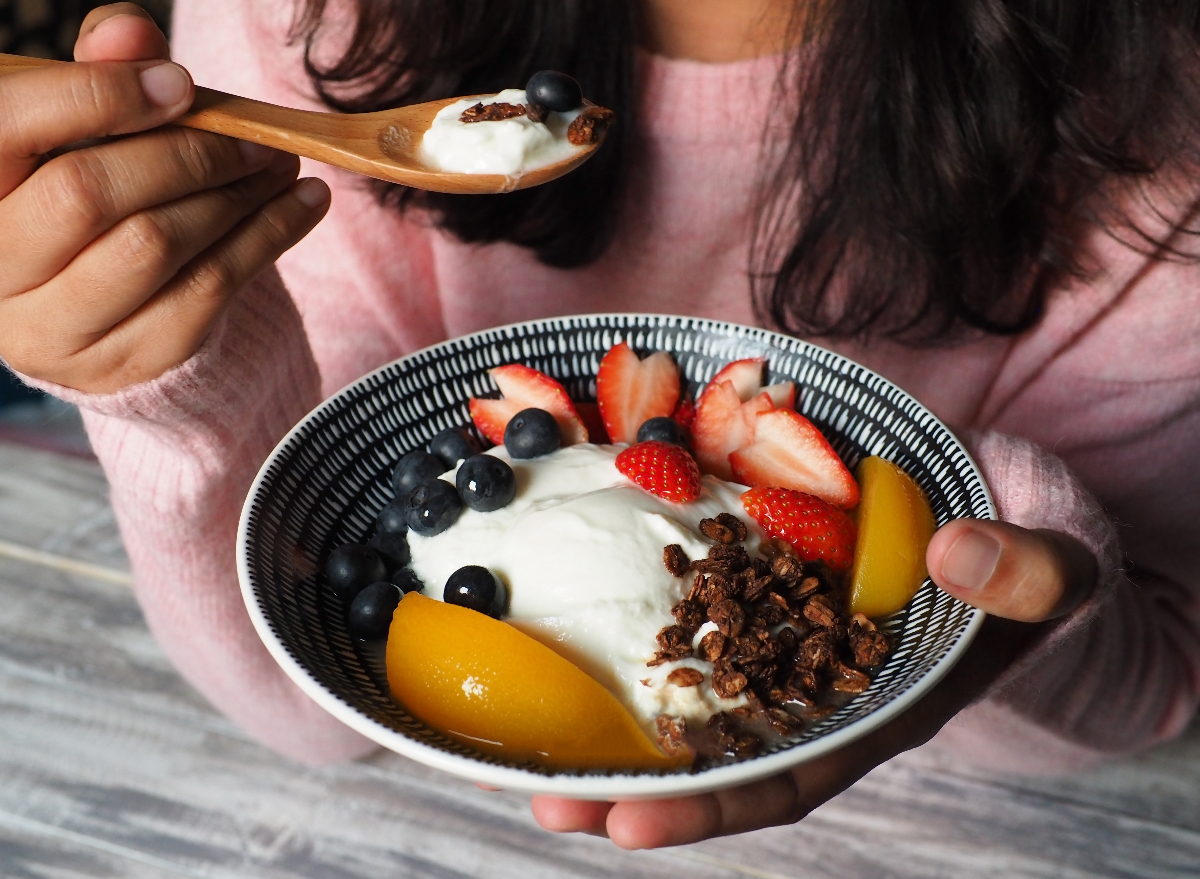
Maria reportedly enjoyed about three servings of plain yogurt daily. The specific strains in the yogurt she chose — including Streptococcus thermophilus and Lactobacillus delbrueckii — are believed to help promote the growth of Bifidobacterium in the gut.
Why this matters for healthy aging:
- Supports a balanced microbiome that may help reduce low-grade inflammation
- Aids digestion and nutrient absorption
- May contribute to better immune regulation
Research has long linked a healthy gut microbiome to everything from mood and cognition to metabolic health. In Maria’s case, this simple daily habit appeared to help maintain a youthful microbial profile well into her supercentenarian years.
Easy ways to try this habit:
- Choose plain, unsweetened yogurt with live and active cultures
- Aim for 2–3 small servings spread throughout the day
- Pair it with fresh fruit or a sprinkle of nuts for added flavor and nutrients
Habit #2: Taking Daily Walks

Maria made gentle daily walks a non-negotiable part of her routine. She stayed physically active in a sustainable, low-impact way without extreme exercise regimens.
Regular moderate movement like walking is one of the most studied habits for supporting healthy aging. It helps maintain muscle mass, joint mobility, cardiovascular health, and even mood. For Maria, this consistent activity likely complemented her genetic advantages by keeping circulation strong and inflammation in check.
Practical tips for daily walks:
- Start with 15–30 minutes if you’re new to it
- Walk at a comfortable pace — the goal is consistency, not speed
- Try walking after meals to support digestion and blood sugar balance
- Bring a friend or family member to make it more enjoyable
Habit #3: Following a Mediterranean-Style Eating Pattern
Beyond the yogurt, Maria followed a traditional Mediterranean way of eating — rich in fruits, vegetables, olive oil, nuts, and whole foods, with limited processed items. She avoided alcohol and smoking entirely.
This dietary pattern is consistently associated in population studies with better heart health, cognitive function, and longevity. The abundance of fiber, antioxidants, and healthy fats helps nourish the gut microbiome and support cellular health over time.
Key elements of her approach:
- Plenty of seasonal fruits and vegetables
- Olive oil as the primary fat source
- Moderate portions of fish, legumes, and whole grains
- Minimal ultra-processed foods and added sugars
How These Three Habits May Work Together
But here’s the part that makes this story especially interesting: the habits didn’t work in isolation. The yogurt supported her microbiome, the daily walks kept her body moving, and the Mediterranean-style diet provided the nutritional foundation. Together, they appear to have helped create an internal environment that supported slower biological aging.
Studies on centenarians and supercentenarians often point to this combination — consistent, simple lifestyle practices that reduce chronic inflammation, support metabolic efficiency, and maintain a healthy gut ecosystem.
Here’s a quick comparison of typical aging markers versus what the study observed in Maria:
| Aspect | Typical in Advanced Age | Observed in Maria Branyas Morera |
|---|---|---|
| Biological Age | Matches or exceeds chronological age | ~17 years younger |
| Gut Microbiome | Reduced diversity, fewer beneficial bacteria | Infant-like profile, high Bifidobacterium |
| Inflammation | Often elevated | Notably low |
| Daily Movement | Frequently limited | Consistent gentle walks |
| Dietary Pattern | Variable | Mediterranean + yogurt focus |
Ready to Incorporate These Habits? Start Small and Stay Consistent
You don’t need to overhaul your entire life overnight. The beauty of these habits is their simplicity:
- Add yogurt — Pick up a tub of plain yogurt with live cultures this week and have one serving with breakfast, another mid-afternoon, and one in the evening.
- Schedule walks — Block out 20 minutes on your calendar every day for a gentle stroll. Make it as routine as brushing your teeth.
- Build Mediterranean meals — Focus on filling half your plate with colorful vegetables and fruits. Use olive oil for cooking and dressings. Reach for nuts, beans, and fish more often.
Small, sustainable changes like these are what most longevity experts emphasize — not perfection, but consistency over time.
What This Means for Healthy Aging
The study of Maria Branyas Morera reminds us that while we can’t control every aspect of aging, everyday choices may have a bigger impact than we realize. Her story highlights how supporting gut health, staying gently active, and eating nutrient-rich foods can work together in ways that support vitality at any age.
Of course, individual results vary, and genetics play a significant role. But these three habits are accessible to most people and come with broad health benefits beyond longevity.
FAQ
What exactly is a supercentenarian? A supercentenarian is someone who has reached the age of 110 or older. Only a tiny fraction of people live this long, making cases like Maria’s especially valuable for scientific study.
How does the gut microbiome influence healthy aging? The trillions of bacteria in our gut help regulate inflammation, immune function, nutrient absorption, and even brain health. A diverse, balanced microbiome is increasingly linked to better outcomes as we age.
Can adopting these habits guarantee a longer life? No habit can guarantee specific outcomes, but research consistently shows that regular physical activity, a nutrient-rich diet, and supporting gut health are associated with better quality of life and healthier aging for many people.
Final disclaimer: This article is for informational purposes only and is not intended to diagnose, treat, cure, or prevent any disease. The information presented is based on a specific case study and general scientific understanding. Always consult with your healthcare provider before making significant changes to your diet, exercise routine, or lifestyle, especially if you have existing health conditions or take medications.


0 comments:
Post a Comment