A New Hampshire mother was stunned when the state’s Division of Motor Vehicles unexpectedly demanded she surrender a vanity license plate she had proudly displayed for more than 15 years on her family vehicle.

The personalized license plate in question read “PB4WEGO,” a playful acronym that the Rochester, New Hampshire resident chose to remind her children to “pee before we go” on car trips, a familiar parental phrase.
For over a decade and a half, the bumper plate brought smiles, honks, and compliments A New Hampshire mother was stunned when the state’s Division of Motor Vehicles unexpectedly demanded she surrender a vanity license plate she had proudly displayed for more than 15 years on her family vehicle.
The personalized license plate in question read “PB4WEGO,” a playful acronym that the Rochester, New Hampshire resident chose to remind her children to “pee before we go” on car trips, a familiar parental phrase.
For over a decade and a half, the bumper plate brought smiles, honks, and compliments from other motorists who appreciated its light‑hearted message, making it a little part of the family’s identity.
But in August 2019, Wendy Auger received an official letter from the New Hampshire DMV ordering her to give up the plate because state rules prohibit content they interpreted as referencing excretory acts or functions.
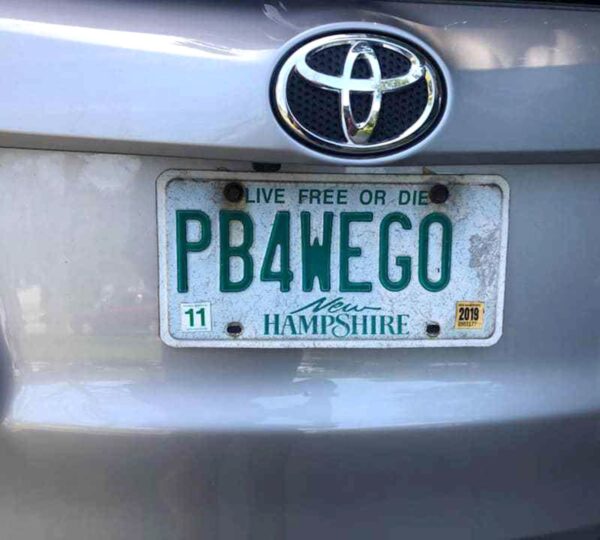
The letter instructed Auger to turn in her personalized plate within ten days and offered her a different plate at no additional charge if she chose to replace it, reflecting the agency’s administrative process.
State officials cited a set of administrative rules governing vanity plates, which restrict content deemed inappropriate, and determined that Auger’s plate did not conform to those guidelines, even though it had been previously approved.
Auger was bewildered by the demand, noting that “pee before we go” is a phrase countless parents use daily, and that hers had always been intended as a harmless, amusing reminder rather than something offensive.
“It would just stink if I don’t have it anymore,” Auger joked, pointing out the irony of losing a plate meant to keep her family comfortable and prepared on long drives.
She also noted the irony of the situation in a state whose official motto, displayed on all license plates, is “Live Free or Die,” suggesting that revoking her phrase seemed contrary to local values.
As word of the recall spread, Auger shared photos of her plates and the DMV letter on Facebook, where her story quickly went viral as supporters rallied behind her cause and expressed disbelief at the ruling.
Many social media users called the situation “ridiculous” and defended the plate as a funny and innocent message that resonates with parents everywhere, with some joking about bathroom humor and road trips.
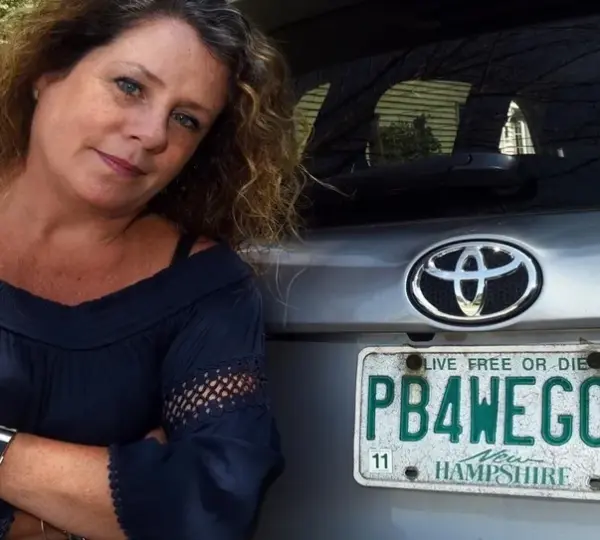
A flood of comments emphasized that most drivers found the plate cute, amusing, and relatable, often sharing personal anecdotes about reminding their own children to use the restroom before leaving home.
Encouraged by public support, some suggested humorous alternatives for her next vanity plate, such as “DMV SUX” or playful variations on the original message, hinting at how widely the story had captured attention.
Auger explained in interviews that she had never intended any offense, and stressed that her plate reflected her personality, her family routine, and a universal piece of parental wisdom rather than an inappropriate message.
She also emphasized that she wasn’t trying to start a political battle but simply hoped to keep something that had been part of her life for many years and brought smiles to others.
While Auger prepared her appeal to challenge the DMV’s decision, the story continued to draw media attention, raising questions about freedom of expression and the subjective nature of content enforcement on personalized plates.
The internal DMV rules in New Hampshire had been tightened in the wake of a 2014 state Supreme Court decision that found broad bans on offensive wording too vague, leading officials to adopt more specific guidelines.
Under the revised standards, references to bodily functions such as excretion were explicitly prohibited on vanity plates, prompting the recall notice even though many drivers had long passed by Auger’s plate without complaint.
As her appeal progressed, the situation caught the attention of New Hampshire Governor Chris Sununu, who intervened after hearing about the unusual dispute between Auger and the DMV.
Gov. Sununu reached out directly to DMV officials and strongly urged them to allow Auger to keep her plate, noting that the phrase was widely seen as a benign parental reminder rather than anything harmful.
In a message to Auger, the governor acknowledged the small bureaucratic obstacle she faced and expressed confidence that “common sense prevailed” in the decision to let her retain the plate.
The intervention from the governor brought relief to Auger and her supporters, who had been concerned she would lose a personalized part of her daily life that had long been cherished.
When the governor’s support became public, Auger shared virtually jubilant posts on social media, announcing that she could keep her vanity plates after all, a victory that delighted those who had followed her story.
Many commentators praised Sununu’s decision, noting that something as innocuous and universally recognizable as a reminder to use the bathroom should not have been the subject of bureaucratic controversy.
The episode illustrated how personalized license plates, which are intended to be fun expressions of individuality, can sometimes clash with administrative policies that interpret wording strictly on technical grounds.
Auger’s success in keeping her plate underscored the importance of context and intent when evaluating language on vanity plates, especially when the phrase has a widely understood, everyday meaning.
In the months following her victory, Auger continued to enjoy the reactions from other drivers who spotted her plate and smiled, honked, or took photos, reaffirming its role as a lighthearted symbol on the road.
Her case also sparked conversation about the broader question of how much control a government agency should have over personal expression and where lines should be drawn around acceptable speech.
While most drivers will never see such scrutiny over their own personalized plates, the “PB4WEGO” saga became a memorable example of how even innocuous phrases can come under official review.
In the end, Auger’s persistence, combined with public support and gubernatorial intervention, allowed her to keep a plate that reminded her children — and amused passing drivers — for many years.
The story remains a fun and unusual chapter in New Hampshire’s vanity plate history, remembered by many as a case of common sense overcoming bureaucratic rules, with a message all parents can recognize.
Some supporters have since shared their own humorous plate ideas, celebrating the freedom to express personality through customized plates, reinforcing that light‑hearted fun on the road can still prevail.
For now, the “PB4WEGO” plate continues to travel the highways of New Hampshire, serving as a quirky reminder that small, everyday messages can connect strangers and spark smiles everywhere it goes.


0 comments:
Post a Comment