Top Ad 728x90

Saturday, May 9, 2026

He said WHAT.. 😳😳

by


Trump makes bombshell claim about text to Melania as he reveals message on his phone
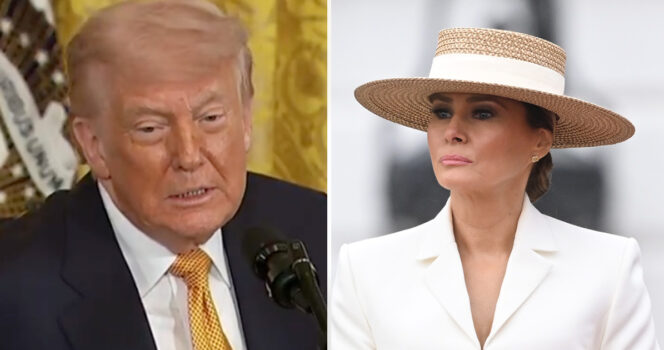
Donald Trump and Melania have been married for more than 20 years. However, when texting his wife, she might have thought he meant it for someone else. Speaking during an event honoring military mothers, Trump spoke about how he mistakenly called his wife by another name as he revealed messages on his phone.

Donald Trump and Melania Trump married on January 22, 2005. The wedding took place at Bethesda-by-the-Sea church in Palm Beach, Florida.

Many celebrities were in attendance, including Elton John and Arnold Schwarzenegger. even Trump’s then-future presidential rival, Hillary Clinton, and her husband and former president, Bill Clinton.

The wedding was Melania’s first, but Donald Trump’s third. His first marriage to Ivana Trump – who sadly passed away in 2022 – lasted from 1977 to 1992. A year later, he married Marla Maples, but the couple divorced in 1999, a year after Trump met Melania for the first time.

In the last few years, rumors about their marriage breaking up have been all over the internet. As they have very different schedules at the White House, with them sometimes even not being in the same city, maintaining a relationship with each other every day is not easy.

In Jaunayr, a source told People Magazine that it has taken its toll on their marriage. However, they both bond over their love for interior design. Meanwhile, previous reports have stated that Donald Trump and Melania always try to have dinner together each day.

Donald Trump makes bombshell claim about text to Melania

Donald and Melania aren’t speaking much about their relationship in public. However, on Wednesday, while at an event honoring military mothers, the U.S President revealed some quite special details on his and Melania’s text messaging.

Trump explained that by accident, he often sent the wrong name to her.

“I love the name Melody because for a long time, they have spell correct and word correct, and these crazy machines that we use to put out truths… every time I wrote Melania it would correct to Melody,” he said. “So I do things, and I work very fast, very fast.”

Trump continued, adding: “And I talk about it, and I say, Melania is fantastic, and happy Mother’s Day, Melania, our great First Lady, Melania. But it would spell correct and word correct to Melody. And sometimes I wouldn’t proofread it, and I would get just absolutely decimated. These people (the media) would decimate me.”

Trump’s story brought down laughter inside the event. The president continued by saying that people claimed he “didn’t know the name” of his wife. He continued, “‘He keeps calling her’ – and I said, ‘What the hell is wrong with this machine?’ I didn’t know about that little feature, but I got that corrected eventually.

Social media erupts

She’s been called Melody a lot,” Trump concluded, adding, “I had to explain it to you this way. I stood up here to explain it to you. I apologize.”

While many found it funny, social media users claimed in the clip’s comments that some pieces were missing from the President’s explanation.

One person wrote, “He does know autocorrect learns from your typing history, right? So…Who tf is Melody???”

Another user added, “And so my question is, Who’s Melody?”

Meanwhile, others thought the president was “relatable,” while a third person explained, “Apple and Google use different tech to handle learning. However, the critical point you missed is the fact that missing the invalid autocorrect reinforces its use for future swipes.”

Another person said, Autocorrect is the worst. 100% does NOT learn from me.”

Thoughts on this? Please share your thoughts in the comment section on Facebook.
She's shared the horrifying reality 😳

by


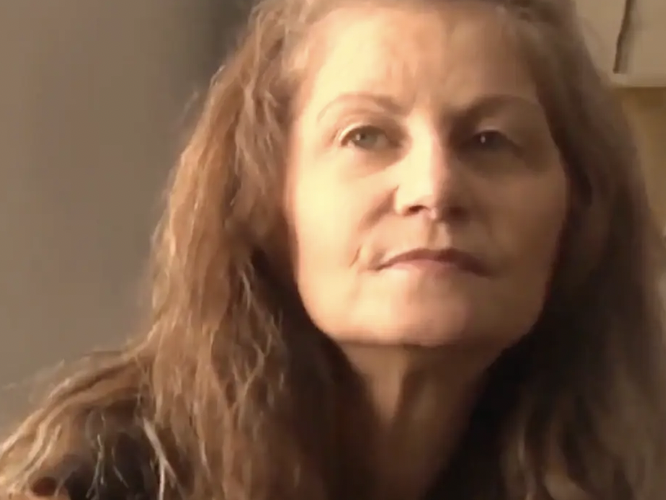
Hantavirus survivor shared terrifying reality of being infected – and her three key symptoms

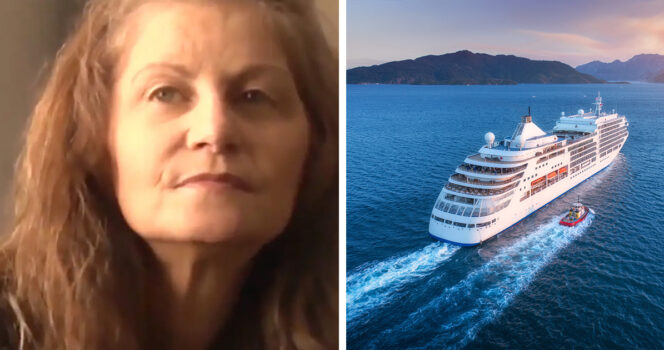
A woman who survived hantavirus has spoken out about the terrifying reality of the disease amid an outbreak on the Dutch cruise ship MV Hondius that has thus far claimed the lives of three people.

Hantavirus refers to a group of viruses carried by mice and rats, and is transmitted via their droppings and urine, through spread between humans is rare.

Earlier this week, the MV Hondius cruise ship made headlines globally when it was revealed that three passengers had died after becoming infected with the disease. The ship is currently positioned off the coast of Cape Verde – authorities are refusing to let anyone disembark.

Nearly 150 passengers and crew members remain stranded on the vessel, while multiple suspected infections have been identified.

WHO Director-General Tedros Adhanom Ghebreyesus wrote on X on Wednesday: “Three suspected hantavirus case patients have just been evacuated from the ship and are on their way to receive medical care in the Netherlands in coordination with WHO, the ship’s operator and national authorities from Cabo Verde, the United Kingdom, Spain, and the Netherlands.”

He continued: “WHO continues to work with the ship’s operators to closely monitor the health of passengers and crew, working with countries to support appropriate medical follow-up and evacuation where needed.

Credit: YouTube/KPAX-TV

“Monitoring and follow-up for passengers on board and for those who have already disembarked has been initiated in collaboration with the ship’s operators and national health authorities. WHO thanks all those involved. At this stage, the overall public health risk remains low.”

As fears grow online that the outbreak could mirror the early stages of Covid-19, WHO epidemiologist Maria Van Kerkhove pushed back on comparisons during a recent press conference.

“This is not the next Covid, but it is a serious infectious disease. If people get infected, and infections are uncommon, they can die. People on the ship who are hearing this are very scared, rightly so,” she said, according to ABC News.

“The general public might be scared as well. Accurate information is critical. Knowing what your actual exposure might be – most people will never be exposed to this.”

While it may not be the next Covid, strains of hantavirus can cause extreme issues for those who contract them.

As per reports, American strains of hantavirus often cause Hantavirus Pulmonary Syndrome (HCPS), which affects the lungs and heart. The WHO says the death rate in these cases is between 20 and 40 percent.

Debbie Zipperian, of Montana, entered an old chicken coop on her ranch to collect her cat’s food plates in 2011.

She was in the coop for under five minutes, but it was long enough for her to inhale dust contaminated with rodent droppings carrying hantavirus.

“My face was this close to it,” she told KPAX-TV in 2018.

Around a week later, Debbie began suffering from backaches, extreme fatigue, and severe neck pain.

Multiple hospital visits later, she was diagnosed with HPS. Debbie’s condition rapidly deteriorated, and she experienced hallucinations, confusion and respiratory failure in the hospital.

“I flat-lined twice,” she said, revealing that doctors had struggled to place her on a ventilator because she was stressed and difficult to sedate.

Her late husband told her that she grew ‘hysterical like a rabid bobcat’.

Debbie eventually regained consciousness after a week in hospital, but the virus left lasting spinal and neurological damage. She had to relearn how to walk and, in 2018, continued to have difficult with her memory and concentration.

Trump must be furious... 😳😳

by


White House lashes out at ‘Star Wars’ actor Mark Hamill for post of Trump in grave5

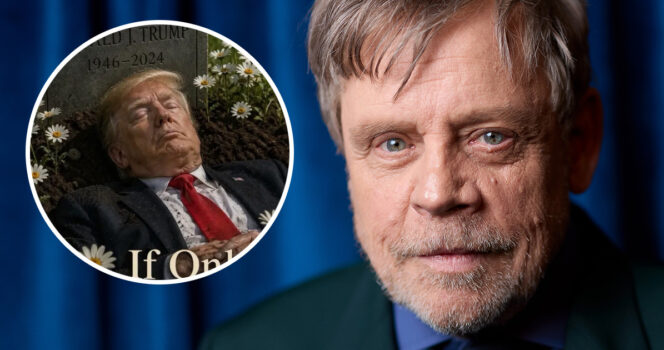
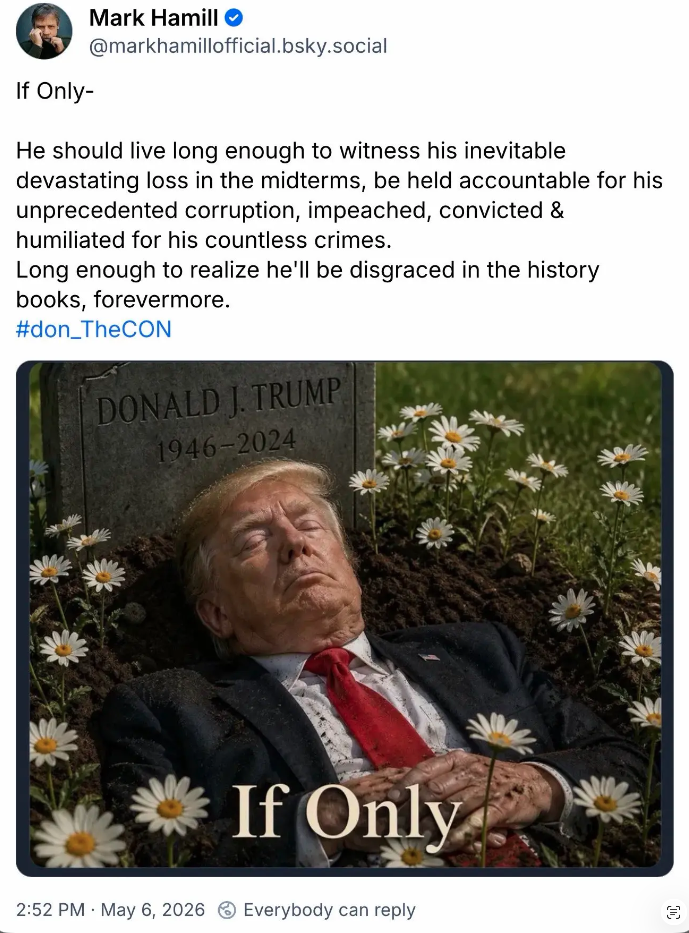
Star Wars actor Mark Hamill posted an AI-generated image of Donald Trump lying in a grave, accompanied by the text “If only,” on social media. Now, the White House has lashed out at the actor, calling him some not-so-charming things.

Star Wars actor Mark Hamill, who starred as Luke Skywalker in the original Star Wars trilogy and made an appearance in the later films, has once again lashed out against Donald Trump. However, this time, it backfired, and the actor deleted his post.

On the social media platform Bluesky, Hamill posted an AI-generated picture of Donald Trump, accompanied by a lengthy caption that again attacked the president.

It came just days after an apparent assassination attempt against Donald Trump during the White House Correspondents’ Dinner at the Washington Hilton.

“If Only,” the actor began the post, picturing Trump lying in a grave. “He should live long enough to witness his inevitable devastating loss in the midterms, be held accountable for his unprecedented corruption, impeached, convicted & humiliated for his countless crimes. Long enough to realize he’ll be disgraced in the history books, forevermore.”

Screenshot

The post went viral, and the White House responded shortly thereafter. On Thursday, posted on X, the White House press team branded Hamill “one sick individual.”

White House lashes out after ‘Star Wars’ actor Mark Hamill posts Trump in grave picture

“These Radical Left lunatics just can’t help themselves,” a post read. “This kind of rhetoric is exactly what has inspired three assassination attempts in two years against our President.”

Later, Mark Hamill decided to remove the image of Trump lying in his grave. He also added a remark.

“Actually, I was wishing him the opposite of ​dead, but apologize ​if you found ?the image inappropriate,” Hamill wrote on Bluesky.

Nark Hammill has been a long-time critic of Donald Trump. He has spoken out against the president several times over the years, and when the president was elected in 2024, Hamill claimed he was close to leaving the country for Ireland or the UK. In the end, however, he was persuaded by his wife to stay in the U.S.

LOS ANGELES, CALIFORNIA – FEBRUARY 15: Mark Hamill poses in the IMDb Portrait Studio at The 2026 Independent Spirit Awards at Hollywood Palladium on February 15, 2026 in Los Angeles, California. (Photo by Emma McIntyre/Getty Images for IMDb)

“She’s very clever. She didn’t respond right away, but a week later she said, ‘I’m surprised you would allow him to force you out of your own country,’” Hamill previously told the Times of London at the time. “That son of a bitch, I thought. I’m not leaving.”

Mocked over threat to leave the U.S amid Trump election victory

It didn’t take long before the White House decided to troll the iconic Star Wars actor. They referred to Rosie O’Donnell, who famously decided to move to Ireland after the 2024 Presidential Election.

“Since Mark has decided to stay in the United States, he will get to enjoy the many wins President Trump is securing for the American people — and really, who can blame him for second-guessing a plan to move to the same place as Rosie O’Donnell,” the White House said

Thoughts on this? Please share your thoughts in the comment section.

A Little Girl Quietly Made the Decision to Reach Into Her Pocket and Spend the Very Last Five Dollars She Had Ever Saved From Doing Small Jobs Around Town Just to Buy a Dying German Shepherd That Was Tied Behind a Broken, Rain-Soaked Barn in a Forgotten Farming Community Where Everyone Said the Dog Would Not Survive Another Few Days, Only for Something Completely Unexplainable to Happen Exactly One Week Later That Left Even the Cruel Farmer Who Sold Him Completely Speechless

by


A Quiet American Farm Town Where Everyone Thought Nothing Would Ever Change was exactly how Pine Hollow, Iowa had always felt to twelve-year-old Emily Carter.

People in Pine Hollow lived predictable lives. They woke up early, worked hard, kept their heads down, and avoided anything that might complicate a simple day. That was the rule, even if no one ever said it out loud.

Which was why nobody talked about the barn at the edge of Miller Grange’s property.

It was old, collapsing in places where the wood had simply given up. The roof sagged like it was too tired to stay up another season. Rainwater soaked the ground behind it, turning the soil into thick mud that swallowed footprints almost immediately.

And in that mud, tied to a rusted metal post, was a German Shepherd.

Emily stopped walking the moment she saw him.

He didn’t bark.

He didn’t pull.

He just stood there, barely standing at all.

His ribs showed through his thin coat. His fur was uneven, matted in places where dirt and exhaustion had settled permanently. One ear hung lower than the other, and his front paw trembled slightly, as if even balance was something he had almost forgotten how to maintain.

A man stepped out of the barn doorway.

Miller Grange.

Everyone in town knew him.

No one liked him.

But no one confronted him either.

“Dog’s no good anymore,” he said flatly, lighting a cigarette like he was discussing broken machinery. “Can’t work, can’t guard. Just takes up space.”

Emily didn’t answer.

Her grandmother, Doris Carter, grabbed her arm immediately.

“We’re leaving,” she said firmly.

But Emily didn’t move.

Because the dog had looked at her.

And in that look, she saw something she didn’t expect to recognize in an animal.

Not hope.

Not fear.

Just… waiting.

Miller exhaled smoke slowly.

“Five dollars,” he added. “Take him or I deal with it myself before the week’s over.”

Doris stiffened. “That’s not a choice.”

But Emily had already reached into her jacket pocket.

Inside was a folded five-dollar bill.

Everything she had earned from helping neighbors—carrying firewood, washing porches, running errands no one else wanted to do.

She looked at the dog again.

And made a decision that felt too big for her age.

“I’ll take him,” she said quietly.

Miller smirked.

“Then he’s yours.”


PART 2 – THE HOUSE WHERE SOMETHING STARTED TO CHANGE

A Quiet American Farm Town Where Everyone Thought Nothing Would Ever Change suddenly didn’t feel so quiet anymore once Emily brought the dog home.

She named him Boone.

He could barely walk when she led him away from the barn. Each step looked like it cost him something invisible but heavy. Emily stayed close, supporting him when he stumbled, talking softly even though she wasn’t sure he could understand.

Behind them, Miller watched without expression.

“You’ll regret it by morning,” he called out.

Emily didn’t turn around.

The first night, Boone didn’t eat.

He didn’t move much either.

He just lay on an old blanket in the small shed behind Emily’s house, breathing slowly like every breath had to be earned. Emily sat beside him for hours, not sleeping, just listening to the rhythm of something she refused to let end.

“Stay with me,” she whispered once.

Boone opened his eyes slightly.

And shifted closer.

Days passed slowly.

People in town noticed.

Some laughed.

Some shook their heads.

“That dog won’t last the week,” someone said outside the grocery store.

Emily heard all of it, but she didn’t stop.

She cleaned his wounds with warm water. She gave him food she saved from her own meals. She stayed beside him even when he couldn’t stand yet.

And something strange started happening.

Boone started responding.

First with his eyes.

Then with small movements.

Then, on the fifth day, he stood.

Unsteady.

Shaking.

But standing.

Emily cried that night without fully understanding why.

Because something that was supposed to be dying wasn’t anymore.

And on the seventh day, Boone disappeared from the shed.


PART 3 – THE DAY THE FARM TOWN STOPPED PRETENDING

A Quiet American Farm Town Where Everyone Thought Nothing Would Ever Change stopped being quiet on the morning Boone walked back into Miller Grange’s land.

Emily found him standing at the edge of the dirt road.

Perfectly still.

Looking forward.

Waiting.

“Miller’s place is that way,” Emily whispered. “Boone, no…”

But Boone didn’t look at her.

He started walking.

Slowly.

Deliberately.

Like he remembered something.

Emily followed, confused, calling his name, her voice breaking in panic and disbelief.

By the time they reached the barn, Miller Grange was already outside loading supplies into his truck.

He saw Boone first.

And froze.

“That dog…” he muttered.

Boone stopped a few feet away.

Didn’t growl.

Didn’t bark.

Just stared.

Then he turned his head slightly.

Toward the barn.

And barked once.

Loud.

Sharp.

Miller frowned.

“What the hell is this?”

Boone took one step forward.

Then another.

Emily caught up, out of breath. “Boone! Come back!”

But something was already wrong in Miller’s expression.

Because Boone wasn’t looking at him.

He was looking past him.

At something inside the barn.

Miller’s hand slowly lowered from the truck door.

“No…” he whispered.

Boone barked again.

And then the barn creaked.

A sound from inside.

Something shifting.

Something that shouldn’t have been there.

Miller stepped back.

For the first time in years, he looked afraid.

“What did you do?” he said quietly, staring at the dog.

But Boone didn’t move.

He just stood there.

Like he had come back for something that was never finished.

And in that moment, the entire town of Pine Hollow would later say the same thing:

The dog hadn’t been saved.

He had returned to make something true visible again.

With heavy hearts, we announce the passing of this beloved 'Fawlty Towers' actress at 89 😭💔 Rest in peace 🌹

by


Beloved ‘Fawlty Towers’ actress dies at 894

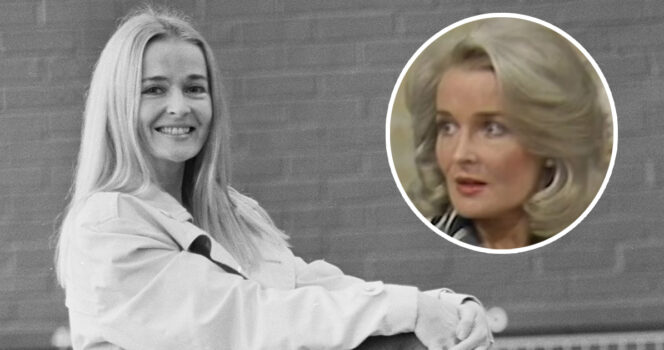
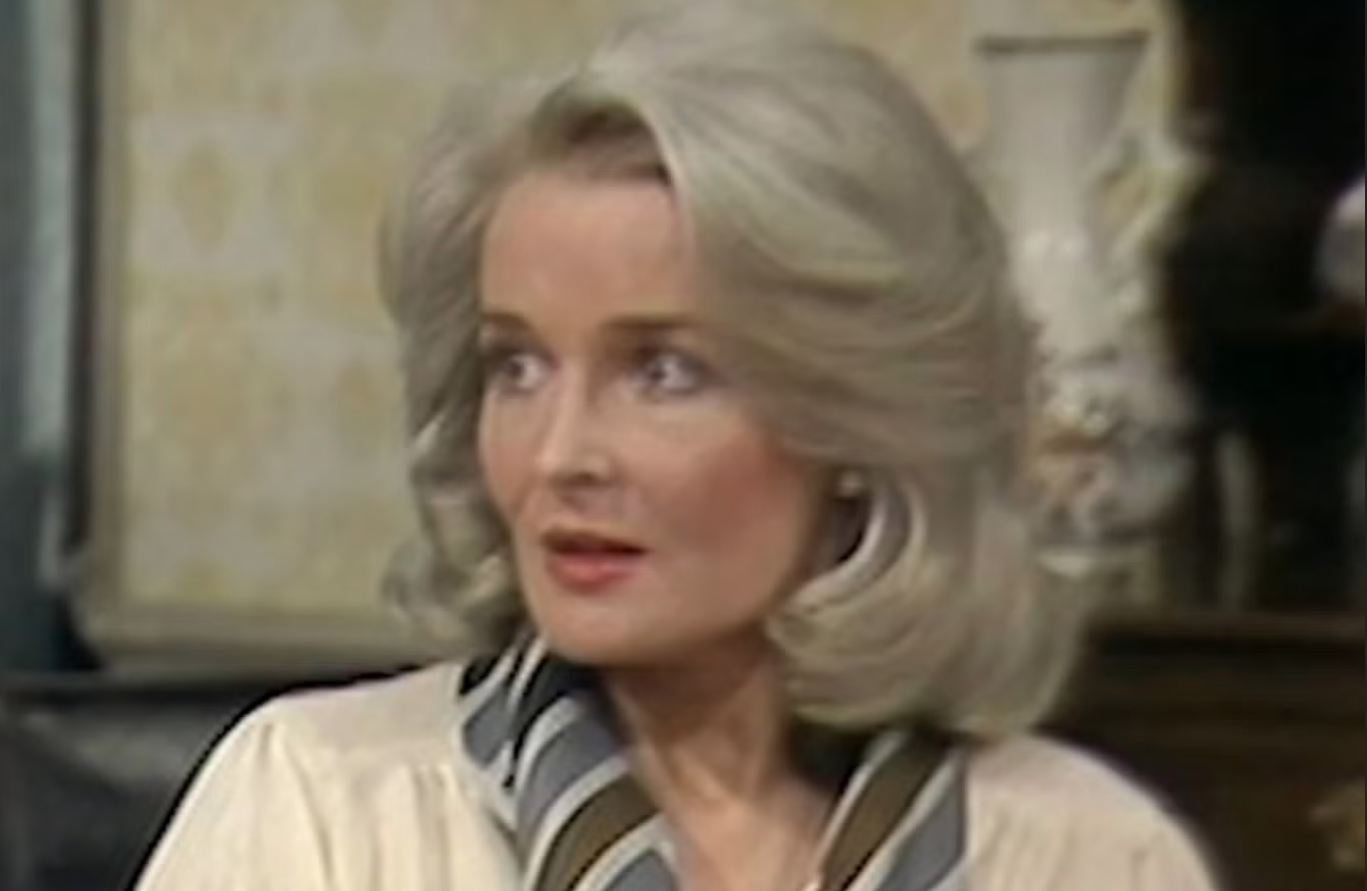
Scottish actress Claire Nielson, best remembered for her role in the beloved comedy series Fawlty Towers, has died at the age of 89.

Scottish actress Claire Nielson, remembered by generations of viewers for her appearance in the classic sitcom Fawlty Towers, has died at the age of 89. She passed away on April 29 after a long and varied career in television, theatre, writing, and the arts.

Born Claire Elizabeth Isbister in Glasgow in 1937, Nielson developed an early fascination with performance after seeing ballet as a child. She later trained at the Royal Scottish Academy of Dramatic Art before moving to London, where she worked with the influential Theatre Workshop.

In the 1960s and 1970s, Nielsen enjoyed a successful career in television. She appeared in several popular shows, including The Two Ronnies, The Dick Emery Show, Z-Cars, and Ghost Squad. Moreover, she also starred in the 1971 film Kidnapped, starring opposite Michael Caine

Credit: Britbox

While her agent had warned her that doing too many comedy roles could hurt her changes of getting a serious acting job, Nielson never regretted her choice.

“Back then, pretty young women who did light entertainment stopped being offered dramatic parts, but I’d always preferred comedy, so I didn’t care,” she told The Times.

Fawlty Towers actress Claire Nielson dies at 89

Comedy was the thing she loved the most, and by continuing to pursue those roles, she also cemented her place in television history in 1979.

Claire Nielson appeared in the third episode of the legendary show Fawlty Towers, called “Waldorf Sallad,” starring alongside John Cleese as Basil Fawlty.

Nielson appeared as the elegant Mrs. Hamilton, a sharp-minded American guest arriving with her husband, in the unforgettable episode “Waldorf Salad.” The episode features one of Basil Fawlty’s most explosive meltdowns, which many believed brought the show to a new level. Further, Many have stated Claire was an important part of one of television comedy’s best-loved episodes.

Outside of acting, Nielson had many creative hobbies. She was a talented painter, wrote and illustrated a children’s book, and co-wrote a book about being grandparents with her family. Moreover, she also helped create drama workshops for schools in Stratford-upon-Avon, loving to play the piano and cook.

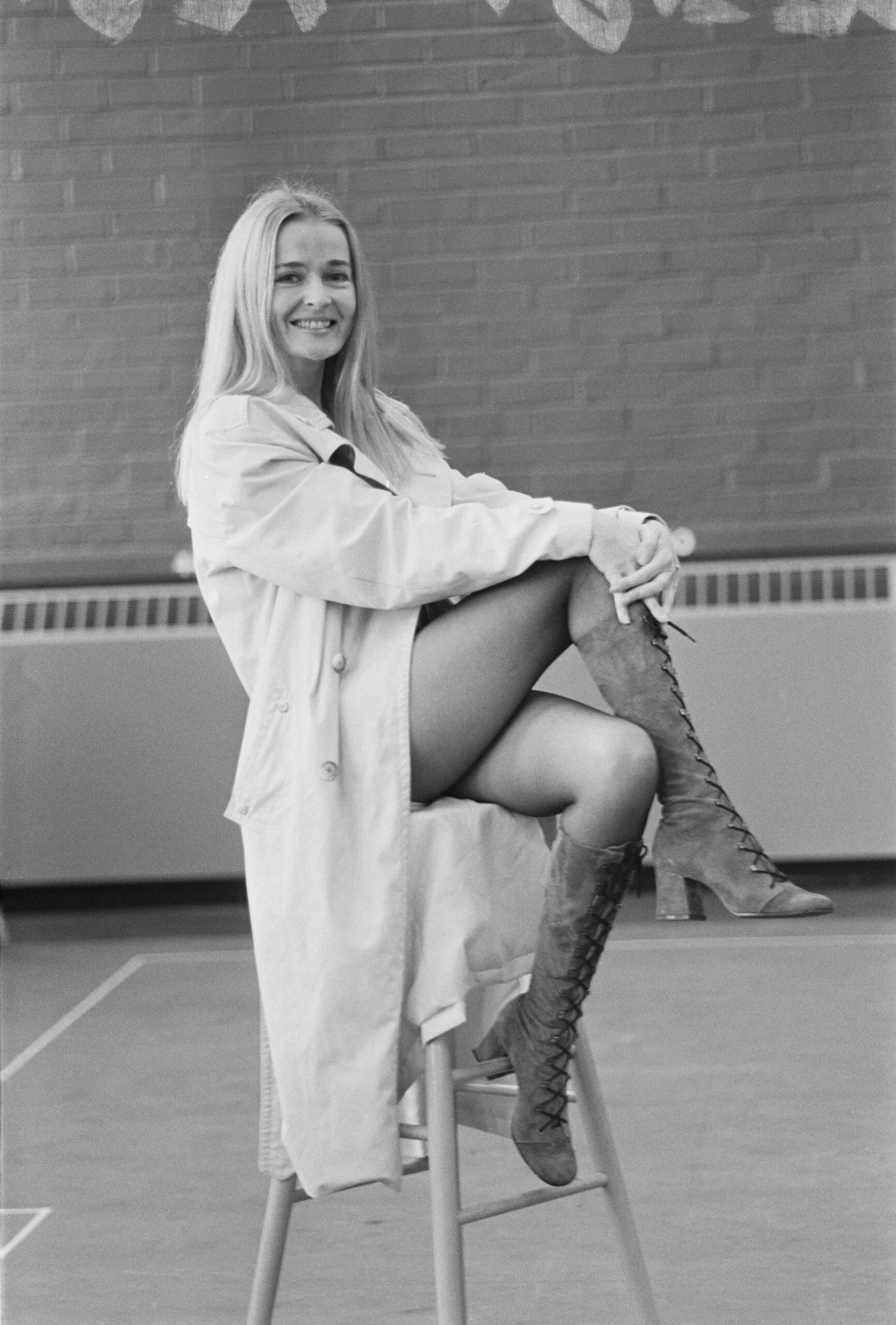
Scottish actress Claire Nielson, UK, 7th May 1971. (Photo by A. Cook/Daily Express/Hulton Archive/Getty Images)

In the 1980s, when Nielson was in her late forties, she enrolled at King’s College, Cambridge to study English literature. Meanwhile, her daughter studied at the same university.

Surived by husband and daughter

In the late stages of her life, Nielsen wrote and illustrated The House at Strone, a children’s adventure book, as well as a guide to grandparenting alongside her husband, actor Paul Greenwood, best known for the sitcom Rosie.

Nielson married twice – the producer Dennis Vance in the 1960s, and Greenwood in 1994. She is survived by husband Paul Greenwood and daughter, Peggy.

Rest in peace, Claire Nielson.

In the Middle of a Desperate Gunfire Attack on a Silent Stretch of Highway Where There Should Have Been Nothing but Wind and Asphalt, a Barefoot Boy Nobody Recognized Ran Straight Into the Path of Three Incoming Bullets to Save My Daughter’s Life, and as I Carried His Small, Shaking Body Toward the Hospital, I Found a Rusted Dog Tag Hanging From His Neck That Carried a Name I Had Burying Six Years Ago Along With My Own Brother

by


My name is Marcus Hale. I used to believe danger belonged somewhere far away from home, somewhere overseas, somewhere I could leave behind when I came back to raise my daughter. I was wrong. Because that night, on a quiet stretch of Highway 50 outside Reno, danger didn’t come from a battlefield. It came from the darkness above us—and from a past I thought I had buried forever.

PART 1

It started like any ordinary night. My daughter Sophie sat in the back seat of my truck humming softly, drawing circles on the fogged window with her finger. The road ahead was empty, swallowed by desert silence. No headlights. No traffic. Just wind brushing against asphalt like something waiting.

Then the gunfire began.

At first, I thought it was a tire exploding. Then another shot cracked through the night, sharper this time, followed by the unmistakable flash of a muzzle somewhere high on the ridge.

“Down!” I shouted, already moving before my mind caught up.

But Sophie didn’t even have time to react.

That was when I saw him.

A barefoot boy—thin, dirty, no older than thirteen—burst out from the side of the road like he had been running through the desert for hours. No shoes. No jacket. Just torn clothes clinging to a body that looked like it had already survived too much.

And he ran straight into the gunfire.

Not away from it.

Into it.

“Stop!” I yelled instinctively, but he didn’t listen. He didn’t even look at me.

He reached my truck just as the next shot fired.

And he pushed Sophie.

Hard enough to throw her backward into the seat, out of the path of the bullet.

The bullet hit him instead.

Then another.

And another.

Three shots in total.

I remember the sound he made more than anything else—not a scream, not a cry, just a breath that broke in half like something inside him had been snapped clean apart.

I ran to him without thinking. The shooter was still up there. Still firing. But none of it mattered anymore.

I dropped to my knees beside him on the gravel shoulder. Blood was already spreading beneath him, dark and fast. My hands pressed instinctively against the wounds, trying to hold him together, trying to stop something that was already slipping away too quickly.

He was impossibly light when I lifted him slightly, like the world had forgotten to finish building him.

His eyes opened for a moment—faded blue, unfocused, but strangely calm.

And then he whispered something that made everything inside me freeze.

“Is… Soph okay?”

Not Sophie.

Not even her full name.

“Soph.”

Only one person in my life had ever used that nickname.

My younger brother.

Caleb Hale.

A man I had buried six years ago after a highway incident that was never fully explained.

My hands stopped moving.

“What did you say?” I asked, my voice breaking in a way I didn’t recognize.

But the boy’s eyes were already drifting shut again.

Behind me, I heard my friend Dylan shouting into a radio. Sophie crying. Tires screeching as backup arrived. The shooter disappearing into the dark.

But all I could see was this dying child in my arms speaking a name that belonged to someone dead.

PART 2

We got him into the truck before I even realized what I was doing.

One moment I was kneeling in the dirt, the next I was holding him in the back seat, shouting at Dylan to drive.

“Hospital. Now.”

Sophie was alive. Shaking. Crying. But alive.

The boy, however, was slipping away fast.

Blood soaked through my shirt, warm and unstoppable. His breathing came in shallow, broken pieces. Every inhale sounded like it cost him something he couldn’t afford.

“Stay with me,” I kept saying, though I wasn’t sure if I was talking to him or myself.

The truck hit a bump, and something pressed hard against my wrist.

Metal.

I reached into his pocket without thinking.

And pulled it out.

A dog tag.

Old. Rusted. Scratched like it had been carried through years of violence and silence. The interior light flickered as Dylan sped down the highway, and for a moment, everything went still inside me.

Engraved on the metal was a name I had spent six years trying to forget.

Caleb Hale

My brother’s name.

My dead brother’s name.

The man I had watched lowered into the ground. The man I had identified myself. The man whose coffin I had carried.

I stared at it until the world blurred.

“That’s not possible,” Dylan said from the front seat, voice tight.

But I didn’t answer.

Because I was looking at the impossible in my arms.

A boy dying while wearing my brother’s identity.

Sophie was crying softly in the back corner of the truck, unaware of what was happening in my hands.

“How does a kid have that?” Dylan asked again.

I didn’t know.

And that terrified me more than the gunfire ever had.

The hospital lights appeared like a distant lifeline. We pulled in hard. Doors opened. Voices shouted. A trauma team rushed toward us.

They took him from my arms.

But before they did, his eyes opened one last time.

And he whispered again.

“Don’t let them take Soph.”

Then he went limp.

PART 3

Everything after that became noise.

Hospital corridors. Red lights. Orders shouted over each other. Sophie being pulled away by a nurse. Dylan answering questions I couldn’t hear properly.

I stood there covered in blood that wasn’t all mine, staring at my own hands like they belonged to someone else.

The boy was in surgery within minutes.

Critical condition. Three gunshot wounds. Internal damage.

But I wasn’t listening anymore.

I was holding the dog tag.

Caleb Hale.

My brother.

A doctor eventually approached me.

“Are you family?” he asked.

I almost laughed.

“No,” I said. “But he knows my family.”

That night, I went back into the trauma area while they were still working on him. I shouldn’t have been allowed in. But I didn’t care.

His belongings were in a tray.

A torn shirt. A small, folded piece of paper.

I opened it.

The ink was smeared, but one line remained readable.

A reference to a place I recognized. A name tied to a military file. And my brother’s name written again—this time not as someone dead, but as someone connected.

My hands started shaking.

“This can’t be real,” I whispered.

A monitor beeped sharply from inside the room.

The boy’s fingers twitched.

And then, impossibly, his lips moved.

“Marcus…”

I froze completely.

Only one person had ever said my name like that.

Caleb.

The monitor spiked.

Doctors rushed in.

I stepped back into the hallway, my entire body shaking as the truth began forming in the only way it could.

Slow.

Cruel.

Unavoidable.

The Barefoot Boy Took Three Bullets for My Daughter.

But he didn’t feel like a stranger.

And the dog tag around his neck suggested something far worse than coincidence.

Because whatever had happened six years ago on that highway…

was not over.

It had just come back to finish what it started.

Top Ad 728x90