I Slipped The Divorce Papers Under Her Door But Two Months Later A Hospital Emergency Note Changed Everything Forever
The crisp cream-colored envelope arrived without warning on a Tuesday morning in October, quietly slid beneath my apartment door while the world was still asleep. My name was written across the front in a delicate, unfamiliar script. The paper itself felt formal, far too gentle for the heavy revelation it carried. My stomach tightly clenched the exact second my eyes locked onto the return address: Riverside Memorial Hospital. Inside, a brief, staggering note read that my ex-wife, Rebecca, had listed me as her primary emergency contact, that she had been urgently admitted, and that she was asking for me. I read those lines three times before my legs remembered how to move. Exactly ninety days had passed since our divorce became official, ending a marriage that had slowly, agonizingly emptied both of us from the inside out. I walked out of that courthouse genuinely believing our story was over, but holding that hospital letter, I realized the past was nowhere near finished with me.
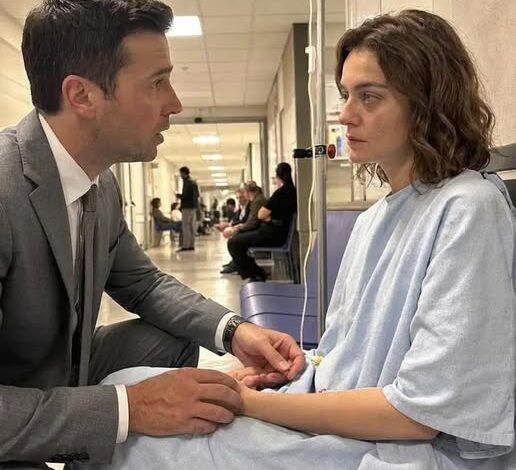
The frantic drive to Riverside felt like traveling backward through every version of us I had tried so hard to forget. I remembered Rebecca laughing on our very first date, waking me up with fresh coffee and terrible singing, and ultimately staring silently out of our bedroom window during the final year of our crumbling marriage while I stood behind her, building deep resentment because I thought she simply didn’t care anymore. I found her in the cardiac unit, looking heartbreakingly small inside a faded hospital gown. Her long dark hair hung loose around her shoulders, and the vibrant confidence that had once drawn me to her was entirely replaced by pure exhaustion. She looked up when the door clicked, her voice trembling as she whispered that I actually came. I stayed near the doorway, suddenly unsure if I possessed any legal or emotional right to step closer to her.
Rebecca lowered her eyes, confessing that she didn’t know who else to list. Her parents had passed away, her sister lived across the country, and old habits lasted far longer than legal documentation. An awkward, suffocating silence filled the room. We had once shared a bed, a kitchen, and a future, but now we barely knew how to share a room. When I finally asked what happened, she admitted that her heart had completely stopped. The medical team believed the cardiac crisis was directly connected to the chaotic way she had been using her prescriptions.
Over the next hour, Rebecca began spilling pieces of her soul that I had never known, even when I was sleeping right next to her. She described a crushing wave of anxiety that began in college and steadily grew into a monster she could no longer manage. There were horrific panic attacks at work, completely sleepless nights, and mornings where her mind was entirely depleted before the day even began. The medications helped at first, but when the fear kept returning, she desperately kept looking for stronger answers in absolute secrecy. What had nearly taken her life was not a single, dramatic event, but years of terrifying panic hidden beneath ordinary routines. She confessed that on the morning of her collapse, she was entirely overwhelmed by the shame of our divorce, believing she had completely failed at the most important relationship in her life.
I asked her why she had hidden it from me, why she chose to drown in total isolation. Rebecca finally looked at me, her eyes pooling with a decade of unread pain, and admitted she was terrified that I would leave her, or worse, that I would stay out of pure pity. As those words left her mouth, our entire marriage began to painfully rearrange itself in my memory. The mornings she stayed in bed claiming she was physically sick were not her avoiding responsibility; she was paralyzed. The dinners she abruptly canceled and the friends she stopped seeing were not signs of her pulling away from me; she was actively trying to survive a drowning mind. I had accused her of giving up, mistaking her defensive silence for a lack of love, completely blind to the fact that she was sinking quietly enough that I never reached out to grab her hand.
Later that evening, her physician, Dr. Patricia Chen, explained that Rebecca was exceptionally lucky to be alive. The medical team was working tirelessly to stabilize both her cardiac functions and the underlying consequences of medication misuse. Her long term recovery would require careful supervision, intensive mental health treatment, and an unyielding support system. Dr. Chen asked if she had any family nearby, and the brutal realization hit me that during our marriage, Rebecca had drifted away from everyone due to deep illness and shame. That night, I slept horribly in the hospital waiting area. Legally, I had no obligation to stay. We were divorced, and she was no longer my responsibility. But the woman in that bed was someone I had loved deeply, and I refused to leave her alone with her shame.
Over the next few weeks, as Rebecca grew physically stronger, we began having the brutally honest conversations we should have had years prior. She detailed her very first panic attack during our second year of marriage, explaining how ordinary tasks like answering phone calls, going to grocery stores, and keeping social plans slowly became insurmountable mountains. I attended her therapy sessions alongside her, learning from a specialist, Dr. Michael Roberts, about the vicious cycle of anxiety disorders, dependency, and the toxic fear of judgment that destroys relationships from the inside out. I had to face my own ugly part in her downfall. My frustration had turned into constant criticism, and my criticism had only made her more terrified to speak the truth. Without ever meaning to, I had helped build a home where she felt she had to hide her suffering to survive.
Six months after that initial hospital note, Rebecca and I built something entirely unexpected. We didn’t repair our marriage; that chapter had ended far too completely to ever be rewritten. What grew instead was something quieter, stranger, and infinitely more honest: a profound friendship rooted in absolute truth and healing. She found specialized support groups and slowly, the true Rebecca returned, but she was entirely different now. She was far less willing to perform wellness just to make other people feel comfortable.
The experience completely transformed me as well. I listen entirely differently now, paying close attention to silence instead of assuming I understand it. Rebecca has been firmly in recovery for over a year now, managing her health through therapy and a strong network. The end of our marriage was entirely necessary, but the divorce became merely a single chapter in a story about forgiveness and awareness. Sometimes understanding arrives too late to save the life you thought you wanted, but it arrives just in time to save your humanity and your capacity to love someone without needing the old story back.


0 comments:
Post a Comment