Top Ad 728x90

Sunday, May 31, 2026

It is with heavy hearts that we announce the passing of this legendary musician... - Check the comments 💔👇🏻

by


The Hammond B3 Finally Goes Silent, Why the Death of This Rock Legend Marks the End of an Era

The world of progressive rock has been plunged into a sudden, resonant silence. Christopher North, the founding keyboardist and undisputed sonic architect of the band Ambrosia, has passed away at the age of 75. To the casual listener, he was the man behind the keys, but to those who lived through the golden age of 1970s experimental rock, North was a “keyboard wizard” who didn’t just play music—he commanded the very atmosphere of the room. His death on April 2, 2026, has sent a shockwave through the industry, leaving bandmates devastated and fans worldwide mourning the loss of a man whose Hammond B3 organ was the heartbeat of a generation.

Ambrosia emerged from the fertile creative ground of Southern California in the early 1970s, a time when rock was shedding its simple blues roots and reaching for something more symphonic, complex, and profound. While many bands were content with standard three-chord progressions, Ambrosia sought to blend the technical precision of classical music with the soul of rhythm and blues. At the center of this ambitious sonic experiment stood Christopher North. He was the kind of musician you felt in your chest before his name even crossed your mind. When he sat behind his massive Hammond B3, he wasn’t just a performer; he was an alchemist, turning electricity and air into emotional landscapes that could wrap themselves around a listener and refuse to let go for decades.

North’s contribution to the band’s identity cannot be overstated. While Ambrosia is often remembered for their smooth, yacht-rock-adjacent hits like “How Much I Feel” and “Biggest Part of Me,” it was their early, progressive work that truly showcased North’s virtuosity. On their self-titled debut album and its follow-up, Somewhere I’ve Never Travelled, North’s organ work provided a roaring, weeping, and lifting foundation that set the band apart from their contemporaries. He had a unique ability to make a mechanical instrument sound human. Under his fingers, the Hammond B3 became a character of its own—one that could growl with aggressive intensity during a heavy jam or shimmer with a delicate, ethereal beauty during a ballad.

Beyond the stage lights and the thunderous applause, North was a man who lived with the same intensity he brought to his music. However, that intensity was often directed toward personal battles that the public rarely saw. He was a survivor in the truest sense of the word, having fought and won a grueling battle against throat cancer. This particular struggle was deeply poignant for a musician; throat cancer threatens the very breath and voice that connect a performer to their art. Yet, even as his physical health faced its greatest challenge, North’s spirit remained unyielding. He continued to find solace and strength in the music, proving that while the body may falter, the creative drive is often indestructible.

His bandmates, who spent decades traveling in cramped vans, sharing cheap hotel rooms, and performing on the world’s most prestigious stages, remember him as much more than a virtuoso. To them, he was a friend whose laughter could fill a room and whose dedication to the craft pushed everyone around him to be better. In the collaborative environment of a band like Ambrosia, where complex time signatures and intricate vocal harmonies were the norm, North was the glue. He possessed an intuitive understanding of space and dynamics, knowing exactly when to let the organ roar to the heavens and when to pull back and let a single, haunting note hang in the air.

The legacy of Christopher North is etched into the wax of every record he touched. His influence can be heard in the work of countless keyboardists who followed him, musicians who realized that the keys weren’t just for backing chords, but for creating a narrative. He belonged to a rare breed of instrumentalists who understood that technical skill is secondary to emotional delivery. Whether he was playing in a smoky, dimly lit club in the band’s early days or in a packed theater during their commercial peak, he treated every performance with a sacred reverence. He played as if every note might be his last, a quality that gave his music an enduring, timeless energy.

In the wake of his passing, the music community has rallied to celebrate a life lived in the service of sound. Tributes have poured in from fellow legends of the prog-rock era, all echoing a similar sentiment: North was an original. He didn’t follow trends; he set them. He didn’t just play the Hammond B3; he redefined what the instrument could do in a rock context. Today, as fans listen back to the soaring swells of “Holdin’ on to Yesterday” or the intricate textures of “Nice, Nice, Very Nice,” the loss feels particularly heavy. Those recordings are now more than just songs—they are the final, permanent echoes of a man who gave everything to his art.

The mystery of North’s final years—the quiet dignity with which he handled his recovery and the private nature of his later life—only adds to the aura of the “wizard.” He was never one to chase the hollow fame of the modern era. He was satisfied with the work, the friendship of his peers, and the profound connection he shared with his audience through the speakers. Even as the silence of his passing hits harder than any minor chord, there is a sense of completion in his journey. He survived the storms, he left his mark on the world, and he ensured that the name Christopher North would be synonymous with musical excellence for as long as people still value the sound of a roaring organ.

As we look toward the future of music, the absence of figures like North becomes increasingly apparent. We are losing the pioneers who built the foundation of modern rock, the men and women who experimented with sound when there were no roadmaps. Christopher North was a pioneer in every sense of the word. He explored the emotional depths of the keyboard, finding beauty in the distortion and grace in the volume.

The records will continue to spin, and the memories of his fire onstage will continue to tremble in the hearts of those who saw him live. Somewhere in those soaring organ swells, in the feedback and the sustain, Christopher North is still very much alive. He has transitioned from the physical stage to the eternal one, leaving behind a body of work that will continue to roar, weep, and lift audiences for generations to come. The “keyboard wizard” has laid down his wand, but the magic he created is permanent. The world is a quieter place without him, but it is infinitely richer because he was here.

Izraeli's president is confir....see more.

by


Tel Aviv on Edge, Verified Details Emerge Amid Rapidly Escalating Regional Conflict

The images and posts flooding social media can create the illusion that news is happening instantly, but when conflict escalates quickly, verifying facts becomes critical. In recent days, posts claiming immediate developments in Tel Aviv and surrounding areas have circulated widely, many citing unnamed officials or rapid “just now” updates. While these posts capture attention, it’s essential to separate viral claims from confirmed information and ongoing uncertainties. Doing so ensures accurate reporting and prevents the spread of misinformation, particularly during volatile events.

One of the central points of concern has been the Beit Shemesh incident. According to multiple credible sources, the area experienced a direct ballistic impact linked to Iranian launches. The attack, which occurred on March 1, 2026, resulted in nine confirmed fatalities and numerous injuries. Many victims were inside public shelters at the time, highlighting both the risks of attacks and the importance of civil defense infrastructure. Avshalom Peled, Deputy Commissioner and Jerusalem District Police Chief, provided detailed accounts of the sheltering procedures, emphasizing how these measures mitigated casualties despite the severity of the impact. Follow-up reports and official visits by Israeli authorities on March 2 have reinforced the verified nature of these accounts.

While some viral posts suggested that a synagogue collapsed onto a shelter beneath it, reporting from reputable outlets such as The Times of Israel indicates damage to the area, but structural conclusions remain unconfirmed. The safest summary, based on verified information, is that the strike affected a synagogue area and nearby shelter spaces, with many people inside, without asserting precise collapse details.

The broader context of this incident is a rapid escalation between Israel, the United States, and Iran. Military activity continues across the region, coupled with diplomatic maneuvers and humanitarian concerns. Israeli officials, including President Isaac Herzog, have underscored alignment with U.S. efforts to prevent Iran from advancing nuclear capabilities. Simultaneously, international humanitarian agencies and the United Nations have emphasized the importance of civilian protection, particularly for children, in areas of conflict.

Civil defense and shelter effectiveness have been a key part of the conversation. While shelters significantly reduce exposure to blasts and debris, their protective capacity depends on construction quality, location, and proximity to impacts. Officials note that no shelter can entirely eliminate risk, particularly under heavy bombardment, but their presence undeniably saves lives. Recent assessments of warning systems and interception capabilities are ongoing, aimed at reducing casualties in future incidents.

Social media continues to be a double-edged sword in this environment. Posts formatted to appear urgent often lack verification and may mix recycled content with new reports. Users are encouraged to rely on official statements from the Israeli presidency, major wire services such as Reuters, and established national outlets with on-the-ground correspondents. Named spokespeople and verifiable quotes remain the gold standard for confirming events.

In terms of reporting practices, news outlets and content creators should maintain a neutral tone, use phrasing such as “officials reported” or “according to sources,” and avoid speculative or emotionally charged language. Highlighting the role of shelters, civil defense preparedness, and ongoing verification processes helps readers understand the real risks and protective measures without sensationalism.

Verified developments from Beit Shemesh emphasize the human cost of the conflict. Nine confirmed fatalities, dozens of injuries, and widespread community disruption illustrate the severity of the situation. While uncertainty remains regarding some structural details, the consensus among major sources confirms that civilians were harmed while attempting to shelter, underscoring the unpredictable and dangerous nature of the attacks.

The rapid spread of information on social media underscores the challenge of distinguishing fact from rumor. Posts claiming “just minutes ago” updates or citing unidentified officials can amplify fear and confusion. Verification requires cross-referencing official government releases, statements from primary sources, and credible news outlets with established on-site reporting.

As the situation unfolds, public attention has rightly focused on the immediate humanitarian impact, the strategic implications of the attacks, and the broader regional tensions. The escalation between Israel and Iran, amplified by U.S. involvement, has implications not only for local populations but also for international security, diplomatic relations, and global attention.

In summary, verified reports confirm that:

  • President Isaac Herzog visited impacted sites, including Beit Shemesh, reinforcing official information and providing firsthand assessments.
  • Multiple credible outlets report nine fatalities and numerous injuries, with many victims sheltering during the attack.
  • Damage occurred in a synagogue area and connected shelter spaces, though structural collapse remains unconfirmed.
  • The Beit Shemesh incident is part of a broader Israel–U.S.–Iran escalation involving military, diplomatic, and humanitarian dimensions.

For those following updates, the guiding principles remain: prioritize verified information, understand the limits of civil defense measures, and interpret social media posts cautiously. Responsible reporting ensures public understanding of real risks, ongoing developments, and humanitarian considerations while avoiding the spread of unverified claims.

This conflict serves as a reminder that rapid, real-time updates, while compelling, must always be measured against credible evidence. The situation in Tel Aviv and Beit Shemesh illustrates how quickly circumstances can escalate, the critical role of shelters and civil defense, and the need for clear, verified information to navigate crises safely .

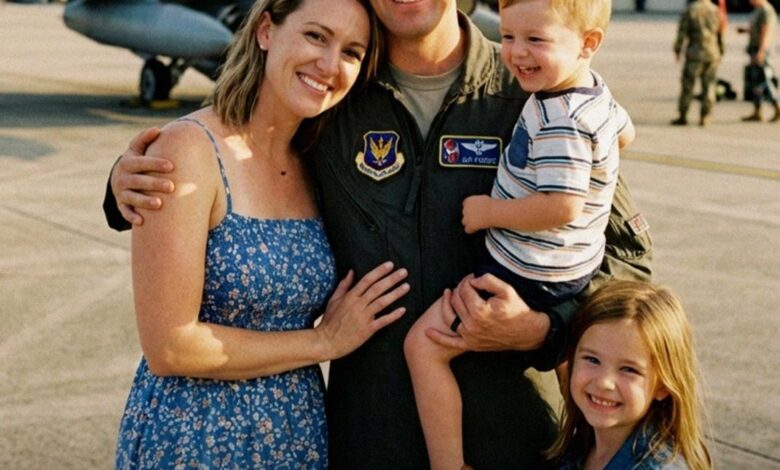
Gifts started appearing on my doorstep after my husband died — I had no idea who was leaving them until my children cried, "IT’S DADDY! He comes at night!" After my husband died, it felt like our home died with him. Noah was a military pilot, an American Air Force pilot who went on a combat mission and never came back. For our family, it was a devastating tragedy. We couldn’t come to terms with his death. And then strange gifts started appearing on our doorstep. At first, it was a bouquet of my favorite wildflowers — the exact kind Noah used to bring me for no reason at all. The next day, there was a small plush airplane for our son, Ben. Then a doll in a blue dress for our daughter, Mia. And a day later, a packet of hot cocoa appeared with a note that had no name on it: "For the bravest mom." It happened every single day. The children lit up with hope. "Mommy, it’s Daddy," Mia whispered, clutching her new toy to her chest. "I heard him outside at night," Ben said seriously. "He just can’t come inside yet." I held them close and told them Daddy would always love us, even if he couldn’t be here with us. But inside, my chest tightened because I knew that couldn’t be true. So one night, I decided not to go to bed. I turned off the lights, sat by the window, and waited. Around midnight, a shadow moved across the yard. Someone stepped carefully onto the porch, placed a small paper package by the door, and turned to disappear into the dark. I ran outside barefoot and grabbed the person by the sleeve. "WHO ARE YOU? What are you doing in my yard?" They spun around. I saw their face — and my breath caught in my throat. "You?... How is this even POSSIBLE?!" What happened next nearly made my legs give out.

by


The Invisible Hand in the Dark, Why a Fallen Pilot’s Commander Was Sneaking onto His Widows Porch at Midnight

Grief is rarely the loud, crashing wave we see in movies; more often, it is a quiet, suffocating fog that settles into the corners of a home. For Lilian, the silence following the death of her husband, Noah, was deafening. Noah had been a dedicated Air Force pilot who lived for the sky, but a combat mission gone wrong left his family grounded in a reality they weren’t prepared to face. In the wake of the tragedy, the initial flurry of support from friends and neighbors eventually faded, leaving Lilian alone with her eight-year-old son, Ben, and six-year-old daughter, Mia. She was drowning in a loss she couldn’t explain to her children, unaware that the silence of their lives was about to be broken by a series of impossible gifts.

It began months after the funeral. One morning, Lilian opened her front door to find a bouquet of wildflowers resting on the porch—the exact variety Noah used to bring home for no reason at all. There was no card, no sender, just the vibrant colors of a memory. The next day, a small plush airplane appeared, followed by a doll in a blue dress—the specific one Mia had been eyeing in stores. Then came a packet of cocoa with a note that read, “For the bravest mom.” These weren’t random acts of charity; they were surgical strikes of comfort, so personal that Lilian began to feel a creeping sense of unease.

While Mia began to believe that her father was visiting them at night, Ben became uncharacteristically serious. Lilian knew she couldn’t let the mystery continue. Driven by a mix of protective instinct and desperation, she stayed awake one night, sitting in the dark by the front window. Around midnight, a shadow detached itself from the yard. A figure stepped onto the porch, placed a package, and turned to flee. Lilian didn’t hesitate; she sprinted outside and grabbed the stranger’s sleeve. When the figure turned, her legs nearly gave out. It was Doug, Noah’s commanding officer.

The confrontation was fraught with tension. Doug, a man defined by military composure, looked exhausted and caught. He handed Lilian the final package—a weathered notebook that belonged to Noah. Doug explained that before his final mission, Noah had tucked the notebook into Doug’s luggage with a simple, haunting request: “If anything ever happens to me… check on them. Not once. Not as a duty. But properly.” Doug admitted that he had initially failed that mission. Paralyzed by his own grief and the weight of his responsibility, he had stayed away, convincing himself that Lilian had enough support. But months later, he finally opened the notebook and realized Noah hadn’t just asked for a check-in; he had left a roadmap for their care.

The notebook was filled with Noah’s intimate observations of his family’s vulnerabilities. He wrote about Mia’s fear of a quiet house, Ben’s habit of pretending to be okay, and Lilian’s tendency to carry the world on her shoulders. Armed with these insights, Doug began his nightly “missions” to deliver the specific items Noah had mentioned. He hadn’t intended to be seen, wanting the comfort to feel like a whisper from Noah himself rather than a calculated act of a commanding officer.

However, the discovery took another shocking turn when a small shadow appeared in the hallway. Ben had been watching. It was revealed that the eight-year-old had caught Doug on the very first night and, instead of telling his mother, had entered into a secret alliance with the officer. Ben had been leaving notes for Doug in a hidden tin box behind a fence panel, giving him “intel” on what the family needed: “Mia likes dolls with blue dresses,” “Mom used to drink cocoa at night,” and “Can you come later? Mom almost saw you.” Ben had carried the secret alone, terrified that if the mystery ended, the smiles on his sister’s face would vanish.

The revelation broke the cycle of secrecy. Lilian realized that while she was trying to protect her children, they were trying to protect her. The next day, they brought the truth into the light. Doug was invited for a proper visit, no longer a shadow in the night but a tangible link to the man they had lost. Mia was told the truth about the gifts, and while she was momentarily saddened that they didn’t come directly from heaven, she found peace in knowing that her father’s love was still active through his friends.

In the weeks that followed, Doug became a steady presence in their lives—not as a replacement for Noah, but as the fulfillment of a final promise. He stayed for dinners, helped Ben with school, and sat with Mia during her drawings. He helped Lilian navigate the paperwork and the emotional hurdles of widowhood, finally acting on the instructions Noah had left behind.

A month later, the family stood together at Noah’s grave. Ben spoke about his school projects, and Mia told her dad about her doll and how she wasn’t scared of the quiet anymore. When it was Lilian’s turn, she placed a bouquet of wildflowers by the stone and whispered, “We’re okay, my love.” For the first time since the crash, the words felt true. They weren’t the same family they were before, but they were steady. Noah hadn’t expected them to survive the grief alone; he had ensured that even in his absence, his hands were still reaching out through the people who respected him most. Through a commander’s guilt and a son’s bravery, a fallen pilot’s final mission was finally complete.

Rich old man marries a young man, two days later he is found without... See more

by

From Fairy-Tale Wedding to Tragic Headlines, The Shocking Incident That Has an Entire Community Reeling

The neighborhood was still buzzing from the wedding just days before. Flowers had been carefully arranged, laughter had echoed through the streets, and neighbors had marveled at the elegance of the celebration. But what started as joy and festivity quickly gave way to shock, confusion, and unease. In a matter of days, the idyllic scene had transformed into something almost unrecognizable—an incident that left everyone questioning what they thought they knew about the couple, their lives, and the fragile boundary between fortune and misfortune.

Social media erupted almost immediately. Friends, distant acquaintances, and complete strangers flooded platforms with speculation, theories, and fragments of information. Hashtags referencing the couple’s sudden misfortune began trending locally, a digital echo of public fascination with events that combined wealth, romance, and tragedy. People scrolled, shared, and commented, trying to piece together a narrative from the few verified details available. It was a reminder of how quickly private pain can become public spectacle in today’s connected world.

Yet amidst the chatter, many voices urged caution. “We don’t know the full story,” one neighbor told reporters, asking to remain anonymous. “All we see is a tragic situation unfold in a matter of days. It’s heartbreaking, and I hope the investigation sheds light soon.” Across the community, similar sentiments were shared. People felt a mix of curiosity and empathy, aware that jumping to conclusions could distort reality—and possibly harm those involved.

The rapid shift from celebration to catastrophe also sparked broader conversations about human relationships, trust, and vulnerability. Large age gaps, once a quiet curiosity among observers, became a focal point for public discussion. People debated the dynamics of such relationships, wondering how differences in life experience, expectations, and social perception could shape outcomes in ways that outsiders rarely understand. Experts on social behavior note that tragedies involving couples with significant age differences often attract outsized attention precisely because they intersect with societal notions of wealth, morality, and power.

Neighbors described a sense of disbelief. Streets that had once been filled with chatter about wedding plans now carried a muted tension, punctuated by hushed conversations and the occasional glance toward the couple’s home. Residents found themselves caught between normal routines and an undercurrent of anxiety, unsure how to process the sudden change. Local shops noticed a spike in questions, with patrons asking cautiously if anyone had details, reflecting the community’s urgent need for clarity in a moment of uncertainty.

Social media, for all its immediacy, offered conflicting narratives. Some posts suggested conspiracies or dramatic backstories, while others aimed to humanize the couple, highlighting their charitable work or family connections. The variety of accounts underscored the challenge of separating fact from rumor. Investigators and journalists emphasized the need to rely on verified sources rather than viral content, noting that unverified claims could inflame emotions and spread misinformation in a community already on edge.

The impact of the incident rippled beyond immediate neighbors. Local authorities reported receiving calls from residents concerned for their own safety and seeking updates. Community leaders, aware of the heightened anxiety, began organizing meetings and informal gatherings to provide accurate information and foster dialogue. These discussions often touched not only on the event itself but on the larger questions it raised—how communities respond to sudden crises, the role of digital media in shaping perception, and the ethics of public curiosity.

While the investigation remains ongoing, several themes have emerged. One is the fragility of trust. Many residents admitted that they had assumed stability based on appearances—well-maintained homes, visible celebrations, and the outward signs of a prosperous life. The incident shattered those assumptions, revealing that appearances, no matter how polished, can conceal vulnerability and unforeseen challenges.

Another theme is the collective processing of tragedy. Human beings are wired to seek patterns, to understand causality even when it is unclear. The neighborhood’s response—from social media speculation to in-person conversations—reflects a community trying to make sense of events that seem almost unreal. Experts in social psychology note that these reactions are natural; communities instinctively seek to integrate shocking events into their collective narrative, attempting to regain a sense of control.

The public’s fascination also underscores society’s complicated relationship with wealth and romance. Stories that combine these elements, particularly when followed by unexpected misfortune, trigger a unique mix of emotions: envy, curiosity, moral judgment, and empathy. This dynamic was evident in online discourse, where posts ranged from sympathetic to speculative, reflecting a spectrum of human responses to high-profile personal events.

Amid the frenzy, some neighbors emphasized empathy over judgment. Community members encouraged restraint, reminding others that the couple’s experience was deeply personal. “We may see the headlines, but we don’t live their lives,” one local said. “All we can do is hope for clarity, justice, and healing.”

The conversation also extended to broader societal questions. Why do certain tragedies capture public attention more than others? How does social media amplify curiosity and anxiety? And what responsibilities do individuals have when sharing information about private lives? These discussions, while abstract, have tangible effects, influencing how the neighborhood navigates ongoing tension and uncertainty.

In practical terms, residents have taken steps to restore a sense of safety and normalcy. Neighborhood associations have increased communication with authorities, local schools have held meetings to address student questions, and community groups have organized support for those directly affected. These measures reflect a proactive approach, combining empathy with practical action to help the community process a rapidly evolving situation.

As the investigation continues, one lesson is clear: sudden incidents, especially those involving wealth, romance, or unusual circumstances, can ripple through a community in unexpected ways. Social media, while a powerful tool for information, can also amplify fear and speculation, making the careful verification of facts essential.

For the neighborhood, life is slowly returning to routine, but the sense of shock lingers. Residents report conversations tinged with caution, glances toward familiar houses that now feel unfamiliar, and a collective awareness that stability is more fragile than previously assumed.

Ultimately, the incident in this community is a reminder of the complexity of human experience. Joy and tragedy can coexist in rapid succession. Trust can be tested in an instant. And a single event can transform not only the lives of those directly involved but also the perceptions, conversations, and emotional landscape of an entire neighborhood.

As neighbors, social media users, and citizens, the challenge is to navigate these moments responsibly—separating verified information from rumor, practicing empathy, and allowing time for clarity to emerge. In doing so, a community can maintain cohesion, support those affected, and ensure that even amid shock and uncertainty, compassion and understanding remain at the forefront.

The story of the couple’s sudden misfortune, and the neighborhood’s response, is far from over. Investigators continue their work, facts are still being confirmed, and the emotional impact lingers. For now, residents remain alert, reflective, and, above all, aware that the events unfolding before them are a stark reminder of how quickly life can change—and how communities respond to such changes defines their resilience and character.

Michael Jackson's daughter has broken her silence- My dad used to...See more.

by


The Mask Falls, Why Paris Jackson Is Risking Everything to Expose the Chilling Truth About Her Fathers Death and Her Own Dark Past

For years, the world knew Paris Jackson only as the veiled child clinging to her father’s hand, a small figure hidden behind surgical masks and the towering shadows of security details. She was the living symbol of Michael Jackson’s desperate attempt to preserve innocence in the face of a predatory global obsession. But today, the veils have been shredded. In a series of raw, unflinching revelations that have sent shockwaves through Hollywood and beyond, the daughter of the King of Pop has stepped into a different kind of spotlight—one fueled by radical transparency and a refusal to be silenced. Paris is no longer playing the role of the grieving heiress; she has emerged as a survivor, exposing a legacy of scars that include addiction, self-harm, sexual assault, and a haunting, forensic conviction that her father was murdered.

The transition from a shielded childhood to a turbulent adulthood has been anything but graceful for Paris. She describes her journey not as a rise to fame, but as a grueling reclamation of her own humanity. For much of her youth, her skin was a battlefield of self-hatred, marked by the physical manifestations of a mental health struggle that nearly claimed her life. Today, those battlegrounds are covered in an intricate map of tattoos—over fifty pieces of art that serve as a living archive of her survival. Each needle stroke represents a deliberate act of taking back her body from the traumas that tried to break it. She has transformed her private horrors into public testimony, speaking openly about the suicide attempts that punctuated her teenage years and the devastating sexual assault she endured at the age of fourteen at the hands of a complete stranger. By naming these demons, she has stripped them of their power, offering a sanctuary of truth for others navigating similar darkness.

However, it is her stance on her father’s legacy that has reignited a firestorm of controversy and intrigue. While the official narrative of Michael Jackson’s 2009 passing points to acute propofol intoxication under the care of a personal physician, Paris remains steadfast in her belief that there is a more sinister truth beneath the surface. She has broken her silence to claim that her father was “setup” and ultimately murdered. This isn’t the emotional lashing out of a grieving daughter, but a conviction she describes as “forensic” and shared by those closest to the pop icon. She recalls her father dropping hints that people were “out to get him,” describing a climate of fear and paranoia that permeated the final months of his life. To Paris, the official story is a convenient mask for a much larger, more terrifying conspiracy—one she is determined to unmask, regardless of the institutional weight stacked against her.

Navigating the world as the daughter of the most famous man on earth is a task Paris describes as a “game of chess” rather than a birthright. She is acutely aware that her every move is scrutinized, her every word dissected for signs of the eccentricities that defined her father’s public image. Yet, she refuses to play the victim. She has embraced her platform to challenge the myths that have surrounded her family for decades, insisting on a narrative that is hers and hers alone. Her loyalty to Michael Jackson remains unwavering, and she defends his memory with the same unflinching honesty she applies to her own struggles. She views her father not as the caricature created by tabloid media, but as a man who was deeply human, vulnerable, and ultimately failed by the systems that profited from his genius.

The scars of addiction have also played a significant role in Paris’s narrative. Growing up in the fishbowl of Neverland and later the intense scrutiny of the Jackson family estate, she turned to substances to numb the overwhelming pressure of her reality. Her journey through recovery has been a cornerstone of her public identity, as she uses her experiences to advocate for mental health awareness. She speaks of the “void” left by her father’s death—a hole that no amount of fame or fortune could fill. By sharing her path through rehabilitation and the ongoing work of staying centered, she has become a beacon for a generation struggling with the same quiet epidemics of self-harm and substance abuse.

Paris Jackson’s emergence as a voice of dissent and resilience marks a turning point in the Jackson family saga. She has moved beyond the global memorial service where she first captured the world’s heart with her tearful goodbye to her “Daddy.” Now, she is a woman who understands that true protection doesn’t come from masks or security guards, but from the power of a story told without shame. She is navigating the intersection of grief and suspicion, building a life that is defined by her own resilience rather than her father’s downfall. Her words are the knife that cuts through the layers of myth, revealing a person who is terrifyingly beautiful and painfully human.

As she continues to challenge the official story of her father’s death, Paris is also building a career in music and modeling that allows her to express her internal world on her own terms. She recognizes that she will always be Michael Jackson’s daughter, but she is no longer content to be a secondary character in his tragedy. She is a survivor who has walked through the fire and come out the other side with her eyes wide open. Her conviction that her father was murdered is a heavy burden to carry, but it is one she bears with a sense of duty to the man who tried so hard to protect her from the very world she now confronts.

The world may never get the definitive answers Paris seeks regarding the end of the King of Pop’s life, but her refusal to let the conversation die is a testament to the bond they shared. She is a woman on a mission, transforming the legacy of Neverland into a legacy of truth. By exposing her own vulnerabilities—the sexual assault, the addiction, the self-harm—she has earned the right to speak on the most difficult topics. She is no longer the shielded child; she is the warrior at the gate, insisting that the world look past the mask and see the reality of a life lived under the most intense pressure imaginable. Paris Jackson is not just surviving fame; she is redefining it as a tool for justice and healing, proving that even the deepest scars can be turned into a map toward a better, more honest future.

With heavy hearts, we announce the passing of this beloved Blue Bloods actor and comedian. Check the first comment ⤵️

by


The Laughter Stops, Why Comedian Alex Duongs Final Heartbreaking Post Is Going Viral After His Sudden Death at 42

The world of comedy is often a mask, a vibrant facade of wit and timing used to deflect from the somber realities of the human condition. For Alex Duong, laughter was more than just a career; it was a lifeline, a way to connect with a global audience that saw him as a beacon of irreverent joy. However, the stage lights have dimmed prematurely for the celebrated actor and stand-up comic. At just forty-two years old, a point in life where many performers are only beginning to hit their creative stride, Duong has passed away following a harrowing and private struggle with a rare, aggressive form of cancer. The news has sent a shockwave through the entertainment industry, leaving fans and colleagues to grapple with the sudden silence of a voice that was supposed to echo for decades to come.

Alex Duong’s journey through the comedy circuit was one defined by authenticity and an uncanny ability to find humor in the mundane and the tragic alike. He was a staple of the underground scene before breaking into the mainstream, known for a style that was as sharp as it was self-deprecating. His peers often described him as a “comedian’s comedian,” the kind of performer who spent as much time perfecting a single inflection as others spent on entire sets. But behind the punchlines and the applause, a much grimmer reality was unfolding. The diagnosis of a rare cancer is a sentence that carries a weight most cannot fathom, yet Duong chose to navigate much of his battle away from the relentless scrutiny of the tabloid press, maintaining a dignity that defined his final chapters.

In the wake of his passing, the digital footprint he left behind has taken on a haunting new significance. Fans have flocked to his social media profiles, seeking a final connection to the man who made them laugh through their own dark times. One post in particular—his final message to the world—has resurfaced with a weight that has left the internet in tears. In the cryptic yet deeply personal style that was his trademark, Duong’s last words to his followers seem to acknowledge the encroaching shadows while reaching out for one last moment of shared humanity. It is a post that speaks to the resilience of the human spirit, a final curtain call from a man who knew his time was short but refused to let his spirit be extinguished before the final bow.

The tragedy of Duong’s death at forty-two highlights a recurring theme in the entertainment world: the fragility of those who dedicate their lives to the happiness of others. The aggressive nature of his illness meant that his decline was swift, a stark contrast to the high-energy persona he projected on screen and stage. Medical experts often point out that rare cancers present a unique set of challenges, often going undetected until they have reached a stage where conventional treatments struggle to keep pace. For Alex, the battle was fought with the same tenacity he brought to his career, but even the strongest will can be overwhelmed by the relentless progression of such a devastating disease.

As the tributes pour in from around the globe, from legendary headliners to the fans who saw him perform in small, smoke-filled clubs, a picture emerges of a man who was deeply loved not just for his talent, but for his character. Colleagues have shared stories of his generosity, his willingness to mentor younger comics, and his unwavering belief that a good joke could bridge any divide. He was a performer who understood that comedy is a serious business, a responsibility to hold up a mirror to society and find the absurdity in our shared struggles. His loss leaves a void in the industry that will be felt in every writers’ room and on every stage where he once stood.

The resurfacing of his final post has triggered a broader conversation about health, mortality, and the legacy we leave behind in the digital age. In a world where every moment is curated for public consumption, Duong’s final message stands out for its raw, unvarnished honesty. It serves as a reminder that behind every public figure is a person dealing with the same fears and hopes as everyone else. The “final post” phenomenon is a uniquely modern form of grieving, allowing the public to engage with a celebrity’s last thoughts as if they were a private conversation. For those who loved Alex’s work, that final post is a treasure, a last piece of the puzzle that was his life.

Grief in the comedy community is a complicated thing. There is a tendency to want to “joke through the pain,” to honor a fallen comrade with a roast rather than a eulogy. But with Duong, the pain seems too fresh for the usual comedic armor. His death is a reminder of the “mask of the clown,” the idea that those who provide the most laughter are often the ones carrying the heaviest burdens. By choosing to keep his illness relatively private, Alex ensured that when the world thought of him, they thought of the joy he provided, rather than the pain he endured. He protected his audience until the very end, a final act of grace from a man who spent his life serving the public’s need for an escape.

The legacy of Alex Duong will not be defined by his illness, but by the thousands of hours of laughter he generated across a career that was cut far too short. His work in film and television stands as a testament to his versatility as an actor, while his stand-up specials remain a gold standard for observational humor. As the industry moves forward, his influence will be seen in the next generation of comics who grew up watching his fearless approach to the craft. He taught a generation that you can be funny without being cruel, and that the best comedy comes from a place of profound empathy.

As we look back at that final post and the outpouring of love that has followed his death, it is clear that Alex Duong achieved the ultimate goal of any artist: he made people feel less alone. Whether through a television screen or from a stage in a crowded city, he reached out and touched the lives of strangers, making the world a slightly brighter place for forty-two years. The aggressive cancer may have taken his body, but it could not touch the impact he made on the culture. He leaves behind a body of work that will continue to provide comfort and joy long after the headlines of his passing have faded.

The laughter may have stopped for Alex Duong, but the echoes of his wit will remain. In the silence that follows the loss of such a vibrant talent, we are reminded to cherish the voices that make us smile, to appreciate the bravery it takes to stand in front of a crowd and bare one’s soul for the sake of a laugh. Alex Duong was a master of that craft, a warrior of the spirit who fought his final battle with the same courage he brought to every performance. He is gone far too soon, but in the annals of comedy, his name will forever be synonymous with resilience, talent, and a life lived with an open heart. The curtain has fallen, but the applause, rightfully, continues.

At 18, Barron Trump FINALLY Admits What We All Suspected...See more

by


Beyond the Gilded Cage, Why Barron Trumps 18th Birthday Revelation Has Shattered Every Conspiracy Theory and Left Washington Speechless

For nearly two decades, Barron Trump has existed as the ultimate enigma of American political life. While his siblings navigated the relentless glare of the spotlight—managing businesses, speaking at conventions, and battling on the front lines of social media—the youngest Trump remained a silhouette in the background. He was the tall, silent figure walking across the White House lawn, the face shielded by security details, and the subject of endless speculation, projection, and digital debate. But as he reaches the pivotal milestone of eighteen, the silence that defined his childhood has finally been broken. What Barron has revealed isn’t the dramatic political manifesto or the scandalous confession many expected; instead, it is a calm, unsettlingly precise declaration of independence that has fundamentally shifted the public’s understanding of his journey.

The world has spent years attempting to draft a script for Barron Trump. Some imagined him as the reluctant heir to a real estate empire, others as a future political heavyweight, and many more as a young man trapped by the gravity of a legacy he never chose. However, in a rare and deliberate moment of openness, Barron has pulled back the curtain just enough to expose the reality of growing up as a national symbol rather than a son. He describes a life lived as a headline instead of a human being, where every growth spurt and wardrobe choice was dissected by millions of strangers. In this environment, he reveals that silence wasn’t a lack of personality or a sign of shyness; it was his primary form of armor. Choosing to stay quiet allowed him to exist in a private world, even while standing under the most intense floodlights on the planet.

Barron’s admission highlights a level of self-awareness that is rare for any eighteen-year-old, let alone one raised in the center of a global hurricane. He explains that while the public was busy arguing about his future, he was busy watching, listening, and thinking. He allowed himself to grow in the shadows of a family that is constantly under microscopic scrutiny, developing a perspective that is distinctly his own. His refusal to be defined by his father’s shadow or his family’s reputation is perhaps the most shocking revelation of all. He is not promising a grand entrance into the family business or a familiar path toward political office. Instead, he is demanding the right to be uncertain, to explore, and to change his mind as he navigates the complexities of early adulthood.

As he steps into the world as a legal adult, Barron is drawing a clear, uncompromising boundary between his public persona and his private self. He has made it clear that his future will not be a public project for the masses to monitor. Whether his path leads him into corporate boardrooms, scientific laboratories, athletic stadiums, or a field that no one has yet predicted, it will be a decision made behind closed doors. He is reclaiming the agency that was taken from him the moment he became a public figure as a child. This stance is a direct challenge to the modern “influencer” culture that often consumes the children of the elite, signaling a preference for substance over optics and privacy over performance.

The psychological weight of his upbringing is a recurring theme in his recent reflections. To be a Trump is to be a person of interest to half the world and a person of disdain to the other half, often before you have even spoken a word. Barron acknowledges this polarization with a maturity that suggests he has spent a long time processing the unique pressures of his position. He understands that for many, he is a blank canvas upon which they paint their own political hopes or fears. By speaking out now, he is effectively taking the brush back. He is informing the world that he is not a character in a reality show or a chess piece in a political game, but an individual with a future that remains entirely unwritten.

This new chapter for Barron Trump comes at a time when the American public is increasingly fascinated by the private lives of political dynasties. Yet, Barron seems uniquely disinterested in the typical trappings of fame. His revelation suggests that he values the power of the “unseen” life. While his peers might chase viral moments and digital engagement, he is signaling a retreat toward intellectual and personal rigor. He is essentially admitting what many suspected: that beneath the quiet exterior was a sharp, observant mind that was carefully calculating its own exit from the expectations of the masses.

The significance of his words lies in their precision. He doesn’t offer the loud, aggressive rhetoric that has become a hallmark of contemporary political discourse. Instead, he uses a calm, measured tone that commands a different kind of attention. It is the voice of someone who knows exactly who they are because they have spent years protecting that identity from outside interference. He is not asking for permission to be himself; he is stating it as an immutable fact. This has left pundits and observers on both sides of the aisle scrambling to adjust their narratives. The “silent son” is gone, replaced by a young man who understands that the most powerful thing you can do in a world that demands everything from you is to keep your true self for yourself.

Ultimately, Barron Trump’s admission is a masterclass in boundary-setting. He is a young man who has lived through historical events that most people only read about in textbooks, and he has emerged with a desire for a life that is authentically his. He is promising a journey of exploration that may take him far from the familiar towers and podiums of his youth. By choosing to reveal himself only on his own terms, he has ensured that when he does speak again, the world will have no choice but to listen. His future is no longer a matter of public debate; it is a private venture, and he is the only one with the key. In the end, Barron Trump has proven that the most radical thing a member of a famous family can do is to insist on being a person first, and a legacy second.

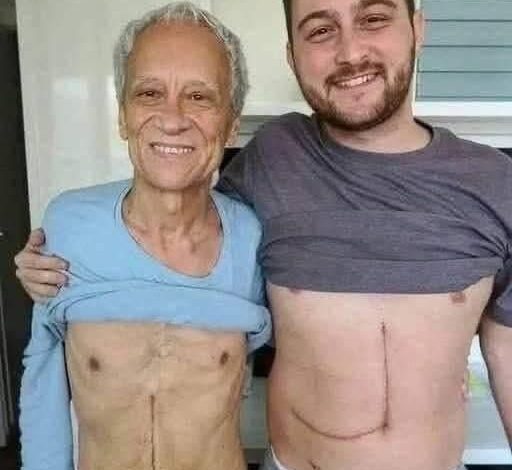
Son who donated part of his liver to his father unfortunately ends up fa... See more

by


SON WHO SAVED HIS DYING FATHER FACES TRAGIC AFTERMATH AFTER LIFE SAVING ORGAN DONATION

What started as a breathtaking act of pure, selfless love has spiraled into an absolute nightmare that has left an entire community reeling in disbelief and sorrow. A devoted son who stepped forward to donate part of his own liver to save his fading father believed he was granting his parent a second chance at life, but the procedure has instead triggered a chain of events that has placed the young man himself in a critical fight for survival. This heart wrenching story of heroism and unintended consequences has shaken families to their core, forcing everyone to question the devastating price of unconditional love.

The journey began with the simple, desperate hope shared by any family facing a medical crisis. The father had been suffering from a failing liver, and as his condition continued to deteriorate, the doctors delivered the grim news that a transplant was his only remaining option. The son, witnessing his father’s health slip away day by day, made the decision that so many would call the ultimate sacrifice. He volunteered to undergo the complex and risky surgery to donate a portion of his own healthy liver, driven by nothing more than the profound bond he shared with the man who raised him.

At the time, the decision was hailed by friends and relatives as the pinnacle of bravery. The procedure, though daunting in its complexity, was initially deemed a success by the medical team. The father, who had been on the precipice of death, began to show signs of genuine recovery, breathing easier and regaining his strength with each passing day. The family felt a sense of overwhelming relief, believing that the darkness of the crisis had finally passed. They celebrated the success of the operation, praising the son’s courage and the strength of their family connection. It was supposed to be a story of triumph, a testament to what we can do for those we love when we are pushed to the edge.

However, the medical reality of transplant surgery can be as unpredictable as it is miraculous. Weeks after the initial operation, the situation took a sudden and terrifying turn. Complications that are rare but devastating began to emerge within the son’s body. While the father’s new organ began to function as the doctors hoped, the physical toll on the young man who had provided the gift proved to be far more severe than anyone had anticipated. What began as a routine recovery process for the donor quickly escalated into a fight for his own life, leaving him in a state that the medical team has described as critical.

The sudden shift from hope to trauma has left the community in a state of shock. People who were cheering for the son’s selflessness only a month ago are now waiting for daily updates with a sense of profound anxiety. The medical teams involved in the procedure are doing everything in their power to stabilize the young man, utilizing every advanced technique and resource at their disposal. The situation is described as deeply concerning, and the emotional weight of this turn of events is almost too much for the family to bear. They are currently caught in a horrific limbo, watching one man recover from the brink of death while the other now stands where his father once was.

This tragedy brings to light the often overlooked realities of living donation. We frequently hear the heartwarming stories of people coming together to save a loved one, but we rarely focus on the significant risks that the donor assumes. Even with the most skilled surgeons and the most advanced technology, a partial liver transplant remains a major surgical event that requires the body to undergo massive stress. While thousands of these procedures are performed safely every year, they are never entirely without danger, and this family’s ordeal is a stark reminder of the gravity of such a decision.

The father, currently navigating his own recovery, is reportedly struggling with the overwhelming burden of the situation. It is an impossible conflict for a parent to endure: to regain their own health only to see their child suffer as a direct result of that salvation. The emotional distress, combined with the physical exhaustion of recovering from transplant surgery, has placed the entire family under immense pressure. They have requested privacy as they navigate this crisis, but their story has resonated with thousands of people who are sending their prayers and well wishes from across the country.

As the medical teams continue their tireless work to save the son, the wider public has been reminded of the immense complexity of organ donation. It is a field defined by both the beauty of human generosity and the inherent uncertainty of biology. Every donor makes a choice that goes beyond the ordinary, and every recipient receives a gift that is truly priceless. Yet, in this instance, the joy of a second chance at life has been inextricably linked with the terror of a new, unexpected medical emergency. It is a complex narrative that defies simple categorization, leaving those watching from the outside with a deep sense of sadness for the young man’s plight.

The future of this family remains uncertain, but their story serves as a somber reflection on the nature of sacrifice. The son acted out of a love that was absolute and unwavering, and in doing so, he placed his own future on the line for his father’s sake. Regardless of how this medical battle concludes, his actions have been recognized as a profound expression of devotion. For now, the entire family remains focused on the hospital, waiting for the one sign of improvement that could turn the tide. They are a family defined by the very bond that led to this crisis, united now in a singular, desperate hope that the son who gave everything to save his father will be given the strength to recover his own life. The world watches on with collective empathy, reminded once again of how deeply we are tied to one another and how courageously, and sometimes tragically, we act when the people we love are in need.

Got $2 bills? Well, their value might shock you! Hold your hat before you check the c0mments👇

by


YOU HAVE BEEN SPENDING A SMALL FORTUNE WITHOUT EVER REALIZING IT!

You have likely tossed a two dollar bill into a tip jar or handed one over to a cashier as if it were nothing more than loose change, but you might be practically throwing away a small fortune. That unassuming piece of currency sitting at the bottom of your wallet could actually be a rare numismatic treasure, with certain editions worth thousands of dollars to the right collector. Most people dismiss the two dollar bill as a mere curiosity or a novelty item, failing to realize that specific serial numbers, printing errors, and vintage stamps have turned these notes into high stakes assets. Stop spending your cash and start checking the details, because you could be holding onto a literal goldmine.

The two dollar bill has always occupied a strange and misunderstood place in American currency. Since its inception, it has been surrounded by myths, superstitions, and a general lack of circulation that has led the average person to treat it with a mixture of confusion and indifference. Because they are not commonly seen in day to day transactions, many people assume they are simply special occasion gifts or leftovers from a bygone era of banking. However, in the world of professional coin and currency collecting, the two dollar bill is a subject of intense obsession. The rarity of these notes is not just a factor of their age, but a result of their complex and fascinating production history.

If you want to know if you are holding a piece of history or a common bank note, the first thing you need to examine is the series date. Bills from the late nineteenth century and the early twentieth century are significantly more valuable than the modern versions we see today. The very first two dollar notes were issued in the eighteen sixties, and early “large size” notes from the late eighteen hundreds are highly prized by collectors. These bills are substantially larger than the currency we carry in our wallets today, and depending on their condition, they can command incredible prices at auction. Even if your bill is not a nineteenth century relic, mid-century bills from the nineteen fifties or earlier can still fetch a significant premium if they are in pristine, uncirculated condition.

Condition is, without a doubt, the most critical factor when determining the value of your currency. A bill that has been folded, crumpled, or kept in a humid environment for years will lose the vast majority of its collector value. Numismatists look for “crisp, uncirculated” notes that have never been folded or subjected to the wear and tear of a pocket or a cash register. If you have a bill that still has its original, razor sharp corners and the paper feels stiff and clean, you have a much higher chance of it being worth significantly more than its face value. Even a small crease or a smudge can be the difference between a hundred dollar bill and a five thousand dollar treasure.

Beyond the date and the condition, you need to look for rare serial numbers. This is where things get truly exciting for the casual collector. The Bureau of Engraving and Printing occasionally releases bills with serial numbers that are considered special. These include “low” serial numbers—those that begin with many zeros—as well as “fancy” serial numbers. Examples of these include repeating sequences like one two three one two three, “radar” serial numbers that read the same way forward and backward, and “solid” serial numbers where every digit is the same. Finding a note with one of these unique numerical patterns is the equivalent of winning a small lottery, as collectors are often willing to pay a massive premium to complete their sets.

Furthermore, you should keep an eye out for star notes. When a bill is damaged during the printing process, the Bureau of Engraving and Printing replaces it with a new note that features a star next to the serial number. These star notes are essentially the “error” versions of the currency world. Because they were created specifically to replace a defective bill, they are produced in much smaller quantities than standard notes. A star note from an older series is an automatic red flag that you might have something rare on your hands. Always check for that little star icon—it is often the subtle detail that turns a standard bill into a prized collector’s item.

Another aspect that often goes overlooked is the series and the printing location. Notes produced in different federal reserve banks can vary in scarcity. Some series were printed in very limited runs due to low demand, while others have specific markings, such as the signature of the Secretary of the Treasury at the time, which can denote a particular era of production that collectors find desirable. Researching your specific bill’s federal reserve seal and the signatures on the front can provide you with a treasure trove of information about its origin and its potential market demand.

If you suspect you have something valuable, the absolute worst thing you can do is attempt to clean it or repair it. Never, under any circumstances, try to wash, iron, or press a bill you believe is valuable. Any attempt at cleaning will immediately destroy the original paper texture and integrity, stripping the bill of its numismatic value. If you think you have a rare note, handle it with gloves, place it in a high quality, archival grade protective sleeve, and keep it away from direct sunlight and moisture. The goal is to preserve the bill exactly as it is until you can get a professional appraisal.

Finally, consider consulting with a reputable currency grader. Professional services like the Paper Money Guaranty or similar organizations can authenticate your bill and provide it with a formal grade. This grading process gives potential buyers the assurance that the bill is legitimate and that its condition has been professionally evaluated. While this service comes with a cost, it is an essential step if you believe your note is worth a significant amount of money. Do not rely solely on online forums or casual advice; get a professional opinion before you ever consider selling.

Take a look through your old savings jars, forgotten wallets, and the depths of your desk drawers. You never know what kind of financial surprises are hiding in plain sight. It is easy to ignore the humble two dollar bill, but that lack of attention is exactly why you might be missing out on a rare find. Every time a bill passes through your hands, give it one extra second of scrutiny. It is an investment that costs you nothing to check, yet it could yield a return that changes your entire year.

These are the consequences of sleeping with your c…. See more⬇️.

by


THE DEVASTATING TRUTH ABOUT SLEEPING WITH THE WRONG PERSON THAT NOBODY TELLS YOU

You think one night of passion is just a harmless escape but the reality is that you might be inviting a psychological parasite into your life that will rot your self worth from the inside out. When you choose to share your most vulnerable space with someone who does not see your value, you are not just engaging in an act of pleasure; you are participating in a silent destruction of your own emotional foundation. The aftermath is never as clean as you expect, and the weight of that mistake can manifest in ways that sabotage your happiness for years.

Sleeping with the wrong person can lead to a vortex of emotional turmoil that lingers long after the physical encounter has faded into memory. When intimacy is shared with a partner who does not offer genuine respect, validation, or emotional safety, the consequences are rarely just physical. You are left feeling an profound sense of emptiness that can be difficult to articulate, but impossible to ignore. What often starts as a fleeting moment of connection or a temporary distraction from loneliness can quickly devolve into a crushing realization that you have allowed yourself to be used. This creates a deeply embedded sense of regret that permeates your daily routine, casting a shadow over your confidence and your ability to trust others in the future.

The complexity of these encounters often stems from the fact that emotions become tangled in the most unpredictable ways. Our brains are not designed to perfectly partition physical intimacy from emotional attachment, despite how much we tell ourselves that we can keep things casual or low stakes. When you are intimate with someone, your body releases a cocktail of hormones designed to foster bonding and attachment. When that intimacy is not matched by the partner’s commitment or respect, your mind is left struggling to reconcile the physical experience with the emotional reality. This dissonance creates a persistent state of confusion, turning what should have been a simple, enjoyable encounter into weeks or even months of exhausting self doubt, overthinking, and lingering heartache.

Many people find themselves trapped in a cycle of questioning their own judgment after such an encounter. They wonder why they allowed themselves to be vulnerable with someone who was clearly indifferent to their wellbeing. This self criticism is perhaps the most damaging aspect of the entire experience. Instead of recognizing that they were simply seeking connection—a fundamental human need—they begin to view their actions as evidence of a character flaw. This distorted perspective can lead to a withdrawal from social circles, a heightened sense of cynical defensiveness, and a diminished capacity to appreciate genuine connections when they finally do arrive. The regret is not merely about the person, but about the way that person made you feel about yourself.

It is also important to acknowledge that the impact of a mismatch in intimacy is not gendered or limited by age. Everyone is susceptible to the emotional fallout of a shared space with the wrong person. In the modern era, where dating apps and casual hookups are increasingly common, the pressure to conform to a culture of detached physical interaction is immense. However, the human nervous system does not always get the memo that a relationship is meant to be casual. We are wired for significance, and when we attempt to ignore that internal mandate, we are fighting against our own biology. When we settle for less than we deserve just to feel desired for an hour or a night, we are essentially signaling to ourselves that our emotional needs are secondary to the need for validation.

Moving on from an encounter that leaves you feeling diminished is rarely a linear process. You do not just wake up the next day and decide to forget the experience. Instead, it requires a period of genuine grieving—not for the person you were with, but for the loss of the peace of mind you enjoyed before the encounter. It requires acknowledging that you made a choice based on a temporary impulse and forgiving yourself for the mistake. The process of moving on involves setting firm boundaries for the future and, most importantly, regaining the ability to see yourself through a lens of inherent worth rather than through the lens of someone else’s indifference.

Many people struggle to find closure because they focus entirely on the partner who failed to provide the respect they needed. They search for reasons, excuses, or apologies that will likely never come. The path to true healing starts when you stop looking at the other person and start looking at your own internal landscape. Ask yourself what you were really looking for in that moment of intimacy and recognize that your desire for connection was never the problem—the problem was the vessel you chose to contain that desire. By shifting the focus from the partner’s behavior to your own internal needs, you can begin to make more conscious, protective choices that safeguard your heart in the future.

If you are currently struggling with the aftermath of an encounter that has left you feeling empty, know that your feelings are a testament to your depth, not your weakness. Your desire for intimacy is a human necessity, and feeling betrayed or used when that intimacy is misused is a sign of a healthy, functioning conscience. Do not let one unfortunate experience define your future or close you off to the beauty of genuine, respectful connection. Every mistake is a data point in the process of learning what you truly need. By reflecting on the consequences of these choices, you are becoming better equipped to identify and cultivate relationships that honor your soul rather than draining it. Take the time you need to recover, nurture your own spirit, and remember that you are the architect of your own emotional sanctuary. You possess the power to choose who is allowed to enter that space, and you have every right to protect it with everything you have.

Top Ad 728x90