Top Ad 728x90

Sunday, May 17, 2026

I showed up to my cousin’s engagement dinner, and my mom said, “Go sit with the kids. Only grown-ups at this table.” When the waiter handed me the bill, I said, “Give it to the grown-ups at that table!”... By the time I walked into the private dining room at Rosewood Grill, everyone was already laughing like the night had started without me. My cousin Emily stood near the windows, showing off her engagement ring while her fiancĂ©, Brandon, accepted handshakes from every uncle who owned a boat and every aunt who thought she had personally invented marriage. The room smelled like steak, perfume, and money. My mother, Carol, spotted me immediately. “There you are, Sophie,” she said, her smile tight enough to snap. “You’re late.” “I’m six minutes late. I came straight from work.” Her eyes moved over my black slacks, my flats, my tired face. I was twenty-six, working double shifts as a surgical scheduler at a clinic, and still somehow my family treated me like the girl who used to spill juice at Thanksgiving. I leaned in to hug Emily, but my mother caught my elbow. “Go sit with the kids,” she whispered. I thought I had misheard her. “What?” She tilted her head toward the far end of the room. There was a smaller table near the kitchen doors where my younger cousins sat with coloring sheets, phones, and baskets of fries. “Mom, I’m not sitting at the kids’ table.” Her smile sharpened. “Only grown-ups at this table tonight.” A few people heard. My Aunt Diane looked down at her wine glass. Uncle Rob smirked. Emily’s face went pink, but she said nothing. I felt heat climb up my neck. “I paid for my own apartment. I pay my own bills. What exactly makes me not grown-up enough?” My mother’s voice dropped. “Don’t embarrass me. This is Emily’s night.” That was the strange thing about my family. They could humiliate me publicly, but if I reacted, I was the embarrassment. So I sat with the kids. For two hours, I cut chicken for a seven-year-old, helped my cousin Tyler fix his game, and listened while the adults ordered wine, seafood towers, filet mignon, and desserts that came with little flames on top. Every now and then, my mother glanced over like she had won something. Then the waiter came out carrying a black leather bill folder. He walked past the adult table. He walked straight to me. “Ms. Miller?” he asked politely. “Your mother said you’d be taking care of the check.” The whole room went quiet. I opened the folder. The total was $4,386.72. My mother lifted her chin from across the room and mouthed, “Please.” I stood up, holding the bill in my hand. Then I smiled and said loudly, “I’m sorry. You’ll need to give this to the grown-ups at that table.”... Discover what happens next here 👇

by


By the time I stepped into the private dining room at Rosewood Grill, everyone was already laughing like the evening had begun without me.

My cousin Emily stood beside the tall windows, flashing her engagement ring while her fiancé, Brandon, shook hands with every uncle who owned a boat and every aunt who behaved like she had personally invented marriage. The room smelled of steak, expensive perfume, and old money. My mother, Carol, noticed me immediately.

“There you are, Sophie,” she said with a smile stretched tight enough to crack. “You’re late.”

“I’m six minutes late. I came straight from work.”

Her eyes traveled over my black slacks, sensible flats, and exhausted face. I was twenty-six, working double shifts as a surgical scheduler at a clinic, and somehow my family still treated me like the little girl who spilled cranberry juice every Thanksgiving.

I leaned toward Emily for a hug, but my mother caught my elbow first.

“Go sit with the kids,” she whispered.

I honestly thought I’d heard her wrong. “What?”

She tilted her head toward the far end of the room. A smaller table sat near the kitchen doors where my younger cousins were eating fries, coloring on paper placemats, and staring at their phones.

“Mom, I’m not sitting at the kids’ table.”

Her smile sharpened instantly. “Only grown-ups are sitting at this table tonight.”

A few people overheard. Aunt Diane focused very hard on her wineglass. Uncle Rob smirked openly. Emily’s cheeks flushed pink, but she stayed silent.

Heat climbed slowly up my neck. “I pay my own rent. I cover my own bills. What exactly makes me not grown-up enough?”

My mother lowered her voice. “Don’t embarrass me. This is Emily’s special night.”

That was the strange rule in my family. They could humiliate me in front of everyone, but the second I reacted, I became the problem.

So I sat with the kids.

For two hours, I cut chicken into pieces for a seven-year-old, helped my cousin Tyler restart his game, and watched the adults order wine, seafood towers, filet mignon, and desserts served with tiny flames dancing on top. Every few minutes, my mother glanced toward me with the satisfied expression of someone who thought she had proved a point.

Then the waiter appeared carrying a black leather bill folder.

He passed the adult table completely.

And walked directly toward me.

“Ms. Miller?” he asked politely. “Your mother said you’d be taking care of the check.”

The room fell silent.

I opened the folder.

The total was $4,386.72.

Across the room, my mother lifted her chin and mouthed, “Please.”

I stood slowly, the bill still in my hand.

Then I smiled and said loudly, “I’m sorry. You’ll need to give this to the grown-ups at that table.”…

The silence after I spoke was so absolute I could hear ice shifting inside someone’s drink.

The waiter froze in place, looking like he wanted the floor to split open beneath him. I felt sorry for him. None of this was his fault. He probably dealt with wealthy families fighting over the honor of paying all the time. He was not prepared for a family that pretended to be generous until the bill arrived.

My mother’s expression changed first. Her polished dinner-party smile slipped away, revealing pure panic underneath.

“Sophie,” she said with a laugh far too loud, “don’t be dramatic.”

“I’m not being dramatic,” I replied. “I’m sitting with the kids, remember?”

A few younger cousins snickered. Tyler, who was twelve and definitely old enough to understand what was happening, whispered, “Oh, dang.”

My mother pushed her chair back sharply. “Can I speak to you privately?”

“No,” I said calmly. “You already spoke to me publicly.”

That made Uncle Rob finally lower his fork. Aunt Diane studied the tablecloth like it contained legal advice. Emily looked helplessly between me, my mother, and Brandon, whose smile had disappeared entirely.

My mother crossed the room carefully, like she was approaching something explosive.

“You knew this was the arrangement,” she hissed.

“No,” I answered. “I didn’t.”

“Yes, you did. I told everyone you offered.”

That hit harder than the amount on the bill.

I turned slowly toward the adult table. “She told all of you I offered to pay?”

Nobody answered.

That silence answered everything.

I looked back at my mother. “Why would I volunteer to pay for an engagement dinner I wasn’t invited to help plan, at a restaurant I didn’t pick, for people who don’t even think I belong at their table?”

Her eyes flashed angrily. “Because family helps family.”

“Family doesn’t use family.”

Emily finally spoke, her voice shaky. “Aunt Carol, you told us Sophie wanted to do this as her engagement gift.”

I looked at Emily. She genuinely looked confused, maybe even hurt. That softened a small part of my anger, but only a small part. “I already bought you a gift. It’s in my car. A Dutch oven from your registry.”

Brandon rubbed his forehead tiredly. “Carol, did Sophie ever actually agree to pay for this?”

My mother opened her mouth, but nothing came out.

Then came the second blow.

Trying to remain professional, the waiter quietly added, “The reservation was made under Ms. Carol Miller. The card used to secure the room was declined when we attempted the pre-authorization earlier tonight. Ms. Miller informed our manager that Ms. Sophie Miller would handle payment.”

Every head turned toward my mother.

Declined.

That single word did what my anger never could. It stripped away every layer of performance.

My mother hadn’t just planned to make me pay. She had built the entire dinner around a lie and waited until the very end to corner me publicly, counting on shame to force my hand where her bank account failed.

I thought about every time she’d called me selfish. Cheap. Cold. The time I refused to lend her nine hundred dollars for “car repairs” only to learn she spent it on a weekend getaway with her boyfriend. The time she told relatives I was ungrateful because I wouldn’t co-sign a loan. The way she always turned responsibility into cruelty whenever it came from me.

I placed the bill folder carefully onto the nearest empty chair.

“I’ll pay for my meal,” I said. “And the kids’ table, since apparently I was their adult supervision.”

The waiter nodded quickly. “Of course.”

My mother’s voice cracked. “You would humiliate me like this?”

I held her gaze for a long moment.

“No,” I said quietly. “You humiliated yourself. I just stopped helping you hide it.”

The manager separated the checks.

My portion, including everything ordered for the kids’ table, totaled $412. It was still painful for me, but I paid it without complaint. The rest of the bill sat untouched on the adult table like a dead animal nobody wanted to claim.

For the first time that evening, the so-called grown-ups actually had to behave like adults.

Uncle Rob complained he’d only had one drink, despite the fact I personally watched him finish three bourbons. Aunt Diane insisted she thought Carol was “handling everything.” Emily cried quietly, not because of the money, I think, but because her engagement dinner had turned into a courtroom. Brandon wrapped an arm around her shoulders and asked the manager for a calculator.

My mother tried one final time.

“Sophie,” she said softly now, “please don’t do this to me.”

That had always been her favorite sentence. It turned her into the victim and me into the villain. For years, it worked perfectly.

But that night, something inside me finally refused to move.

“I’m not doing anything to you,” I said. “I’m leaving.”

I walked out to my car, grabbed Emily’s gift, and returned with it. She met me near the entrance, wiping tears from her cheeks.

“I’m sorry,” she whispered.

“You don’t need to apologize for her.”

“I should’ve said something when she made you sit with the kids.”

I almost told her it was okay, but it wasn’t, and I was tired of lying just to make other people comfortable.

“Yes,” I said honestly. “You should have.”

Emily nodded slowly. The truth hurt her, but she accepted it.

Then she surprised me.

“Brandon and I are paying the rest tonight,” she said. “Not because she deserves it, but because the restaurant staff shouldn’t suffer because of this. After tonight, though, I’m done letting her turn family events into traps.”

I believed her. Not completely. Not immediately. But enough.

The next morning, my phone was flooded with messages.

Some relatives accused me of ruining Emily’s engagement dinner. Others admitted they’d always known my mother was irresponsible with money. Uncle Rob sent me a long lecture about respect, which was ironic coming from a man who hid behind his napkin while my mother tried to saddle me with a four-thousand-dollar bill.

I ignored most of them.

I sent one message to the family group chat:

“I will no longer pay, lend, front, reimburse, or ‘temporarily help’ with anyone’s expenses unless I personally agree beforehand in writing. I will gladly attend family events where I’m treated with basic respect. If that’s too difficult, please stop inviting me.”

Then I muted the chat.

For three weeks, my mother didn’t contact me. It was the longest silence we’d ever had. Instead of guilt, I felt rested.

Eventually Emily invited me to lunch, just the two of us. She told me Brandon’s parents had covered part of the dinner bill, and she and Brandon handled the rest. My mother promised she would repay them eventually, though nobody truly expected it.

“She’s telling people you abandoned the family,” Emily said carefully.

I laughed, not because it was funny, but because it was predictable.

“No,” I said. “I just stopped being the emergency exit.”

Emily stared down at her coffee cup. “I don’t want to become like them.”

“Then don’t.”

That was the real ending—not a dramatic apology or perfect reconciliation. My mother never admitted she was wrong. Uncle Rob still believes I should have “kept the peace.” Some relatives still invite me to events with carefully worded notes explaining exactly what everyone is expected to pay.

But now they ask first.

And when Emily got married the following spring, I sat at a real table near the front of the ballroom. My place card read “Sophie Miller” in gold lettering.

Beneath it, Emily had handwritten a small note:

“Thank you for teaching me the difference between keeping peace and staying quiet.”
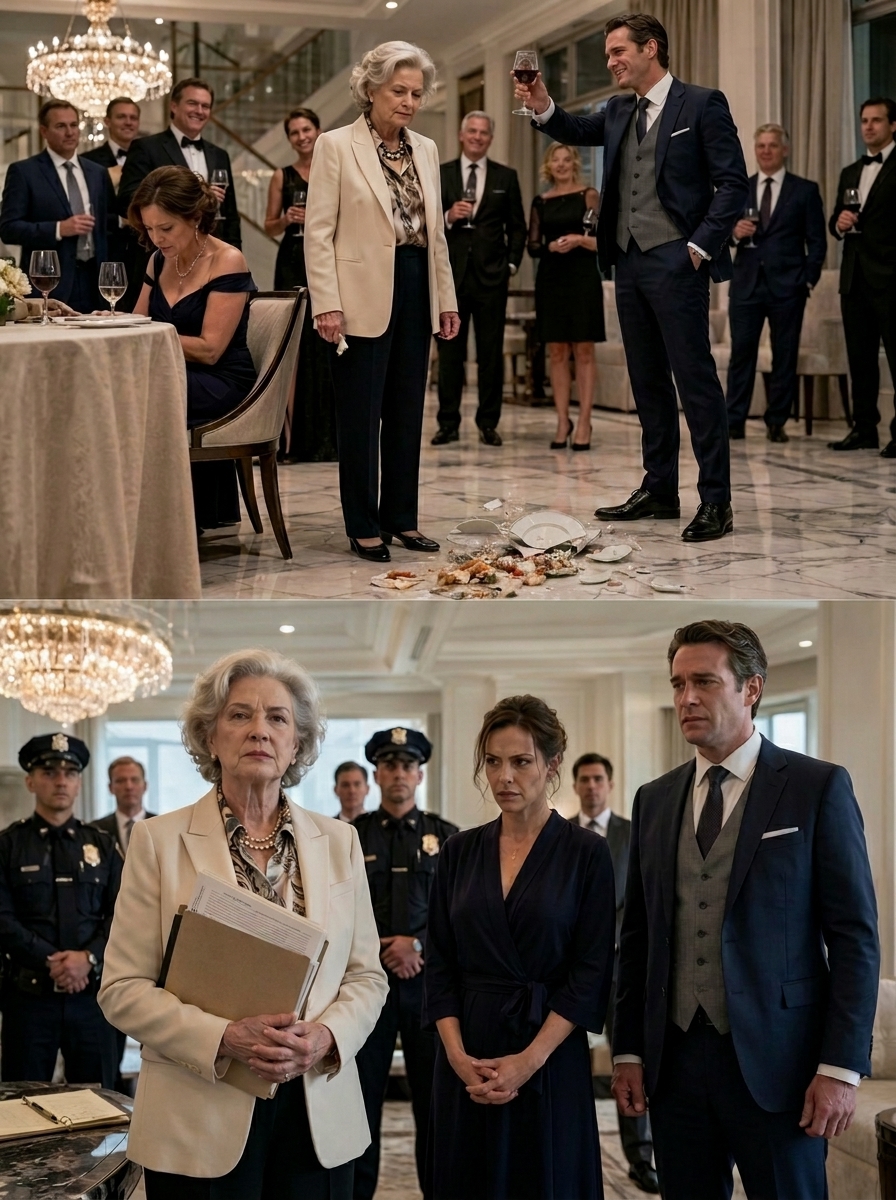
If you want dinner, lick it off the floor!"" My son-in-law mocked me after knocking my plate down, while making a toast at dinner. I stood up, adjusted my coat, and said three words that left him completely terrified! The next day, I did something even worse The gravy hit the marble floor before my plate shattered. For one breath, the whole dining room went silent, as if even the chandeliers were holding their breath. Then my son-in-law laughed. “If you want dinner,” Victor said, raising his wineglass, “lick it off the floor.” My daughter, Claire, looked down at her lap. Not at me. Not at the broken porcelain. At her lap, where her fingers twisted a napkin into a rope. Around the table, Victor’s friends smirked in their designer suits. His mother covered her mouth, but I saw the smile hiding behind her diamonds. It was supposed to be a celebration dinner. Victor had just announced that he was “expanding” his luxury real estate firm. He stood at the head of the table in my late husband’s house, drinking my late husband’s wine, wearing the watch my daughter had bought him with money I had given her. And he had knocked my plate from my hands because I had refused to toast him. “Come on, Margaret,” he said, voice smooth as poison. “Don’t be dramatic. You’re living here rent-free, eating food I pay for.” I looked at the roast on the floor. At the red wine crawling across the white marble like blood. At my daughter’s pale face. “I paid for this house,” I said quietly. Victor leaned forward. “Not anymore.” A few people laughed. He had been working on Claire for two years. Little comments. Little documents. Little emergencies. First, he convinced her I was lonely. Then forgetful. Then unstable. Then expensive. Recently, Claire had asked me to sign papers “to make things easier.” I had smiled, put on my reading glasses, and signed nothing. Victor thought grief had made me soft. He thought age had made me harmless. He thought a widow in a black coat could be pushed into a corner and left there. I stood slowly. My knees hurt, but my spine did not bend. I took the napkin from my lap, placed it beside the broken plate, and adjusted my coat. Victor’s smile widened. “Leaving already?” I looked him straight in the eye. Then I said three words. “You’re under investigation.” The glass slipped in his hand. Red wine splashed across his shirt. For the first time that night, Victor looked afraid. I walked out before anyone could stop me. Behind me, Claire whispered, “Mom?” I did not turn around. Not yet....To be continued in C0mments 👇

by


The gravy splashed across the marble floor a split second before my plate shattered. For one suspended breath, the entire dining room fell silent, as though even the chandeliers above us had stopped breathing.

Then my son-in-law laughed.

“If you want dinner,” Victor said, lifting his wineglass with a grin, “lick it off the floor.”

My daughter Claire lowered her eyes to her lap. Not toward me. Not toward the shattered porcelain. Toward her lap, where her fingers twisted a napkin so tightly it looked like a rope.

Around the table, Victor’s friends smirked inside their expensive suits. His mother lifted a hand to her mouth, but I still saw the smile hiding beneath the diamonds.

The evening was supposed to celebrate Victor’s newest announcement. He had just declared that he was “expanding” his luxury real estate company. He stood at the head of the table inside my late husband’s house, drinking my late husband’s wine, wearing the watch my daughter purchased for him with money I had given her.

And he had slapped my plate from my hands because I refused to raise a toast to him.

“Come on, Margaret,” he said smoothly, poison wrapped in charm. “Don’t be dramatic. You’re living here rent-free, eating food I pay for.”

I looked down at the roast scattered across the floor. At the dark red wine spreading over the white marble like blood.

At my daughter’s pale face.

“I paid for this house,” I said quietly.

Victor leaned forward. “Not anymore.”

Several people laughed softly.

For two years, he had been working on Claire piece by piece. Tiny comments. Tiny papers. Tiny emergencies. First he convinced her I was lonely. Then forgetful. Then unstable. Then expensive. Lately, Claire had started bringing me documents “to make things easier.” I smiled, adjusted my reading glasses, and signed absolutely nothing.

Victor believed grief had softened me.

He believed old age had made me harmless.

He believed a widow in a black coat could be cornered and forgotten there.

I stood slowly. My knees ached, but my spine stayed straight. I removed the napkin from my lap, placed it beside the broken plate, and adjusted my coat carefully.

Victor’s grin widened. “Leaving already?”

I looked directly into his eyes.

Then I said three words.

“You’re under investigation.”

The wineglass slipped in his hand. Red wine splashed down the front of his shirt.

For the first time all night, Victor looked frightened.

I walked out before anyone could stop me. Behind me, Claire whispered softly, “Mom?”

I didn’t turn around.

Not yet…

The following morning, Victor called me seventeen times.

I ignored every single call.

By noon, the text messages started arriving.

You misunderstood.

Don’t upset Claire.

We should talk like family.

That last one made me laugh.

Family.

Victor used that word like a weapon. Family meant I should stay quiet while he moved company documents into my home office. Family meant I should ignore the young assistant who left his company crying. Family meant I should smile politely while he bragged about “investors” whose names never appeared anywhere publicly.

Family meant surrender.

But before I became a widow wrapped in black coats, I spent thirty-two years working as a forensic accountant. I tracked stolen money through shell corporations, fake invoices, and offshore accounts. Men like Victor always believed cruelty was power.

It wasn’t.

Cruelty was noise.

Paper was power.

And I had paper.

Three months earlier, I discovered a folder hidden behind a loose wall panel inside my late husband’s study. Victor had been using Claire’s name to move money through fake renovation contracts. My daughter had signed documents she believed were routine household approvals. He had tied her to financial fraud like a stone chained around her neck.

That was when I stopped being a grieving widow and became a witness.

I copied everything.

Bank records.

Emails.

Security audio Victor forgot existed.

Video footage of him threatening a contractor in my driveway.

A recording of him telling his attorney, “Once the old woman signs, we control the trust.”

The old woman.

I remember making tea after hearing that line. My hands never trembled once.

At three in the afternoon, Victor arrived at my guesthouse without knocking.

Two men came with him.

“Margaret,” he said, smiling too hard, “you’ve embarrassed yourself enough.”

“I’m busy.”

He stepped inside anyway. “You’re confused. You’re angry. Claire mentioned you’ve been behaving strangely.”

“She told you that?”

Something flickered across his face.

I slowly set my tea cup down. “Interesting.”

One of the men opened a leather folder. “Mrs. Hale, we’ve prepared paperwork for a medical guardianship review.”

Victor’s smile returned instantly. “For your own safety.”

There it was.

The next step.

Declare me incompetent. Take my house. Silence me. Blame everything on dementia.

I almost admired how quickly he moved.

Almost.

“You should leave,” I said calmly.

Victor stepped closer. His cologne filled the room like smoke. “Listen carefully. You’re old. Claire is weak. I’m the only person in this family who knows how to win.”

I glanced toward the tiny camera hidden on the bookshelf behind a ceramic dove.

“You always talk too much,” I replied.

His expression hardened. “What did you say?”

I stood and slowly opened my coat.

Pinned inside was my old federal consultant badge, renewed six weeks earlier for a financial crimes task force.

Victor stared at it.

I smiled faintly.

“You targeted the wrong woman.”

By sunset, the dining room was crowded again.

Not with guests this time.

With lawyers.

Victor arrived furious, dragging Claire beside him like she was another expensive accessory. His mother followed behind, wrapped in diamonds and panic. Two police officers stood near the front door. My attorney sat at the table with three perfectly organized folders in front of him.

Victor stopped cold when he saw them.

“What is this?” he snapped.

“A family meeting,” I answered calmly.

Claire looked at me, her eyes swollen and red. “Mom, what’s happening?”

I reached for her hand. She flinched first, then held on tightly.

Victor pointed at me. “She’s manipulating you.”

“No,” I said quietly. “You did that.”

My attorney opened the first folder. “Mr. Cole, we possess evidence that you forged investor disclosures, misused trust-related accounts, and created fraudulent renovation contracts under your wife’s name.”

Victor laughed once. “That’s ridiculous.”

Then the second folder opened.

Emails.

Transfers.

Signatures.

Dates.

His laughter disappeared.

His mother whispered shakily, “Victor…”

Then I pressed play on the recording.

“Once the old woman signs, we control the trust.”

The entire room turned cold.

Claire’s hand shook violently inside mine. “You used me?”

Victor turned toward her immediately. “Don’t be stupid. Everything I did was for us.”

“No,” I said softly. “Everything you did was for yourself.”

He lunged toward the table, but one of the officers stepped forward immediately.

My attorney continued speaking, calm and precise. “Additionally, Mrs. Hale’s trust has already filed civil action to recover losses. Your business accounts have been frozen pending investigation. Your largest investor withdrew this morning. Your licensing board received evidence earlier today.”

Victor’s face lost every trace of color.

“You can’t do that,” he whispered.

I glanced toward the faint stain still visible on the marble floor where my dinner had fallen the night before.

“I did something worse,” I replied.

His eyes snapped toward mine.

“I protected my daughter before you could destroy her.”

Claire started crying, but this time she didn’t lower her head. Instead, she removed her wedding ring and placed it gently on the table.

Victor stared at it like it was a bullet aimed directly at him.

“You’ll regret this,” he hissed.

“No,” Claire said, her voice breaking but steady. “I already regret marrying you.”

That was the moment he finally broke.

Not from anger.

From fear.

Real fear.

The kind arrogant men feel when the world suddenly stops bending for them.

Two weeks later, Victor was arrested for fraud and coercive financial abuse. His company collapsed before the month ended. His mother sold her diamonds to pay attorneys who still couldn’t save him. The friends who laughed while he humiliated me disappeared faster than smoke.

Six months later, Claire and I sat together in that same dining room eating dinner.

No glittering chandeliers.

No strangers.

No cruelty disguised as charm.

Just soup, warm bread, and peace.

Claire reached across the table and squeezed my hand gently.

“I should have listened,” she whispered.

I looked at my daughter — alive, free, sunlight soft across her face.

“You’re listening now.”

Outside, the garden had started blooming again. Inside, the marble floor shone spotless and bright.

This time, nothing was broken.

Top Ad 728x90