Top Ad 728x90

Wednesday, May 27, 2026

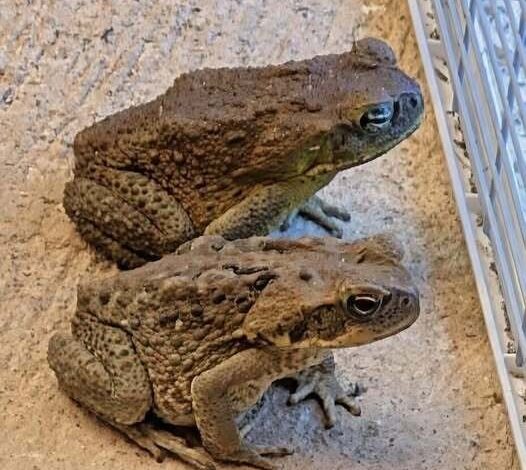
Did you know that toads come to your house when...See more

by


The Hidden Meaning Behind the Toad in Your Home and Why You Should Never Shoo It Away

The sudden appearance of a toad on your doorstep or tucked away in a cool corner of your laundry room can be a jarring experience for the uninitiated. One moment you are going about your evening routine, and the next, a pair of golden, unblinking eyes is staring back at you from the shadows. It is a moment that often triggers a primal reaction—a mix of surprise, perhaps a touch of revulsion, and a frantic search for a broom to usher the intruder back outside. However, before you act on that impulse, it is worth pausing to consider that this small, bumpy visitor is far more than just a stray amphibian. Toads are creatures of profound ecological importance and deep symbolic resonance, and their presence in your personal sanctuary is rarely a coincidence.

At the most fundamental level, a toad enters a human dwelling or a managed garden space in pursuit of three basic biological necessities: moisture, shelter, and sustenance. Unlike frogs, which usually require constant proximity to open water, toads have evolved to be more terrestrial, yet they remain highly sensitive to dehydration. Their skin, while thicker and more resilient than that of their sleek cousins, is still permeable. A toad inside your home is often a traveler seeking refuge from the desiccating heat of a summer afternoon or the drying winds that precede a storm. They are drawn to the damp microclimates we inadvertently create—the condensation around a potted plant, the cool tiles of a bathroom, or the shaded humidity of a crawlspace. When you find one, you are looking at a master of survival that has identified your home as a viable oasis in a challenging environment.

Beyond the search for water, these amphibians are expert opportunists when it comes to the dinner table. If you have ever noticed a toad lingering near your porch light, you are witnessing a tactical genius at work. Outdoor lighting attracts a swirling buffet of moths, beetles, and flies, and the toad is more than happy to sit in the glow and wait for dinner to land within reach of its lightning-fast tongue. In this capacity, toads act as a silent, organic security force for your home. They are voracious predators of the very pests that humans spend millions of dollars trying to eradicate with chemical sprays. A single toad can consume hundreds of insects in a single night, including mosquitoes that carry diseases and garden pests that devour your prized flowers. Their presence is a definitive sign of a healthy, functioning ecosystem. If a toad can thrive in your yard, it means the soil is untainted by excessive toxins and there is a robust food chain supporting life. They are the “canaries in the coal mine” for the modern suburban landscape; where there are toads, there is life.

However, the story of the toad extends far beyond the realm of biology and pest control. For millennia, humans have looked at these ground-dwelling creatures and seen something mystical. Because they undergo a dramatic metamorphosis—starting as fragile, water-bound tadpoles before transforming into rugged, land-walking adults—they have become the universal symbol for growth and adaptability. Finding a toad in your path is often interpreted in various folklore traditions as a sign that you are entering a period of significant personal transition. Just as the toad successfully navigated the shift from one world to another, its presence suggests that you possess the inner resources to handle the changes currently unfolding in your own life.

In the ancient practice of Feng Shui, the toad is not a pest to be feared but a harbinger of wealth and opportunity. The famous “Money Toad” or “Three-Legged Toad” is a staple of Eastern symbolism, believed to attract prosperity and protect the household’s finances. While the toad in your kitchen might have the standard four legs, the energy it brings is much the same. In many cultures, these creatures are seen as gentle cleansers of stagnant energy. Because they prefer the quiet, overlooked corners of a home, they are thought to “moop up” the heavy or negative vibrations that accumulate in the shadows, allowing for a fresher, more positive flow of life force to circulate through the living space.

There is also a profound lesson in mindfulness to be learned from the humble toad. In a world that moves at a frantic, digital pace, the toad is a creature of absolute stillness and patience. It does not chase its goals with frantic energy; it positions itself correctly, remains quiet, and waits for the right moment to act. Observing a toad in your garden can be a meditative experience. It forces you to slow down, to lower your gaze from the horizon to the ground, and to appreciate the intricate details of a life lived close to the earth. There is a quiet dignity in their movements and a stoic resilience in their posture. They remind us that there is power in being grounded and that much can be achieved through steady, quiet persistence.

Embracing the presence of a toad requires a shift in perspective. It requires us to move away from the idea of the home as a sterile box isolated from the world and toward an understanding of the home as a part of a larger, interconnected web of life. When a toad crosses your threshold, it is an invitation to practice hospitality toward the natural world. It is a reminder that we share our environment with ancient lineages of survivors who have been navigating the earth long before we laid our foundations. Instead of seeing an intruder, try to see a partner.

If you find a toad indoors and wish to move it, do so with the gentleness its status deserves. Use a small container to lift it carefully, ensuring your hands are moist if you must touch it, as the oils and salts on human skin can be irritating to their sensitive membranes. Place it in a shaded, damp area of your garden, perhaps near a rock pile or under a leafy shrub, where it can continue its vital work of balancing the local insect population. By treating this small visitor with respect, you are acknowledging the vital role it plays in the ecological harmony of your surroundings.

Ultimately, the toad in your home is a symbol of balance. It represents the intersection of the practical and the spiritual—the marriage of effective pest management and profound symbolic renewal. Whether you view it as a lucky charm, a biological ally, or a spiritual messenger, its appearance is a call to pay attention. It asks you to notice the small wonders that persist in the cracks and shadows of everyday life. It is a testament to the fact that nature is never truly separate from us; it is always there, breathing quietly in the corner, waiting for the right moment to remind us of the magic inherent in the natural world. So, the next time you encounter a bumpy-skinned traveler on your porch, take a breath, offer a silent word of thanks, and recognize that you are in the presence of a tiny, ancient guardian.

The one detail everyone missed 😱😳 Check comments 👇

by


TRUMP ASSASSINATION PLOT EXPOSED THE SMOKING GUN EVIDENCE THAT HAS THE ENTIRE WORLD GASPING IN DISBELIEF

The atmosphere inside the grand ballroom was thick with the scent of expensive perfume and the electric hum of high-stakes political anticipation. It was a night designed for optics, a glitzy media gala where the elite gathered to rub shoulders with the most polarizing figure in modern history. The lighting was perfect, the cameras were rolling, and the stage was set for what should have been a standard stump speech. However, in a matter of heartbeats, the choreographed elegance of the evening shattered into a million jagged shards of glass and terror. As the first sharp cracks of gunfire echoed through the hall, the collective breath of the nation hitched. But as the smoke cleared and the initial shock began to subside, a darker, more cynical narrative began to take root in the digital underworld. Now, millions of citizens are not just mourning a breach of security; they are demanding answers to a question that threatens to tear the social fabric apart: Was this a brush with death, or was it the most expensive piece of political theater ever produced?

The skepticism did not emerge from a vacuum. In an age defined by deepfakes, algorithmic manipulation, and a profound distrust of institutional narratives, the public has become conditioned to look for the strings behind the puppet show. The “major proof” currently circulating across social media platforms isn’t a grainy photograph or a ballistics report, but something far more damning in the eyes of the internet’s self-appointed detectives: a slip of the tongue. Disciples of the “staged” theory have zeroed in on a single, offhand comment made by Donald Trump’s own press secretary just minutes before the chaos erupted. When replayed in slow motion and dissected with the fervor of a forensic pathologist, the comment appears to suggest a foreknowledge of the “event” that defies logical explanation. Critics argue that the phrasing used was not that of a nervous staffer, but of someone following a script that had been rehearsed behind closed doors.

To understand the weight of these allegations, one must look at the visual evidence that has been weaponized by those claiming the event was a “live-fire nightmare” by design. Analysts on various forums have pointed toward the positioning of the security detail and the seemingly “perfect” camera angles that captured the former president’s defiant reaction. They argue that in a genuine moment of life-or-death crisis, the chaos would be messy, uncoordinated, and ugly. Instead, what the world saw was a cinematic tableau—a blood-streaked face framed against a backdrop of flags, a moment of high drama that looked more like a Renaissance painting than a frantic crime scene. This aesthetic perfection is being cited as proof of a meticulously choreographed performance, one intended to manipulate the pulse of a nation that is already teetering on the brink of total collapse.

The narrative of the “staged” assassination attempt plays into a larger, more terrifying cultural zeitgeist. We live in an era where the line between reality and entertainment has been permanently blurred. When a tragedy occurs, the immediate reaction is no longer “How can we help?” but rather “Who benefits from this?” In this case, the political dividends of a survived assassination attempt are immeasurable. It transforms a candidate into a martyr, a survivor, and an untouchable icon of resilience. For the skeptics, the timing of the event is simply too convenient to be a coincidence. With the election cycle reaching a fever pitch and the country divided into two irreconcilable camps, a brush with destiny provides the kind of narrative momentum that money cannot buy.

However, the “staged” narrative faces a steep uphill battle against the sheer logistics of such a conspiracy. To pull off a fake assassination attempt in a room filled with high-definition cameras, veteran journalists, and professional security experts would require a level of precision that borders on the supernatural. Every bullet fired, every shattered light fixture, and every drop of blood would have to be accounted for. The risk of a single whistleblower coming forward to expose the charade would be enough to end not just a political career, but to land dozens of people in federal prison for life. Yet, for those who believe the system is fundamentally broken, the impossibility of the task is not a deterrent to belief. In their view, the “elites” are capable of anything, and the gala was simply the grandest stage they have ever used.

The press secretary’s comment remains the primary fuel for this fire. The specific words—which some interpret as a “countdown” or a “cue”—have been shared millions of times, accompanied by ominous soundtracks and red circles highlighting supposed “crisis actors” in the crowd. The psychological impact of this viral skepticism cannot be overstated. When a significant portion of the population refuses to believe their own eyes, the very concept of shared truth evaporates. The gala, which was supposed to be a showcase of power and prestige, has instead become a Rorschach test for the American public. Where one person sees a miraculous escape, another sees a cynical ploy for votes.

As the investigation into the shooter and the security failures continues, the “proof” of a staged event continues to evolve. New theories emerge every hour, ranging from the caliber of the weapons used to the specific trajectory of the projectiles. Each new detail is fed into the maw of the internet, where it is chewed up and spit back out as a meme, a thread, or a viral video. The reality of what happened in that room may eventually be established by official reports, but in the court of public opinion, the verdict is already split. The glitzy media gala has left a stain on the national consciousness that no amount of fact-checking can easily wash away.

In the end, the debate over whether the attempt was genuine or choreographed reveals more about the state of the world in 2026 than the event itself. We are a society haunted by the ghost of deception, looking for conspiracies in the shadows because the truth has become too difficult to bear. Whether the “major proof” holds up under scrutiny or eventually dissolves into the ether of forgotten internet rumors, the damage is done. The trust is gone. As the nation moves forward, the echoes of those shots will continue to ring out, not just as a reminder of a violent night, but as a symbol of a country that can no longer agree on what is real. The pulse of the nation is indeed being manipulated, but perhaps not by a single script or a single event—rather by the overwhelming weight of our own collective doubt.

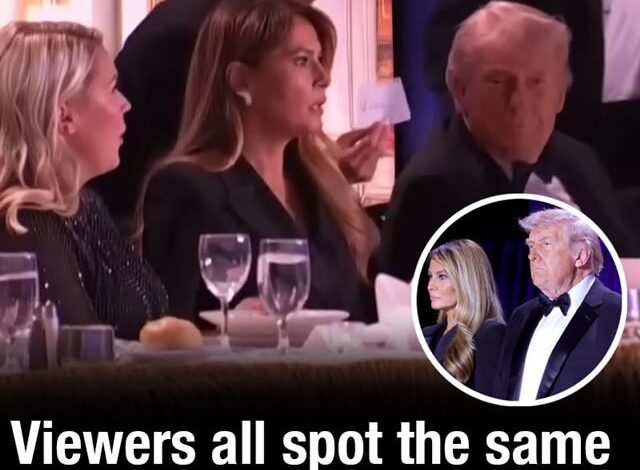
First Lady Melania Trump showed visible fear, and her chilling words have now been revealed. Check the comments to read them 👀

by


MELANIAS CHILLING DEATH WARNING REVEALED AFTER CHAOS ERUPTS AT WASHINGTONS MOST ELITE RED CARPET EVENT

The evening was supposed to be a celebration of the delicate, often contentious dance between the American presidency and the free press. Instead, the glitz and glamour of the Washington Hilton were replaced by the cold, biting reality of a national security nightmare. As the political elite gathered for the White House Correspondents’ Dinner, the atmosphere was thick with the usual banter and the clinking of champagne glasses. But beneath the surface of this high-society gala, a predator was moving through the shadows, carrying a payload of violence that would soon shatter the peace of the nation’s capital. When the smoke cleared and the screams subsided, Donald Trump emerged not just as a survivor, but as a witness to a terrifying premonition that his wife, Melania, had voiced long before the first shot was fired.

The suspect, a man whose background reads like a chaotic jigsaw puzzle of modern American life, has been identified as Cole Tomas Allen. To his neighbors in Torrance, California, he was a teacher, an engineer, and an indie game developer—a man of intellect and creative ambition. But according to federal investigators, Allen had spent months cultivating a much darker persona. His journey from the sunny suburbs of the West Coast to the high-security perimeter of a presidential gala in Washington, D.C., was a meticulously planned pilgrimage of hate. Reports indicate that Allen didn’t just stumble into the Hilton; he arrived heavily armed, carrying multiple weapons and a manifesto of grievances that authorities are still working to decode. The sheer audacity of his attempt to breach the innermost sanctum of presidential security has sent shockwaves through the Secret Service and the Department of Justice alike.

The moment the breach occurred, the ballroom transformed from a temple of wit into a theater of war. In the heart of the confusion, the Secret Service demonstrated why they are considered the premier protective force in the world. As the threat became undeniable, agents surged forward to form a human shield around Donald Trump, Melania Trump, and Vice President JD Vance. One agent, whose identity remains a closely guarded secret of the service, took a direct hit from a projectile. Only the rigid ceramic and Kevlar of a protective vest stood between that agent and a fatal wound. While the agent is expected to make a full recovery, the incident serves as a brutal reminder of the thin line that separates a gala from a graveyard.

In the aftermath of the evacuation, Donald Trump spoke with a somber intensity about the experience. He was quick to deflect the focus from his own safety to the bravery of those who stood in the line of fire. He described the suspect as a “lone wolf,” a term that suggests a terrifying lack of institutional footprints for the intelligence community to track. Trump noted that the transition from a joke-filled evening to a life-and-death struggle happened in a matter of seconds—a temporal blur where instinct replaces thought and training replaces fear. But perhaps the most haunting aspect of his public statement was his recollection of Melania’s reaction.

According to Trump, the former First Lady did not succumb to the hysteria that gripped many in the room. Instead, she exhibited a chilling, almost supernatural level of awareness. Trump revealed that Melania had frequently reminded him in private that the presidency is inherently a dangerous vocation—a role that carries a permanent bullseye. When the armed suspect stormed the perimeter, Melania’s response was not one of surprise, but of grim confirmation. She had seen this moment coming in her mind’s eye for years. Her husband praised her presence of mind, noting that while the world around them was descending into a frenzied panic, she remained anchored by the realization that her darkest fears were finally manifesting in the real world.

The investigation into Cole Tomas Allen has now become a global priority. Federal agents are currently scouring his digital footprint, his engineering blueprints, and his game development logs for any hint of a broader conspiracy. They are looking for the “why” behind the “how.” How did a Torrance-based educator manage to bypass multiple layers of elite security with an arsenal of weapons? Was he aided by an insider, or was his engineering background the key to exploiting a previously unknown vulnerability in the Hilton’s security protocols? The writings linked to him are said to be a labyrinth of political philosophy and personal obsession, painting a portrait of a man who believed that a single violent act could alter the trajectory of history.

As the nation grapples with the fallout, a fierce debate has ignited over the future of large-scale political events. The White House has already signaled a comprehensive review of presidential security, acknowledging that the current protocols may no longer be sufficient in an era of radicalized “lone wolves” with technical expertise. The Washington Hilton, once seen as a fortress during these high-profile dinners, is now being scrutinized for every possible point of failure. From the valet stands to the service corridors, every inch of the property is being mapped by forensic teams looking for the path Allen used to bring his weapons so close to the Commander-in-Chief.

In true Trump fashion, the former president has refused to let the incident dictate his schedule or dampen his political momentum. Rather than calling for a total cancellation of the festivities, he has urged the White House Correspondents’ Association to show resilience. He has called for the dinner to be rescheduled within thirty days, framing the move as a refusal to give the “lone wolf” a victory. To Trump, retreating from the public eye would be a surrender to the forces of chaos. By demanding the event proceed, he is signaling to his base and his detractors alike that he remains undeterred by the threat of assassination.

However, the shadow of the event looms large over the political landscape. The incident has intensified the already simmering conversation regarding political violence in America. Analysts are pointing to the suspect’s background as a particularly troubling sign of the times. When teachers and engineers—the very pillars of a stable society—begin to see armed insurrection as a viable path, the foundations of the Republic are clearly under immense strain. The “lone wolf” narrative, while convenient for law enforcement, offers little comfort to a public that feels increasingly vulnerable to unpredictable outbursts of rage.

As the legal proceedings against Cole Tomas Allen begin, the world waits for the full story to emerge. The charges of attempted assassination and multiple firearms violations are just the beginning of what promises to be a landmark trial. But for those who were in the room, the headlines and the court filings are secondary to the memory of those terrifying seconds under the chandeliers. They will remember the sound of the breach, the sight of the Secret Service springing into action, and the image of a former president being whisked away as his wife’s chilling warnings finally came true. The glitzy media gala of 2026 will not be remembered for its guest list or its comedy sets, but as the night the pulse of the nation nearly stopped.

People watching this scene all had the same chilling realization… 😮👇

by


Shocking History Repeats Itself At Washington Hilton As Gunfire Erupts Near Trump In Terrifying Assassination Scare

The glitz and glamour of the 2026 White House Correspondents’ Dinner at the Washington Hilton was shattered in a heartbeat when the echoed cracks of gunfire transformed an evening of political satire into a high-stakes race for survival. In a scene that felt ripped from the darkest chapters of American history, the elite of Washington, D.C. found themselves ducking for cover as security details launched into a frantic protocol to protect the former president and current political figures. While the world watched in stunned silence, a chilling realization began to spread among those familiar with the venue’s bloody past: history was repeating itself in the exact same spot where a previous commander-in-chief nearly lost his life decades ago.

The chaos erupted without warning within the confines of the Hilton, a hotel that has hosted countless presidents but is now forever linked to two of the most harrowing security breaches in the capital’s history. As the first reports of a shooter inside the building filtered through the panicked crowd, the Secret Service moved with practiced, lethal efficiency. Donald Trump and Melania Trump were immediately surrounded by a wall of high-level security and rushed through service corridors to armored vehicles. The atmosphere, which only moments before had been filled with laughter and the clinking of glassware, was replaced by the heavy silence of tactical maneuvers and the distant shouting of law enforcement officers engaging a deadly threat.

Authorities eventually identified the individual responsible for the terror as Cole Thomas Allen. Far from a spontaneous act of aggression, the details emerging from the investigation suggest a chillingly calculated plan. Allen was not merely a lone protester; he was a walking arsenal, reportedly carrying a shotgun, a handgun, and a variety of knives. The sheer amount of weaponry indicated a desire for a prolonged confrontation or a high body count. Witnesses and law enforcement officials described a terrifying scene as Allen attempted to breach a secure checkpoint, leading to an immediate exchange of fire with officers. The bravery of the Secret Service was the only thing standing between a planned tragedy and the safety of the dignitaries inside. Allen was eventually subdued and taken into custody, but the questions he left behind were far more haunting than the smoke from his weapons.

In the aftermath of the takedown, investigators began peeling back the layers of Allen’s life and found a trail of intent that spanned the entire continent. Evidence suggests that the suspect traveled by train all the way from Los Angeles to the nation’s capital with a singular, dark purpose in mind. Todd Blanche, speaking on the progress of the investigation, noted that the discovery of writings and a suspected manifesto pointed directly toward a plot to assassinate high-level government officials. This was not a crime of passion, but a cross-country pilgrimage of violence fueled by a specific, albeit twisted, ideology.

Donald Trump, speaking with his characteristic bluntness following the event, did not mince words when describing the man who had targeted the gathering. He labeled the suspect a lone wolf and a whack job, reflecting the frustration of a man who has lived under the constant shadow of security threats. He praised the men and women of the Secret Service who put their lives on the line to tackle a man armed to the teeth, acknowledging that the speed of their response saved lives. However, even with the suspect behind bars, the conversation quickly shifted from the shooter’s identity to the eerie nature of the location itself.

The disturbing detail that social media sleuths and historians immediately latched onto was the geographical coincidence of the attack. The Washington Hilton is the site of the 1981 attempted assassination of Ronald Reagan. It was on those very grounds that John Hinckley Jr. stepped out of a crowd and opened fire, sending a ricocheting bullet into the 40th President’s chest and nearly changing the course of the Cold War. To see a similar security crisis unfold in the same hallways forty-five years later felt like a glitch in the American timeline. For many, the Hilton has gone from a prestigious landmark to a site of recurring political trauma.

This parallel has sparked a massive debate about the security of such high-profile events and the psychological impact of seeing history echo so precisely. The 1981 shooting led to a total overhaul of Secret Service protocols, yet here in 2026, a man with multiple firearms was able to get close enough to the inner sanctum of power to exchange shots with federal agents. The irony was not lost on the public; the very place that should have been the most hardened against such an attack became the stage for a modern sequel to a national nightmare.

As the investigation into Cole Thomas Allen continues, the nation is left grappling with the reality of political life in an era of extreme polarization. The fact that the crowd inside the Hilton reacted with a sense of unity—as noted by Trump in his post-incident remarks—offers a small glimmer of hope, but it is overshadowed by the sheer audacity of the attempt. The details of the manifesto are expected to reveal more about the suspect’s specific grievances, but for the average citizen, the motive matters less than the fact that it happened at all.

The incident at the Washington Hilton serves as a stark reminder that the machinery of protection is only as strong as its ability to anticipate the unpredictable. Even with the most advanced technology and the bravest agents, the human element of a lone attacker with a manifesto and a train ticket remains a terrifying wildcard. The news cycle will eventually move on, and the Hilton will host more dinners and more presidents, but the shadow of 1981 and 2026 will now hang over its entrance forever. The haunting coincidence of the location has turned a standard news story into a legendary cautionary tale about the persistence of political violence and the strange ways in which the past refuses to stay buried. For now, the capital breathes a sigh of relief that no lives were lost, but the disturbing details of that night will linger in the public consciousness for years to come.

I found this in my husband’s pants pocket when I was about to wash his clothes. I’ve been holding it in my hand for half an hour now, trying to figure out what it is. Does anyone know what this is? Check the first comment for the answer 👇

by


While Emptying My Husband’s Pockets Before Laundry, I Pulled Out a Cold, Sharp Metal Object That Looked Dangerous Enough to Belong in a Crime Story Rather Than Our Quiet Marriage, and When He Casually Claimed He Had “No Idea” What It Was, My Imagination Spiraled Into Fear, Suspicion, and Questions About Secret Lives, Hidden Habits, and Whether the Man I Thought I Knew Had Been Keeping a Side of Himself Buried So Deeply That Even a Tiny Piece of Metal Could Suddenly Make Me Feel Like I Was Standing Beside a Complete Stranger in My Own Home

It began so quietly that, at first, I almost laughed at myself for reacting the way I did. There was no dramatic confrontation. No suspicious perfume lingering on a shirt collar. No mysterious text messages lighting up Ethan’s phone at midnight. Just laundry. Ordinary, boring, deeply domestic laundry. The kind of task that fades into the background of married life until your hands can perform it automatically while your mind drifts somewhere else entirely.

Saturday mornings in our house followed a rhythm so familiar it felt rehearsed. Ethan always woke before sunrise because he claimed sleeping late made him feel like he was “losing the day.” Coffee brewed before the sky fully brightened. A low jazz playlist hummed through the kitchen speaker while I sorted clothes into piles with the efficiency that comes from doing the same thing beside the same person for over a decade. It was predictable in the comforting way long marriages often become.

That morning started no differently.

Ethan had already left the house to “run errands,” which usually translated to wandering through hardware stores searching for tools we absolutely did not need. I remember smiling faintly while carrying his jeans to the laundry room because every week I found something ridiculous in his pockets. Receipts. Loose screws. Folded gum wrappers. Once, during summer, an entire melted granola bar that permanently glued itself to the fabric.

But this time, when I turned the pocket inside out, something hard dropped heavily into my palm.

The weight startled me immediately.

Cold metal. Dense. Sharp.

For one irrational second, I genuinely thought it might be a bullet.

The object rested against my skin beneath the bright laundry room light, gleaming with a kind of dangerous precision that instantly made my stomach tighten. It was small, maybe two inches long, with a pointed tip that narrowed into something almost surgical-looking. The opposite end was threaded, clearly designed to screw into something else. It looked purposeful in a way that felt unsettling.

I turned it slowly between my fingers.

There’s something uniquely disturbing about discovering an unfamiliar object inside your own home, especially when it clearly belongs to someone you think you know completely. Suddenly the ordinary room around me felt strange. The washing machine hummed softly beside me while my imagination began quietly assembling possibilities faster than logic could intervene.

I called Ethan immediately.

When he answered, I tried to keep my tone casual even though tension had already slipped into my voice.

“Hey,” I said carefully. “I found something weird in your jeans pocket.”

“Oh?” he replied distractedly. Traffic noise echoed faintly behind him. “Like what?”

I described it briefly.

Silence followed.

Then, strangely, he laughed awkwardly.

“Huh,” he said. “Weird.”

My stomach tightened instantly.

“What do you mean weird?” I asked.

“I honestly don’t know what that is,” he replied too quickly. “Probably nothing.”

Probably nothing.

Those two words unsettled me more than the object itself.

If Ethan had immediately identified it, my imagination might have settled down right there. But uncertainty is dangerous fuel for fear. Once doubt enters your mind, it starts rewriting ordinary details into evidence. Suddenly I remembered how Ethan had been staying out later recently some evenings. How he occasionally seemed emotionally distant afterward, quieter somehow. How his “errands” had become longer over the past several months.

Had there always been another side to him I simply failed to notice?

Marriage creates an illusion that we fully know another person. After enough years beside someone, you stop questioning the familiar rhythms because familiarity itself feels like proof of intimacy. But sitting there in the laundry room holding that strange metal object, I realized how terrifying it could feel to suddenly confront the possibility that everyone still contains private corners hidden from view.

For the rest of the afternoon, I carried the object around the house like it might somehow reveal its purpose if I stared at it long enough.

I searched online obsessively using increasingly ridiculous phrases.

“Small pointed threaded metal object.”

“Sharp steel attachment.”

“Weapon tip maybe.”

“Arrow looking thing.”

Every search result only deepened my confusion. Some images resembled hunting equipment. Others looked like tactical tools or mechanical parts. One article about concealed self-defense gear nearly sent me into full panic mode.

By the time Ethan returned home carrying grocery bags and acting perfectly normal, I had already constructed at least twenty different theories in my head ranging from mildly concerning to genuinely terrifying.

He found me sitting at the kitchen table with the object placed carefully beside my coffee mug like courtroom evidence.

“So?” I asked immediately. “Did you remember what it is?”

Ethan glanced at it briefly.

Something unreadable flickered across his face before he shrugged again.

“Still not sure.”

That answer irritated me more than fear itself.

“Ethan,” I said slowly, “it was literally in your pocket.”

He set the grocery bags down carefully.

“Okay, relax.”

Relax.

Another terrible word during moments like that.

“I am relaxed,” I lied instantly.

He finally picked up the object, rolling it thoughtfully between his fingers. “Maybe it’s from the garage?” he offered weakly. “Or maybe Greg gave it to me at work or something.”

Nothing about his explanation sounded convincing.

What unsettled me most wasn’t even the object anymore. It was the strange feeling that he was minimizing something intentionally. Not necessarily something dangerous, but something hidden.

That evening while we watched television together, I found myself studying him differently. Ethan had always been gentle. Quiet. Thoughtful in small ways that mattered. He warmed my car during winter mornings before I left for work. He remembered exactly how I liked my tea. He still reached for my hand absentmindedly during movies after eleven years of marriage.

Yet suddenly I became painfully aware of how little I actually knew about parts of his inner life beyond our shared routines.

Marriage eventually compresses itself into logistics.

Bills.

Groceries.

Appointments.

Chores.

You stop asking deeper questions because you assume you already know the answers.

Later that night, after Ethan fell asleep beside me, I quietly slipped out of bed and retrieved the object from the kitchen counter again.

Under the bedroom lamp, I noticed something tiny engraved near the threaded end. Numbers. A partially scratched brand name. And another detail I somehow hadn’t fully processed before.

The tip wasn’t actually bladed.

It was slightly rounded.

Designed for impact rather than cutting.

That realization shifted something in my thinking immediately. Whatever this thing was, it wasn’t made for stabbing. It was designed for precision.

The next morning while Ethan showered, I searched the engraved brand name specifically.

Within seconds, dozens of identical images filled my screen.

Archery field points.

Practice tips for arrows.

I stared at my phone in disbelief.

Archery?

Ethan?

Nothing about my husband screamed “secret outdoorsman.” He hated camping because mosquitoes annoyed him. He once described hiking as “walking uphill voluntarily for no reason.” Yet there it was unmistakably: the mysterious metal object that had consumed my imagination for almost twenty-four hours was simply a detachable arrow tip used for target practice.

Relief hit me so hard I laughed out loud.

Then confusion immediately followed again.

Why hadn’t he just told me?

When Ethan walked into the kitchen toweling off his hair, I silently held up my phone showing the search results.

His entire expression changed instantly.

Not fear.

Embarrassment.

“Oh,” he muttered quietly. “Right.”

I crossed my arms.

“You seriously couldn’t identify your own archery equipment yesterday?”

He winced sheepishly before sitting down across from me at the table.

For several long seconds neither of us spoke.

Then he sighed deeply.

“I knew what it was,” he admitted softly. “I just didn’t know how to explain it.”

“Explain what? Archery?”

“It sounds stupid.”

“Try me.”

He stared down into his coffee for a while before finally speaking again.

“About eight months ago, work got really bad.”

His voice remained calm, but exhaustion lived underneath the words.

“The pressure. Deadlines. Meetings constantly. I felt like my brain never shut off anymore.”

I listened quietly while pieces slowly began connecting themselves.

“One afternoon,” he continued, “I drove past this outdoor range outside town. They offered beginner lessons. I don’t even know why I stopped honestly.” He laughed weakly at himself. “I think I just wanted silence.”

Silence.

That single word landed harder than I expected.

Ethan explained how the instructor taught him basic archery techniques: breathing, posture, repetition, focus. The process demanded complete concentration. No phones. No multitasking. No noise. Just stillness.

Apparently, he became quietly obsessed afterward.

Every Saturday morning while I assumed he wandered hardware stores, he had actually been driving thirty minutes outside town to spend hours alone practicing at the range.

“Why keep it secret?” I asked softly.

He shrugged again, though sadness touched the movement this time.

“I don’t know,” he admitted. “It felt personal.”

Then he searched for better words.

“Not secret exactly. Just… mine.”

That sentence hit me unexpectedly hard because suddenly I understood something uncomfortable about marriage itself.

We often assume intimacy means sharing absolutely everything.

Every thought.

Every hobby.

Every private emotion.

But sometimes people need small spaces belonging only to themselves—not because they’re hiding betrayal, but because certain parts of healing feel fragile before being spoken aloud.

Ethan admitted he worried I would laugh because the hobby seemed random.

Or worse, ask why he needed somewhere to escape from the life we built together.

“It wasn’t about shutting you out,” he said quickly. “Honestly, I think I needed somewhere to clear my head so I could come home calmer.”

Looking at him then, I suddenly noticed changes I had ignored before.

The peacefulness he occasionally carried after Saturday mornings.

The way his shoulders seemed less tense lately.

How he had started sleeping better over recent months.

While I imagined dark secrets and hidden danger, my husband had simply been standing quietly in open fields trying to learn how to breathe again.

That afternoon, Ethan asked if I wanted to visit the range with him.

Part of me expected awkwardness after the unnecessary suspicion spiraling through my mind the previous day, but curiosity outweighed embarrassment now.

The drive took us farther outside town than I expected, winding through stretches of trees turning gold with early autumn.

Eventually we arrived at a quiet clearing surrounded by wooden targets lined across wide open fields.

The place felt strangely peaceful.

No loud music.

No chaos.

Just wind moving softly through grass and the occasional distant thud of arrows striking targets.

Ethan seemed different there somehow.

Lighter.

The instructor greeted him warmly by name before handing over equipment with practiced familiarity.

Watching my husband assemble a bow confidently felt surreal because this entire hidden version of him had existed quietly beside me for months unnoticed.

Then he stepped onto the practice line.

Lifted the bow.

Drew the string back.

And everything about his posture changed.

Stillness settled over him completely.

The world narrowed into breath and silence and focus.

When the arrow struck near the center of the target with a satisfying thump, he smiled faintly—not proudly exactly, but peacefully.

I realized then that I hadn’t seen that particular expression on his face in a very long time.

Later, while we sat together watching sunset light spill orange across the field, Ethan admitted something else quietly.

“Sometimes I come here after difficult days because it’s the only place my mind goes quiet.”

My chest tightened unexpectedly hearing that.

Marriage teaches you someone’s routines, favorite foods, sleeping habits.

But sometimes you miss their exhaustion entirely until it accidentally reveals itself through something tiny hidden in a pocket.

I thought back to how quickly fear transformed that harmless field point into something sinister simply because I didn’t understand it.

Humans do that with each other constantly.

We see unfamiliar behavior and immediately fill the gaps with worst-case stories instead of curiosity.

Of course secrecy sometimes does hide betrayal.

But other times, it hides loneliness.

Stress.

Private rituals people quietly build just to survive themselves.

“You could’ve told me,” I whispered eventually.

Ethan nodded slowly.

“I know.”

Then after a pause, he smiled sheepishly.

“But honestly? Watching you interrogate a field point like it belonged to the FBI was kind of impressive.”

I laughed so hard tears formed in my eyes because the absurdity finally fully hit me.

Twenty-four hours earlier, I had practically convinced myself my husband lived some dangerous hidden double life.

Meanwhile, the man had simply been shooting arrows at hay bales to decompress after stressful meetings.

Months have passed since then.

The tiny metal field point still sits in a small dish beside Ethan’s keys near the front door.

Not because we forgot about it.

Because somehow it became symbolic of something bigger between us.

A reminder about assumptions.

About hidden exhaustion.

About how even long marriages still contain undiscovered rooms if you stop paying attention.

I’ve gone to the range with him many times now.

I’m terrible at archery honestly. My arrows drift embarrassingly sideways while Ethan patiently tries not to laugh.

But I understand now why he loves it.

There’s something deeply meditative about the repetition.

Drawing the string.

Breathing deeply.

Releasing tension with precision.

Modern life rarely allows that kind of stillness anymore.

More importantly, the experience changed how I see my husband.

Not because he secretly practiced archery, but because it reminded me he remains an entire person beyond the familiar roles I automatically assign him every day.

Husband.

Partner.

Provider.

Routine makes us flatten each other sometimes. We stop actively discovering the people beside us because familiarity tricks us into believing discovery is finished.

But everyone carries private worlds still unfolding quietly.

Interests they haven’t shared yet.

Fears they struggle naming aloud.

Ways of coping invisible even to those closest to them.

Looking back now, I almost feel grateful for that strange moment in the laundry room.

Grateful for the cold shock of finding something unfamiliar because it forced me to look again instead of assuming I already knew everything about the person beside me.

The truth turned out far gentler than the stories my imagination invented.

It usually does.

Sometimes what frightens us initially is simply misunderstanding wrapped in mystery.

A sharp-looking object becomes an archery tip.

Silence becomes stress rather than deception.

Distance becomes someone quietly searching for peace instead of escape.

And sometimes love deepens not through dramatic confessions or grand gestures, but through finally asking the right question—and staying long enough to genuinely hear the answer.
Top Ad 728x90