Top Ad 728x90

Monday, June 1, 2026

Why My Landladys 3 AM...

by


The Pristine Exit, Why My Landladys 3 AM Inspection Led to a Life-Changing Phone Call I Never Saw Coming

There is a specific, hollow silence that accompanies the final hours in an apartment you’ve called home for years. It is the sound of echoes in rooms that used to be filled with furniture, the ghost of a life packed into brown cardboard boxes, and the strange realization that a space which once held your most intimate moments is about to become a blank slate for a stranger. When the notice arrived that my sanctuary of three years was being put up for sale, I didn’t meet the news with the typical bitterness of a displaced tenant. Instead, I retreated into a ritual of quiet, meticulous labor. I spent my final forty-eight hours not just cleaning, but restoring. I scrubbed the grout until it gleamed, polished the baseboards I hadn’t looked at in months, and ensured that every window pane was a transparent portal to the world outside.

To an outsider, this might have seemed like an obsessive pursuit of a security deposit. But for me, it was a silent eulogy. This apartment had been my harbor during a tumultuous season of career shifts and personal evolution. It had kept me dry during the storms and cool during the heatwaves of a life that felt increasingly unpredictable. Leaving it spotless wasn’t just a matter of contractual obligation; it was a profound gesture of gratitude. I wanted the next person who walked through that door to feel the same sense of peace I had found within those four walls. I wanted to leave the space better than I found it, a small act of rebellion against a world that often encourages us to take what we can and leave the mess for someone else to solve.

The morning after I handed over the keys, my phone buzzed on the kitchen counter of my new, sterile environment. The caller ID flashed my former landlady’s name, and instantly, a cold knot of anxiety tightened in my chest. In the high-stakes world of urban renting, a call the day after move-out rarely signals good news. I began a frantic mental inventory of the property. Had I overlooked a hairline fracture in the bathroom mirror? Was there a lingering scent of the spices I used for dinner? Had the moving crew scuffed the hardwood floors in their haste? I answered the call with a voice tight with practiced apologies, ready to defend a character I feared was about to be questioned.

However, the voice on the other end wasn’t the one I expected. There was no mention of damages, no itemized list of deductions, and no stern inquiry about a missing key. Instead, there was a soft, almost hesitant note of gratitude. She told me she had gone over to the unit to prepare it for a showing and found herself standing in the center of the living room, struck by the sheer care I had taken. She described the apartment not just as clean, but as “honored.” Then, she asked the question that would haunt me for the rest of the day: “Why are you always so careful, even when you don’t have to be? Even when there’s no one there to see it?”

I stood in my new, unfamiliar kitchen, surrounded by towers of boxes, and felt the weight of that question. It was the first time someone had identified the invisible engine that drove my behavior. I realized that my obsession with a “clean break” wasn’t about the money or the lease agreement. It was about the person I had become through years of transient living. I told her the truth, a confession that felt raw and long overdue. I explained that when you move from place to place as often as I have, you learn that very few things in this life are permanent. Furniture breaks, neighborhoods change, and people drift away. The only thing you truly own—the only thing that stays with you through every zip code and every transition—is the way you leave things behind.

Kindness, I realized in that moment, doesn’t require an audience to be valid. Integrity isn’t a performance we put on for the sake of a positive review or a returned deposit. It is a quiet, internal compass that dictates how we treat the world when the doors are closed and the lights are low. Respect isn’t something you toggle on and off based on who is watching or what is at stake. If you only respect a space because you fear a penalty, you aren’t actually respectful; you are simply obedient. True character is found in the extra hour spent scrubbing a floor you will never walk on again, simply because it is the right way to close a chapter.

The silence on the other end of the line wasn’t the awkward quiet of a finished conversation. It was the thoughtful silence of two strangers who had suddenly found a common language in the values that often go unspoken in our fast-paced society. Before we hung up, she offered me something far more valuable than a reference. She told me that if I ever found myself in need of a home again, she wanted to be the first person I called. It wasn’t just a business offer; it was an acknowledgment of a shared humanity. It was a reminder that the world is smaller than we think, and that the seeds of integrity we plant in the dark often bloom in the most unexpected ways.

As I began the arduous task of unpacking my new life, I moved with a different kind of energy. I realized that the “spotless apartment” wasn’t a chore I had finished, but a standard I was carrying forward. We often think that our big, public achievements define us—the promotions, the grand gestures, the loud successes. But the real architecture of a life is built in the shadows. It’s built in the way we handle a breakup, the way we treat a waiter when we’re having a bad day, and the way we leave a rented room when the lease is up. These small, seemingly insignificant choices are the bricks and mortar of our identity.

That phone call didn’t just provide closure for my previous residence; it provided a blueprint for my future. It taught me that while we cannot control the sale of a building or the shifting tides of our circumstances, we are the absolute masters of our exits. Every ending is an opportunity to leave a signature of grace. By treating that apartment with respect, I wasn’t just helping my landlady; I was affirming my own worth. I was proving to myself that I am the kind of person who values excellence for its own sake, not for the reward it might bring.

In a world that often feels disposable, where we are encouraged to move fast and break things, there is a profound power in slowing down and fixing things. There is dignity in the details. The “call I got the next day” wasn’t just about a clean apartment; it was a validation of a philosophy. It served as a permanent reminder that the things we do when we think no one is looking are the only things that truly matter. They are the things that shape the soul, the things that define our reputation, and the things that—eventually—someone will notice, even if that person is only ourselves. I walked into my new living room and looked at the blank walls, knowing that one day I would leave this place too. And when I did, it would be spotless. Not because the contract demanded it, but because my life did.

MY HUSBAND AND OUR 3 SONS DIED DURING A STORM — FIVE YEARS LATER, MY YOUNGEST DAUGHTER CAME UP TO ME AND SAID, "MOM, I KNOW WHAT REALLY HAPPENED THAT DAY. THE POLICE LIED TO YOU." My husband Ben and I had eight children — five girls and three boys. My family was my entire world. When our boys got a little older, we started a tradition — Ben would go away for a few days with just the boys. You know, one of those father-and-sons weekends. But five years ago, when Ben took our three boys to a cabin in the woods for their weekend trip, they never came back. While they were driving, a severe storm started, and Ben lost control of the car. The police later found the car overturned in the woods. No one survived. I couldn't understand what had happened. Ben had been taking the boys to that cabin for years. He ALWAYS checked the weather and knew when storms were coming. Could it be that this time he hadn't checked the weather? That day, even our family friend Aaron — a police officer — arrived and took charge of the investigation. He said the car must have gone off a hill and rolled over several times, and that's why no one could have survived. In a single moment, my life fell apart. I just tried to find the strength to move forward for the sake of my five daughters. Five years have passed, and I still miss Ben and my sons every single day. My youngest daughter, Lucy, had recently been asking more and more about what happened to her father and brothers. She was only six when it happened, and I understood that she wanted to know more. But it hurt too much to remember, so I tried not to go into too much detail. But last night, Lucy came into my bedroom and woke me up. I was startled and asked: "Sweetheart, is everything okay?" She looked pale and said: "Mom, I found something... a note Dad hid inside my teddy bear... it fell out." I asked: "Sweetheart, what are you talking about?" Her eyes filled with tears: "MOM, I KNOW WHAT REALLY HAPPENED TO DAD AND MY BROTHERS. THE POLICE LIED TO YOU. IT WASN'T THE WAY AARON TOLD YOU IT WAS." ⬇️

by


Shocking Secret Hidden Inside A Teddy Bear Exposed My Husbands Murderer

The silence in my home was never a natural occurrence. For years, it was a heavy, suffocating blanket that settled over the rooms where three boisterous boys and a loving husband used to reside. Five years ago, my husband Ben and our three sons vanished into a terrible storm, their lives claimed by a slick mountain road and a tragic lapse in judgment. At least, that was the story I was fed. I spent half a decade raising my five daughters in the shadow of that devastating tragedy, leaning heavily on the one man who stayed behind to help me pick up the shattered pieces: Aaron, a trusted family friend and the police officer who handled the investigation.

Aaron was there for the funerals, standing by my side in the freezing rain. He was there for the first birthdays celebrated without a father, bringing gifts and a steadying presence. Eventually, he became a fixture in the quiet evenings, offering a comforting hand to hold when the grief became an unbearable physical weight. We had only been officially dating for three months when the very foundation of my world did not just crack, but completely disintegrated.

It happened in the dead of night, at three in the morning. My youngest daughter, Lucy, stood beside my bed, clutching Mr. Buttons, an old and matted teddy bear she had cherished since she was a toddler. She was trembling so violently that I feared she was having a seizure. When I reached out to comfort her, she did not offer a hug. Instead, she handed me a small scrap of paper. She explained that it had fallen out of a frayed seam in the bear, a hidden pocket that Ben must have stitched years ago for safekeeping.

I unfolded the delicate note, and the familiar sight of Ben’s hurried, masculine handwriting made my stomach lurch. The message was a chilling warning from the grave: If anything happens to me, do not believe what you are told. I am sorry, but I did something stupid. Go to the cabin. Look under the rug.

As the weight of those words settled over me, I felt a pair of eyes on my back. I slowly turned my head to see Aaron shifting in his sleep beside me, wearing an old department t-shirt. The man I trusted with my life, the man who had officially closed the case on my family’s death, was sleeping soundly while my heart turned to ice. I did not sleep for the rest of the night. I watched the clock tick toward dawn, the crumpled note clutched in my shaking hand like a weapon.

The following morning, I drove up the winding mountain road to the cabin. It was the place Ben had inherited from his grandfather, the exact destination they were heading toward on that fateful, rainy night. I had not visited the property since the accident. The road itself was a winding ribbon of trauma, passing the very spot where the SUV had plummeted off the steep ridge. When I finally reached the clearing, the cabin looked identical, yet it felt fundamentally different.

Stepping inside, I braced myself for the expected smell of dust and stagnant air. Instead, there was a strange, eerie cleanliness to the place. The dust was not nearly thick enough to reflect five years of total abandonment. Someone had been coming here regularly. My pulse hammered in my ears as I crossed to the center of the living room and heaved back the heavy, braided rug.

I found the loose floorboard almost immediately. Tucked into the hollow space beneath was a digital voice recorder sealed inside a plastic bag. My fingers were so numb with fear and anticipation that I could barely press the play button. When Ben’s voice filled the silent cabin, it felt as though he was standing right behind me, his breath warm against my neck.

Ben explained on the recording that he had discovered a massive discrepancy in a domestic violence case Aaron had handled. Aaron had deliberately altered evidence to protect a well-connected friend, a move that would have ended his career and landed him in federal prison. Ben had confronted Aaron, giving him a weekend to come clean to the chief before Ben went to the authorities himself. The recording ended with Ben’s voice dropping to a somber whisper, admitting he felt he had made a fatal mistake in trusting Aaron with that ultimatum.

The drive home was a terrifying blur of adrenaline and nausea. The realization washed over me that Aaron had not been a supportive, compassionate friend all these years; he had been a sentry. He had stayed close to ensure no one dug too deep into the circumstances of the crash. He had carefully groomed me and my daughters, turning himself into our personal hero so he could remain the ultimate gatekeeper of the dark truth.

I did not confront him immediately. I knew I had to be methodical. I went to the police station first thing in the morning. I spoke with Internal Affairs, handed over the digital voice recorder, and laid out the entire timeline. Then, I drove home and sent Aaron a simple text message asking if he could stop by the next day.

When Aaron arrived the following morning, he brought my favorite coffee. He looked so domestic, so kind, and so utterly monstrous in light of what I now knew. I sat him down at the kitchen table and placed the digital recorder between us. I did not say a single word; I simply pressed play.

The transformation was instantaneous. The color completely drained from his face, replaced by a grey, sickly pallor. He did not deny the allegations, not entirely. He claimed he never meant for them to die. He confessed that he had followed them that night, intent on talking Ben out of reporting him. He admitted to a high-speed chase in the middle of a torrential downpour on the slick mountain road. He claimed he saw the SUV lose traction and slide over the edge, and instead of calling for help or rushing down the steep embankment to save my sons, he had simply turned around and driven away. He let them die in the cold and the dark so his own secret would stay buried forever.

He tried to tell me it was not a big deal, arguing that the original lie he told to the department was just a small detail. He reached out to touch my hand, attempting to plead his love for me and the girls. I recoiled as if he were a venomous serpent. I looked him in the eye and told him the police were already waiting outside to arrest him.

The arrest was quiet, which felt like a final, bitter insult to the loud, vibrant lives he had so cruelly stolen. Neighbors watched from their porches as the man who had been a pillar of our recovery was led away in handcuffs. He looked back at me one last time, perhaps expecting a flicker of the affection we had shared, but he found nothing but the cold, unyielding stare of a woman who had finally awoken from a long nightmare.

A week later, I took my five daughters back to the memorial marker on the mountain road. We replaced the faded plastic flowers with bright, resilient ones. I looked at my girls, five beautiful survivors of a parent’s worst nightmare, and realized that the clean investigation Aaron provided was nothing more than a carefully constructed cage. The truth, as jagged and painful as it was, was the only thing that could actually set our family free.

I knelt beside Lucy and hugged her tightly. She had been the one to find the key to the truth hidden inside an old stuffed toy. Ben had known that if he could not protect his sons, he had to at least provide a way for his daughters to know he had not just been a careless victim of a storm. He was a man who died standing up for the truth, and because of that act of courage, his girls could finally grow up in a house that was no longer haunted by lies. The silence in our home was gone, replaced by the sound of justice, and for the first time in five long years, I could finally breathe.

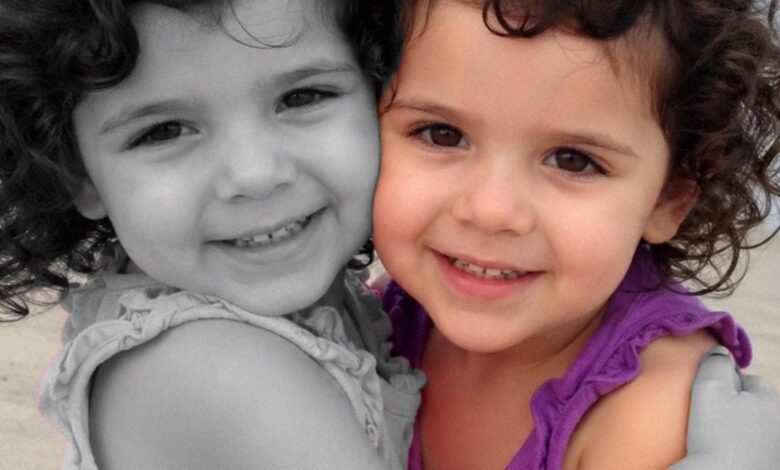
ONE OF MY TWINS DIED — THREE YEARS LATER, ON MY DAUGHTER'S FIRST DAY OF SCHOOL, HER TEACHER SAID: "BOTH OF YOUR GIRLS ARE DOING GREAT." Three years ago, one of my twin daughters, Ava, suddenly became ill, and we rushed her to the hospital. She had a persistent high fever and felt weak all the time. The doctors ran countless tests, but they still couldn't give us a clear diagnosis. They said it was most likely meningitis. A few days later, she died. I was in such shock that I barely remember anything from that time. The doctors admitted me to the hospital, and I was hooked up to IV fluids. Those days were a blur. My husband's mother came, and the two of them handled the funeral while I was still in the hospital. Even on the day of the funeral, I could barely stand. In the years that followed, I tried to find the strength to keep living for my other daughter, Lily. Three years passed. The pain never faded. I suggested we move to another city. We sold the old house and bought a new one a thousand miles away. After we moved, Lily was about to start first grade. That morning, I walked her to school. It was the first day of school. Later that afternoon, I went to pick Lily up. She was packing her backpack when her teacher, Ms. Thompson, walked over to me. She smiled and said: "Both your girls are doing very well." I smiled politely and replied: "I'm sorry, but you must be mistaken. I have one daughter — Lily." Ms. Thompson looked surprised. "Hmm... I'm still getting to know everyone. But Lily has a twin sister, doesn't she? They look so alike. I just assumed you had two daughters." My heart started pounding, but the teacher continued. "We divided the class into two groups. Oh, by the way, the last lesson in the other group is just about to end — that's where your second daughter is. Come with me." My blood ran cold. I still didn't understand what Ms. Thompson was talking about. She led me to another classroom and stepped inside. Then she pointed to a girl and said: "Well, there SHE IS — Lily's twin sister." I STOPPED BREATHING. The story continues in the comments. ⬇️

by


I Saw My Dead Daughter In A Classroom Three Years Later And Demanded A DNA Test

I buried one of my twin daughters three years ago and spent every single day wrapping myself around that deep and truly devastating loss. So when her sister’s teacher casually said, “Both of your girls are doing great” on the very first day of first grade, I literally stopped breathing.

I remember the fever more than anything else. Ava had been cranky for two days. On the third morning, her temperature hit 104 degrees, and she went limp in my arms. I knew with the bone-deep certainty that only mothers understand that this was something else entirely. The hospital lights were too bright. The beeping was constant. And the word meningitis arrived the way the worst words always do, quietly, almost carefully, like the doctor was trying to hand it to us gently. John held my hand so hard that my knuckles ached. Ava’s twin sister, Lily, sat in a waiting room chair with her shoes not quite reaching the floor, not fully understanding, and eating the crackers a nurse had given her. And then, four days later, Ava was gone.

I do not remember much after that. I remember IV fluids and a ceiling I stared at for what felt like weeks. I remember Debbie, John’s mother, whispering to someone in the hallway. I remember signing papers that were put in front of me. I do not know what they said. I remember John’s face, hollowed out in a way I had never seen before and have not seen since. I never saw the casket lowered. I never held my daughter one last time after the machines went quiet. There is a wall in my memory where those days should be, and behind it, nothing. Lily needed me to keep breathing, so I did.

Three years is a long time to keep breathing through. I went back to work. I got Lily to preschool, gymnastics, and birthday parties. I cooked dinner, folded laundry, and smiled at the right moments. From the outside, I probably looked fine. From the inside, it was like walking through every single day with a stone in my chest. I just got better at carrying it.

One morning, I sat at the kitchen table and told John I needed us to move. He did not argue. He already knew. We sold the house, packed everything, and drove a thousand miles to a city where no one knew us. We bought a small house with a yellow door, and for a while, the newness of it helped.

Lily was about to start first grade. She stood at the front door that morning in new sneakers, backpack straps tightened all the way, practically levitating with excitement. She had been talking about first grade for three weeks straight. The classroom, the teacher, and whether she would sit next to someone nice. “You ready, sweetie bug?” I asked her. “Oh, yes, Mommy!” she chirped. And for one real, full second, I laughed. I drove her to school, watched her disappear through the doors without a backward glance, and then I went home and sat very still for a while.

That afternoon, I went back to pick Lily up when a woman in a blue cardigan crossed the room toward us. She wore a warm, efficient smile of someone who has thirty children’s parents to meet and is doing her best. “Hi there, you are Lily’s mom?” she asked. “I am, Grace,” I said. “Ms. Thompson.” She shook my hand. “I just wanted to say, both your girls are doing really well today.” “I think there might be some confusion. I only have one daughter, just Lily.”

Ms. Thompson’s expression shifted slightly. “Oh, I am sorry. I just joined yesterday, and I am still learning everyone. But I thought Lily had a twin sister. There is this girl in the other group… she and Lily look so alike. I just assumed.” “Lily does not have a sister,” I clarified. The teacher tilted her head. “We split the class into two groups for the afternoon session. The other group’s lesson is just finishing up.” She paused, genuinely puzzled. “Come with me. I will show you.”

My heart raced as I followed her. I told myself it was a mix-up, a child who looked similar, an honest mistake from a new teacher still learning thirty names. I told myself that all the way down the hall. The classroom at the end of the corridor was winding down. Chairs were scraping, lunch boxes were being zipped, and there was the usual chaos and the restless noise of six-year-olds being released from concentration. Ms. Thompson stepped in ahead of me and pointed toward the window tables. “There she is, Lily’s twin.”

I looked. A girl sat at the far table, stuffing a crayon set into her backpack, her dark curls falling forward over her face. She tilted her head to one side as she worked. That specific angle and that particular tilt made my vision go strange at the edges. The girl laughed at something the child beside her said, her whole face crinkling at the corners. The sound traveled across that classroom and landed directly in the center of my chest like something I had not heard in three years.

“Ma’am?” Ms. Thompson’s voice came from somewhere far away. “Are you all right?” The floor came up very fast. The last thing I saw before the lights went out was that little girl looking up, and for one impossible second, looking straight at me.

I woke up in a hospital room for the second time in three years. John was standing near the window, and Lily was beside him, watching me with wide, careful eyes. “The school called,” John said. His voice was controlled in a way that meant he had been scared and had converted it to composure by the time I opened my eyes. I pushed myself upright. “I saw her. John, I saw Ava.” “Grace.” “She has the same features,” I said. “The same laugh. I heard her laugh, John, and it was… Ava.” “You were barely conscious for three days after we lost her. You do not remember those days clearly. Ava is gone. You know that.” “I know what I saw, John.” “You saw a child who looked like her, Grace. It happens.”

I stared at him. “Do you know you never let me talk about this? Any of it?” That landed. But John did not answer. I lay back against the pillow and let the silence settle. Because he was right about one thing: there were pieces I could not retrieve. The IV, the ceiling, his mother handling the arrangements, papers, John’s hollow face, and the funeral I moved through like something underwater. I never saw Ava’s casket lowered. And that blank wall in my memory had never once stopped feeling wrong.

“I am not unraveling,” I broke the silence. “I just need you to come see her. Please.” After a long moment, John nodded. We dropped Lily off the next morning and walked directly to the other classroom. The class teacher told us that the girl’s name was Bella. The little one was sitting at the window table, already working on something, her pencil moving in the same absentminded twirl between her fingers that Lily had done since she was four. John stopped walking.

I watched him take it in. The curls, the posture, the way Bella pressed her lips together in concentration. I watched the certainty leave his face, and something much less comfortable take its place. “That is…” he started, and then did not finish. The class teacher explained that Bella had transferred in two weeks ago. She was a bright girl and adjusting well. Her parents, Daniel and Susan, dropped her off every morning at 7:45 without fail. We waited, and John kept reminding me it could all be a coincidence.

At 7:45 the next morning, a man and a woman came through the school gate hand in hand, with Bella between them. Daniel and Susan. They were warm, ordinary, and clearly bewildered when John quietly asked if they had a moment. We stood in the schoolyard while Lily and Bella eyed each other from ten feet away with the particular suspicious fascination of identical-looking strangers. Daniel looked between the two girls and let out a slow breath. “That is genuinely uncanny,” he said. But he recovered quickly. “Kids look alike sometimes,” he added. And the way Susan’s hand tightened on Bella’s shoulder told me she had the same thought and was already pushing it back down.

I could not sleep that night. I lay in the dark and went through it again, slowly, the way you press a bruise to confirm it is real. Ava was three years old. She was gone. That is what I had forced myself to believe. But grief does not believe in logic, and mine had found the one crack it could fit through. “I need a DNA test,” I said, facing the ceiling. John was quiet for long enough that I thought he had fallen asleep. Then he said, “Grace…”

“I know what you are going to say, John. That I am spiraling. That this is grief. That I will hurt myself more than I am already hurting.” I turned to face him in the dark. “But I will hurt more not knowing. And you know that too.” He stared at the ceiling for a long time. “If it comes back negative,” he said finally, “you have to let her go. Really let her go. Can you promise me that?” I reached for his hand under the covers and held it. “Yes, I can.”

Asking Daniel and Susan was the hardest conversation I have ever had. Daniel’s face went from confusion to anger in about four seconds flat, and I did not blame him. I was a stranger asking him to question the identity of his child, and no matter how gently John explained it, the request was enormous. But John told him about Ava quietly and without flinching. About the fever, about the days I could not stand, and about the blank space where the memory of a goodbye should be.

Daniel looked at his wife. Something passed between them, the silent, whole-sentence language of two people who have been through hard things together. Then he looked back at us. “One test,” Daniel agreed. “That is it. And whatever it says, you accept it. Both of you.” “Yes,” John answered.

The wait was six days. I barely ate. I watched Lily sleep twice, standing in her doorway in the dark, comparing her face to every photograph I had on my phone. I questioned my own memory so many times that it started to feel like someone else’s. The envelope arrived on a Thursday morning. John’s hands were steadier than mine, so he opened it. He read it once. Then he looked at me. “What is it?” I asked, scared of what the answer might be. John just handed me the paper. “Negative,” he said softly. “She is not Ava, Grace.”

I cried for two hours. Not from devastation, though that was in there, too. I cried the way you cry when the grief you have been holding onto for three years finally releases its grip. John held me the whole time and did not say a word, which was exactly right. I think he had known all along, but he agreed to the test because he knew I needed to see it in writing.

Bella was not my daughter. She was someone else’s beloved, ordinary, bright little girl who happened to share a face with the one I lost. Nothing more and nothing sinister. Just the particular cruelty and grace of coincidence. And somehow, having that confirmed in black and white gave me something I had not been able to find in three years of trying: the goodbye I never got to say.

A week later, I stood at the school gate watching Lily sprint across the yard toward Bella with her arms already out. The two of them collided, laughing, and immediately started braiding each other’s hair in that fast, chaotic way six-year-olds do. They walked through the doors side by side, indistinguishable from the back, same curls, same bounce, and same size. My heart ached the way it had on that first afternoon. Then it loosened.

Standing there in the morning light, watching Lily and her new best friend disappear through those school doors together, I felt something shift quietly into place. Not pain. Not panic. Something that, if I had to name it, I would call peace. I did not get my daughter back. But I finally got my goodbye. Grief does not always look like crying. Sometimes it looks like a little girl across a classroom who carries your broken heart home. And sometimes that is exactly enough to let you start healing.

I TOOK MY MOM TO PROM BECAUSE SHE MISSED HERS RAISING ME — MY STEPSISTER HUMILIATED HER, SO I GAVE HER A LESSON SHE'LL REMEMBER FOREVER. My mom got pregnant with me in high school. My bio father bailed the same day she told him. No calls. No help. Nothing. She missed her prom, traded her glitter dress for diapers and double shifts, studied for her GED while I slept. So when my own prom rolled around this year, I told her: "Mom… you missed your prom because of me. Come to mine — with me." She laughed, then cried so hard she had to sit down. My stepdad, Mike, was excited too. But my stepsister, Brianna? She nearly choked on her Starbucks. "You're bringing YOUR MOM? To PROM? That's… actually pathetic." I ignored her. Later she sneered again: "Seriously, what's she gonna wear? One of her church dresses? You're gonna EMBARRASS yourself." Still ignored her. Prom day came — and my mom looked stunning. Beautiful gown, vintage curls, glowing smile. She whispered, "What if people stare? What if I ruin this?" "Mom, you MADE my life. You can't ruin anything." We arrived at the school courtyard for photos. Brianna strutted up in a glitter dress that probably cost more than my car. She pointed at my mom and loudly said: "Why is SHE here? Is this prom or Bring-Your-Parent-to-School Day? What an EMBARRASSMENT." Her friends giggled. My mom's face fell. I felt fire in my veins. But Brianna had no idea that her father, Mike, would step forward. When he heard what she said, he came up dangerously slowly and did something I will remember UNTIL THE DAY I DIE. "Brianna. Sit." ⬇️

by


My Stepsister Laughed At Me For Taking My Mom To Prom So I Humiliated Her In Front Of The Entire School

I am 18 years old, and what went down last May still plays in my head like a movie I cannot stop rewatching. You know those moments that shift everything, where you finally understand what it really means to protect the people who protected you first? This is that story. My mother, Emma, became a parent at the very young age of 17. She gave up her entire adolescence for me, including the prom she had dreamed about since middle school. Mom gave up her dream so I could exist. I figured the least I could do was give her one back.

Mom found out she was pregnant during her junior year of high school. The guy who got her pregnant vanished the second she told him the news. There was no goodbye, no child support, and no curiosity about whether I would inherit his eyes or his laugh. Mom faced everything completely alone after that. College applications went into the trash, and her dream dress stayed in the store. Graduation parties happened without her. She juggled crying babies she babysat for the neighbors, worked graveyard shifts at a local truck stop diner, and cracked open her GED textbooks only after I had finally dozed off for the night.

When I was growing up, she would sometimes mention her almost-prom with a forced laugh, the kind of laugh people use when they are trying to bury pain under humor. She would say things like, “At least I avoided a terrible prom date!” But I always caught the deep sadness that flashed in her eyes before she quickly redirected the conversation.

This year, as my own senior prom approached, something clicked in my brain. Maybe it was a little sentimental, but it felt absolutely right. I was going to give her the prom she never got. One evening while she was scrubbing the dishes, I blurted it out. “Mom, you sacrificed your prom for me. Let me take you to mine.”

She laughed as if I had told a joke. But when she realized my expression did not change, her laughter dissolved into tears. She actually had to grip the kitchen counter to steady herself, asking over and over if I was sure I would not be embarrassed. That moment was the purest joy I had ever witnessed on her face. My stepfather, Mike, who came into my life when I was 10 and became the father I had always needed, practically jumped with excitement. He taught me everything from tying a tie to reading body language, and this idea thrilled him.

But there was one person whose reaction was completely ice cold: my stepsister, Brianna. Brianna is Mike’s child from his first marriage, and she moves through life as if the world is a stage built specifically for her own performance. Picture salon-perfect hair, ridiculously expensive beauty treatments, a social media presence dedicated exclusively to outfit documentation, and an entitlement complex that could fill a warehouse. She is 17, and we have clashed since day one, mainly because she treats my mother like inconvenient background furniture.

When the prom news reached her ears, she practically spat out her overpriced coffee. “Wait, you are escorting your mother to prom? That is genuinely pathetic, Adam.”

I walked away without responding. Days later, she cornered me in the hallway, smirking. “Seriously, though, what is she planning to wear? Some outdated outfit from her closet? This is going to be so humiliating for both of you.”

I kept my mouth shut and moved past her. She pushed even harder the week before the event, going straight for the throat. “Proms are for teenagers, not middle-aged women desperately chasing their lost youth. It is honestly depressing.” My fists clenched involuntarily, and heat rushed through my veins. But I forced out a casual laugh instead of the explosion building inside me, because I already had a plan in motion that she could not possibly anticipate.

“I really appreciate the feedback, Brianna,” I said calmly.

When prom day finally arrived, my mom looked absolutely breathtaking. She chose an elegant gown that made her eyes sparkle, styled her hair in soft retro waves, and wore an expression of pure, unadulterated happiness that I had not seen in over a decade. Watching her transformation brought tears to my eyes. She kept questioning everything nervously as we prepared to leave, asking if everyone would judge us or if she would ruin my big night.

I held her hand firmly. “Mom, you built my entire world from nothing. There is absolutely no way you could mess this up. Trust me.”

Mike photographed us from every conceivable angle, grinning from ear to ear. We arrived at the school courtyard where students gathered before the main event. My pulse raced from overwhelming pride. Yes, people stared, but their reactions shocked my mother in the best way possible. Other mothers praised her appearance and her dress choice. My friends surrounded her with genuine affection and excitement. Teachers stopped mid-conversation to tell her she looked stunning and that my gesture was moving.

Then Brianna made her move. While the photographer was organizing group arrangements, Brianna appeared in a sparkly dress that probably cost a month of rent. She planted herself near her squad and projected her voice across the courtyard. “Wait, why is she attending? Did someone confuse prom with family visitation day?”

My mother’s radiant expression crumbled instantly. Sensing vulnerability, Brianna delivered her follow-up with venom. “This is beyond awkward. Emma, you are way too old for this scene. This event is designed for actual students, you realize.” My mother looked ready to bolt. Rage burned through me, but I manufactured my calmest smile. “Interesting perspective, Brianna. I really appreciate you sharing that.”

What Brianna could not possibly know was that I had met with the principal, the prom coordinator, and the event photographer three days prior. I had explained my mother’s sacrifices and asked if we could include a brief acknowledgment. During the evening, the principal approached the microphone. A spotlight found us.

“Tonight, we are honoring someone extraordinary who sacrificed her own prom to become a mother at 17,” the principal announced. “Adam’s mother, Emma, raised an exceptional young man while juggling multiple jobs. Ma’am, you inspire every person in this room.”

The gymnasium erupted in cheers. Applause thundered through the room, and students chanted my mother’s name in unison. My mother’s hands flew to her face, her entire frame trembling with overwhelming emotion. Across the room, Brianna stood frozen, her jaw hanging open and mascara beginning to streak from her furious glare. Her friends stepped back, exchanging looks of disgust, and one of them clearly said, “You actually bullied his mother? That is seriously messed up, Brianna.” Her social standing shattered instantly.

Post-prom, we gathered at home for a low-key celebration. Then Brianna burst through the door, fury radiating from her. “I cannot believe you turned some teenage mistake into this massive sob story! You are all acting like she is a saint for getting knocked up in high school.”

That was the final straw. Mike set down his pizza with calculated precision. “Brianna, sit right now.”

He gave her an unforgettable lecture about his respect for Emma and the disgrace Brianna had brought upon the family with her cruel behavior. “Here is what happens next. You are grounded through August. Your phone gets confiscated. No social gatherings, no vehicle privileges, and you will write a handwritten apology to Emma.”

Brianna shrieked, but Mike held firm. She stormed upstairs, slamming her door. My mother collapsed into cathartic, relieved tears, clinging to Mike and me.

Brianna later wrote the apology letter, and she is now respectful whenever my mother is around. Watching my mother realize her sacrifices created something beautiful is the true victory. My mother is my hero, and now, everybody else recognizes it too.

What do you see in the image? The answer reveals your psychological nature.. Details in the first comment.

by


UNLOCK YOUR MIND, What You See First in This Viral Image Reveals the Hidden Secrets of Your True Personality!

The human brain is an anatomical marvel, a complex network of firing neurons and electrical impulses that work tirelessly to categorize the world around us. Yet, for all its sophistication, the mind is remarkably prone to being tricked. We often assume that what we see is an objective reality—a direct feed from our eyes to our consciousness—but the truth is far more subjective. Our perception is a curated experience, filtered through the lens of our past experiences, our current emotional state, and our inherent personality traits. Nowhere is this more evident than in the captivating world of optical illusions and psychological visual tests. What starts as a simple exercise in observation often transforms into a profound mirror, reflecting the hidden architecture of who we are.

Take a moment to center yourself and look at the image before you. Do not overthink. Do not squint to find hidden meanings or try to deconstruct the geometry of the lines. Simply allow your eyes to land where they naturally want to. Within the first few seconds, your brain has already made a choice. It has prioritized one specific element over all others, signaling a deep-seated cognitive bias that dictates how you interact with the world. Whether you see the soft curve of lips, the vertical strength of trees, or the intricate web of roots, your first instinct is a window into your soul.

For those whose gaze was immediately drawn to the shape of the lips, your personality is likely characterized by a remarkable sense of fluidity and inner peace. In a world that is often loud, chaotic, and demanding, you are the calm in the eye of the storm. Seeing the lips first suggests a brain that prioritizes harmony over conflict and simplicity over unnecessary complexity. You are a person who values the “flow” of life, rarely getting caught up in the minutiae of drama or the frantic pace of modern competition. This doesn’t mean you lack ambition; rather, it means you understand that the most effective way to reach a destination is often the most direct and peaceful path.

People who identify the lips first are often described by their friends and family as the ultimate “fixers,” though not in an aggressive way. You are the listener, the one who offers a steady hand and a quiet word of reassurance when everything else seems to be falling apart. You possess an innate adaptability that allows you to navigate diverse social circles and high-pressure environments with a grace that others find enviable. However, there is a hidden challenge in this gift. Because you are so focused on maintaining external harmony and supporting those around you, you may find yourself neglecting your own emotional landscape. You are a natural-born caregiver, but remember that the strongest bridge still requires a solid foundation. Your tendency to be steady and reliable is a superpower, provided you take the time to refill your own reservoir of peace.

If, however, your eyes bypassed the curves and locked onto the majestic silhouettes of the trees, you possess a fundamentally different cognitive orientation. You are an outward-focused individual, someone who is energized by the vibrancy of the world and the connections within it. The trees represent growth, visibility, and strength. If this was your first focal point, you are likely someone who is highly expressive, observant, and socially confident. You don’t just walk into a room; you sense the energy within it. You are the kind of person who notices the subtle shifts in a conversation, the unspoken cues of a colleague, or the underlying tension in a group setting.

This high level of social intelligence makes you a natural leader and a compelling communicator. You aren’t afraid of standing tall, much like the trees that captured your attention. You value integrity and honesty, and you expect the same from those in your orbit. You are likely a person of great curiosity, always seeking new experiences and broader horizons. For you, life is a grand landscape meant to be explored and understood. Yet, with this expansive nature comes a certain restlessness. Because you are so focused on the “tall and bold” aspects of existence, you might occasionally overlook the subtle, quiet details that hold things together. Your challenge is to balance your social magnetism with moments of internal silence, ensuring that your outward growth is matched by an inward stability.

Then, there are the few whose perception dives deep, past the obvious shapes and into the intricate, hidden world of the roots. If the roots were the first thing you noticed, your mind is a sanctuary of depth and reflection. While others are looking at the surface or the sky, you are looking at the foundation. You are a thinker, a philosopher, and a strategist. You understand that nothing beautiful or strong can exist without a complex, invisible system supporting it. You are not interested in small talk or superficial interactions; you crave meaning, structure, and intellectual stimulation.

Being drawn to the roots suggests a personality that values tradition, history, and the “why” behind every action. You are likely someone who plans for the future with meticulous detail, but only after thoroughly analyzing the past. You are the “anchor” in your social or professional circles—the person who provides the logic and the structural integrity that others rely on. However, because you think so deeply, you may sometimes struggle with a tendency toward over-analysis. You might find it difficult to “just be” without trying to solve a puzzle or find a hidden meaning. Your strength lies in your incredible resilience and your ability to see what others miss, making you an invaluable ally and a profound visionary.

It is fascinating to consider that thousands of people can look at the exact same arrangement of lines and colors, yet walk away with entirely different emotional and psychological reactions. This is the beauty of human perception. It reminds us that there is no “correct” way to see the world. One person sees a forest where another sees a face; one person sees a problem where another sees an opportunity. These visual tests are not meant to box us into rigid categories, but rather to spark a sense of wonder about the unique wiring of our own minds.

In our daily lives, we are constantly bombarded with information. We make thousands of split-second judgments about people, situations, and environments. Understanding what we see first can help us become more mindful of our natural biases. If you know you are a “lips” person, you can consciously work on setting boundaries. If you are a “trees” person, you can practice the art of listening. If you are a “roots” person, you can learn to embrace the beauty of the superficial every now and then.

Ultimately, these images are a celebration of individuality. They encourage us to trust our instincts and to appreciate the diverse perspectives of those around us. The next time you find yourself in a disagreement with a friend or colleague, remember the image. Remember that they might be looking at the same set of facts but seeing the trees while you see the roots. By acknowledging these differences in perception, we move closer to a more empathetic and connected world. Perception isn’t just about what we see—it’s about who we are.

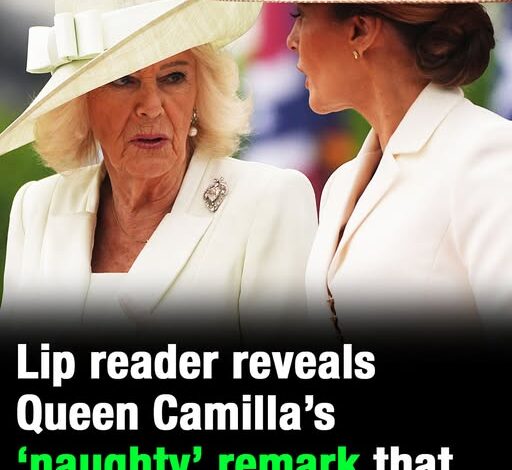
The First Lady was stunned 😳😳

by


Melania Trump Left Absolutely Speechless After Queen Camilla Whispers Something Shocking In The Rain

The Grand Diplomatic Visit

While President Donald Trump and King Charles III have stood in the primary spotlight during the royal family’s recent state visit to the United States, First Lady Melania Trump and Queen Camilla have also played absolutely pivotal roles. On Tuesday, all four high-profile figures attended a stunning ceremonial military review on the White House South Lawn as rain poured down from the overcast sky. That unexpected shift in the weather prompted Queen Camilla to make a very British comment, one that left Melania completely stunned and searching for words in front of the assembled press corps.

Queen Camilla and Melania Trump have spent a considerable amount of time together alone during this historic state visit. This United States tour marks the third time the two women have met in a formal state visit setting. Meanwhile, it represents the very first time Queen Camilla has stepped inside the walls of the White House since King Charles ascended the British throne in 2022.

When Donald and Melania visited the United Kingdom last year, the Queen and the First Lady spent substantial time together behind closed doors. They toured the famous Queen Mary’s Dolls’ House and the magnificent Royal Library, sharing quiet moments away from the global press. During this U.S. visit, they once again managed to carve out some quiet time. While King Charles and President Trump met privately inside the West Wing to discuss international trade and security, Melania brought Camilla to the private tennis pavilion, where the two women viewed historical artifacts and discussed their respective roles on the global stage.

A Partnership Of Support

The relationship between the United Kingdom and the United States has experienced moments of strain in recent months, primarily due to differing approaches concerning the escalating conflict in Iran. Speaking to CNN regarding the dynamics of the visit, royal expert and author Elizabeth Holmes explained that both Queen Camilla and Melania Trump are approaching their respective roles during the state visit in the exact same manner, acting as diplomatic anchors for their husbands.

“Neither one of them is trying to steal the spotlight here,” Holmes stated during her analysis. “In this case, Charles and Trump are very much the focal point of the cameras and the media. I would bet both men appreciate that. Certainly, Charles has had times in his life when he was not the focal point.”

Holmes added that both the First Lady and the Queen represent women who need to play a supporting part during these large-scale diplomatic operations, providing a sense of stability and grace.

While both Queen Camilla and Melania Trump appear to genuinely enjoy each other’s company when they are together, they are not particularly close friends. Elizabeth Holmes clarified this dynamic for viewers, noting that they are simply fulfilling their public duties with utmost professionalism.

“I do not know of any sort of established relationship between the First Lady and the Queen, nor do I think there necessarily has to be one,” the royal author explained. “This feels very much like the First Lady and the Queen are going through the motions of what their role requires in a highly professional and diplomatic manner.”

An Unexpected Change In Weather

Although formal meetings and more informal conversations between the Trumps and the royals have taken place, other, more formal events were heavily scheduled throughout the week. Just as during the September state visit in the United Kingdom, Donald Trump wanted to give the monarch something extra, an extraordinary sign of respect and alliance between the two nations.

At the White House South Lawn on Tuesday, a grand ceremonial military review took place. This event represents the highest level of honor that the United States extends to any visiting head of state, featuring a full honor guard, military bands, and a twenty-one-gun salute to signify the strength of the alliance. However, the bright and sunny weather from the previous day had moved on. Instead, it turned rainy and gray, perhaps what someone would affectionately call typical British weather, setting a slightly somber but majestic tone for the day’s events.

Donald and Charles were seated next to each other in the main viewing area, while Camilla and Melania sat together on the other side of the small, covered stage. It was during this brief period of waiting in the damp conditions that Queen Camilla made a very British remark to Melania, a comment that left the American First Lady temporarily stunned and thoroughly confused by the regional slang.

The Lip Reader Reveals All

Speaking with the Daily Mail, renowned lip-reading expert Nicola Hickling revealed the exact exchange between the two women. When they prepared to sit down on the rain-dampened chairs, the Queen leaned over and said, “Oh, it is rather wet.”

Melania agreed with the observation, responding that the chairs “certainly are” before the two women shared a brief, polite laugh about the unfortunate weather conditions. Then, Queen Camilla instantly replied with a cheeky tone, “We shall have soggy bottoms,” referring directly to the damp chair cushions they were currently sitting on.

The First Lady was visibly stunned and did not fully understand the reference at first. Seemingly confused by the unusual phrase, Melania looked at the Queen, paused, and asked, “What did I just hear?” before asking, “Soggy bottoms?”

The phrase “soggy bottom” originated in the popular television show The Great British Bake Off, where it is often used humorously to describe a pastry or pie with an undercooked, wet base. Queen Camilla is a well-known and outspoken fan of the show, often attending events related to baking and culinary arts. It is a very common piece of British slang, but it is one that is rarely heard in the halls of the White House, making the exchange all the more memorable for royal historians and observers.

Public Reaction And Engagement

The exchange quickly became a viral sensation, capturing the hearts of royal watchers and internet users around the world. Many found the interaction to be incredibly charming and indicative of the warm, human moments that often occur behind the scenes of high-level diplomacy. Others were simply amused by the cultural disconnect between British television slang and American political protocol. The lighthearted moment showed that even in the most formal settings, humor and casual conversation can bridge cultural divides. Fans continue to share their thoughts on social media regarding Queen Camilla and her unique, relatable sense of humor during the diplomatic trip.

New Food Stamp Rules Start in ...see more..

by


The Silent Chamber, Why Newt Gingrich Says a Chilling Display of Disunity Is the Final Warning for Americas Corrupt Political Elite

In the high-stakes theater of American governance, the Joint Session of Congress is traditionally a rare moment where the friction of partisan warfare yields, however briefly, to the dignity of the institution. It is a time for shared goals, collective reflection, and a unified front before a watchful global audience. But according to former House Speaker Newt Gingrich, the most recent gathering on Capitol Hill was defined not by what was said, but by a deafening, deliberate silence. Gingrich, a veteran of decades of legislative combat, has stepped forward with a sobering assessment of the atmosphere in the chamber, describing a level of disengagement and reflexive partisan hostility that he believes signals a terminal breakdown in the American political system. For Gingrich, the refusal of House Democrats to participate in even the most basic displays of unity is more than a snub; it is a symptom of a deeper, more dangerous rot that is currently hollowing out the foundations of Washington.

Gingrich’s observations center on a disturbing lack of “energy” and “shared vision” that he witnessed during the proceedings. He noted that even during moments specifically designed to be non-partisan—moments intended to uplift the American spirit or celebrate national achievements—the response from across the aisle was one of stone-faced detachment. “They couldn’t applaud anything,” Gingrich remarked, highlighting a level of polarization that has moved beyond mere disagreement over policy and into the realm of total ideological alienation. In his view, when one half of the legislative body refuses to acknowledge any positive development simply because it is presented by the opposing side, the concept of leadership is effectively dead. It suggests that partisan reflexes have completely overshadowed the collaborative spirit the American public desperately craves.

However, Gingrich’s critique goes far beyond the optics of a single evening. He argues that this behavior is part of a broader, systemic failure that is alienating the American people at a record pace. Citing recent data from his conservative research group, Gingrich pointed to a staggering statistic: 82 percent of Americans now believe the political system is fundamentally corrupt. This isn’t just a marginal concern held by a few cynics; it is a near-universal consensus that spans across geographic, economic, and social divides. Gingrich contends that if this perception of corruption and self-interest continues unchecked, it will eventually erode the very trust required to sustain a functioning democracy. When the public views the halls of power not as a place of service, but as a theater of performance and bureaucratic entrenchment, the social contract begins to unravel.

In Gingrich’s framing of the current crisis, there is a clear divide between those seeking to overhaul the status quo and those desperate to preserve it. He positions Republican leaders as the vanguard of necessary reform, arguing that they are the only ones willing to challenge the “long-standing bureaucratic systems” that have stifled American progress for decades. Conversely, he accuses the Democratic establishment of acting as the ultimate defenders of those very systems, prioritizing the survival of the administrative state over the needs of the citizenry. According to Gingrich, the refusal to applaud isn’t just about a lack of enthusiasm; it is a defensive posture intended to protect a failing infrastructure from the threat of meaningful change.

The underlying issue raised by the former Speaker—the catastrophic collapse of public confidence in government—is a reality that no serious observer can ignore. Regardless of one’s political affiliation, the data confirms that Americans are increasingly weary of a leadership class that seems more interested in scoring points for their base than in solving the tangible challenges facing the nation. Whether it is the rising cost of living, the complexities of national security, or the integrity of the border, the public perceives a disconnect between their daily struggles and the grandstanding that takes place in Washington. Gingrich’s warning is that when the system becomes so polarized that even a simple handclap is viewed as a betrayal of the party, the ability to pass significant legislation or address national emergencies becomes almost impossible.

The mechanics of this polarization are fueled by a media and political ecosystem that rewards conflict over compromise. Gingrich suggests that the “applause lines” and “partisan loyalty” that currently drive political strategy are a poor substitute for actual service to the public. He believes that the modern political operative has become obsessed with the “optics of the fight” rather than the “results of the work.” This creates a feedback loop where politicians are afraid to show even a hint of bipartisanship for fear of being primaried or ostracized by their own ranks. The result is a legislative body that is effectively paralyzed, unable to move forward on any issue that hasn’t been focus-grouped into a partisan weapon.

The conversation sparked by Gingrich’s comments reflects a wider national anxiety about the future of the republic. How do we rebuild confidence in a system that four out of five people believe is corrupt? How do we encourage an honest debate in an environment where the “other side” is viewed not as a competitor, but as an existential enemy? Gingrich argues that the path forward requires a radical return to the principles of transparency and accountability. He calls for a leadership that is driven by a shared vision of American excellence rather than a narrow adherence to party platform. To Gingrich, the silent chamber was a wake-up call—a visual representation of a government that has stopped listening to the people and has started only listening to its own echo.

As the 2026 political cycle begins to take shape, the themes of reform and corruption are expected to dominate the national discourse. Gingrich’s early warnings set the stage for a confrontation between the “reformers” and the “system defenders.” He believes that the American people are ready for a leadership that isn’t afraid to break the old rules in order to save the country. The question remains whether the institutions of Washington are capable of such a transformation, or if they are so set in their partisan ways that they will continue to stare in silence while the nation demands action.

Ultimately, Gingrich’s message is one of urgency. He believes that the window for rebuilding trust is closing. The disengagement he observed in the House chamber is, in his eyes, a precursor to a much larger disconnection between the government and the governed. If the political elite cannot find it in themselves to applaud for the country, they may soon find that the country has stopped applauding for them altogether. The stakes are nothing less than the survival of the American experiment, and as Gingrich points out, the first step toward a cure is acknowledging the depth of the disease. The silence in the chamber was loud enough for everyone to hear; now, the question is whether anyone in power has the courage to speak up and change the tune.

Top Ad 728x90