MY HUSBAND HID A SHOCKING SECRET ABOUT OUR ADOPTED DAUGHTER FOR FIVE YEARS BUT THE TRUTH CAME OUT AT HER BIRTHDAY PARTY
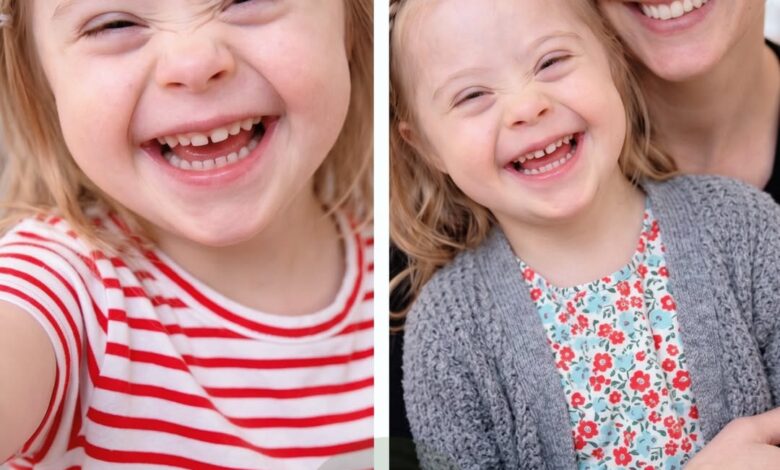
The first time I saw Evelyn, she was curled into a ball inside a crib that felt far too large for her tiny, fragile frame. She was only eighteen months old, a beautiful child with soft curls damp from sleep and a thumb tucked firmly under her cheek. A social worker stood beside me, holding a file that felt impossibly light for a document containing the entire history of a human life. Her biological parents had abandoned her at the hospital with a single, handwritten note that shattered my heart: We cannot handle a special needs baby. Please find her a better family. Reading those words felt like a physical blow to my soul. For years, Norton and I had navigated the hollow, sterile world of infertility—endless tests, failed treatments, and silent prayers in waiting rooms. We were grieving, exhausted, and desperate. We had told ourselves we were open to any child, but in the harsh reality of the adoption world, profiles of children with disabilities were often ignored. Not Evelyn. The social worker had warned us that some families felt unprepared for the challenges of raising a child with Down syndrome, but when Evelyn opened her eyes and smiled at me, I knew in an instant that she was the daughter I had been waiting for my entire life.
Our lives transformed the moment we brought her home. The house, once defined by the heavy, lingering silence of our own disappointment, was suddenly flooded with the chaotic, beautiful sounds of a growing family. It was not an easy life—there were endless therapy appointments, specialized routines, and nights when exhaustion left us barely able to stand. But it was profoundly meaningful. Norton adored her with a devotion that was quiet, steady, and absolute. He didn’t treat her progress as a checklist; he treated it as a series of miracles. I used to watch him sitting on the carpet after a long day, his tie loosened and his sleeves rolled up, patiently guiding her through hand movements and speech exercises. He was the anchor of our home, the man who made every challenge feel like a victory we were winning together.
The only shadow in our lives was Norton’s mother, Eliza. She was a woman who mastered the art of polite cruelty. She never yelled or made a scene; she simply deployed cold smiles, long, uncomfortable pauses, and biting comments that sounded reasonable until you recognized the venom beneath them. When we first announced the adoption, she asked if we were sure it was wise, treating a human life like a failing stock portfolio. When she finally visited, she stood in our living room clutching her designer handbag, looking at our home as if she had wandered into a slum. When Evelyn, with her sweet, slurred voice, toddled toward her and reached out to be held, Eliza recoiled. She wasn’t just bad with children; she was allergic to the very existence of our daughter. After years of visits that left Evelyn confused and me white-hot with rage, Norton and I finally set the boundary that was long overdue: Eliza was no longer welcome in our home.
The years rolled on until the afternoon of Evelyn’s fifth birthday. We had decorated the living room with daisies and paper streamers because Evelyn insisted on a sunshine dress for her party. We were in the middle of arranging plastic juice cups when the doorbell rang. I expected a neighbor or a family friend, but when I opened the door, Eliza stood on the porch, her expression severe and grim. She didn’t offer a birthday wish. She looked past me into the house, her eyes scanning the room with a chilling coldness, and asked me a question that made my blood run cold: He still hasn’t told you anything, has he?
The room seemed to tilt beneath me. Norton, who had been laughing with Evelyn a moment before, turned and went deathly pale. I felt the air leave the room as Eliza brushed past me, her presence immediately turning our celebration into a wake. She looked at me, her fingers wrapping tightly around my wrist, and insisted that the truth had to be told. Norton rose from the floor, his face drained of all color, and slowly lifted Evelyn into his arms. He looked at me with an expression of such raw, agonizing vulnerability that I felt my own heart begin to shatter before I even knew the secret he had been hiding.
Norton placed Evelyn on the couch beside me and sat across from us, his elbows resting on his knees as he began to speak. He confessed that before we met, he had been involved with a woman named Marissa for less than a year. They had lost touch, and the relationship had simply faded away. When the adoption agency gave us Evelyn’s file, her birth mother was listed as Marissa. He had assumed it was a coincidence—until he noticed the small, crescent-shaped birthmark behind Evelyn’s ear. It was a family marker, one that his grandfather, his father, and he himself shared. The realization had haunted him for years. He had conducted a quiet DNA test shortly after bringing her home, and the results had confirmed his worst fear: Evelyn was his biological daughter from that past relationship.
The silence that followed was total, broken only by Evelyn humming softly as she played with a ribbon. The foundation of my existence had split open. My husband had known for five years. He had watched me love her, nurture her, and fight for her, all while harboring the knowledge that he was her father by blood. He pleaded with me, his eyes filling with tears, claiming he had intended to tell me but had been paralyzed by the fear that I would view our entire marriage as a sham. I looked at him and saw a man who loved our daughter deeply, but also a man who had stolen my agency. He had decided for me what I could handle, and in doing so, he had built a wall between us that I wasn’t sure I could ever tear down.
Then came the final, devastating realization: Eliza had known the entire time. She hadn’t rejected Evelyn because she was a child with Down syndrome; she had rejected her because she was proof of Norton’s past, a complication she didn’t want in her meticulously managed family image. The anger that surged through me was hot and fierce, but I managed to keep it contained for the sake of the child in my lap. I looked at my husband and made it clear that while his betrayal was a wound that would take a long time to heal, Evelyn was my daughter, and that would never change. I told Eliza that if she ever stepped foot in our home again and spoke of my child with such disdain, it would be the last time she ever saw any of us. She left without a word, and for the first time, I felt that the power in the room had finally shifted back to the ones who deserved it.
We stayed for the cake. We sang the songs and put the plastic tiara on Evelyn’s head. The truth had not neatly fixed our problems; it had complicated them in ways I was only beginning to understand. But as I watched Evelyn blow out her candles, her face glowing in the warm light, I realized that the secret had not tainted her. She had been found. She had been loved by a man who didn’t know her origin and a mother who didn’t care about the biology. She was our daughter, and despite the secrets and the lies that had threatened to define her, she remained exactly who she had always been: the bright, shining sunshine of our lives.


0 comments:
Post a Comment