Top Ad 728x90

Friday, May 22, 2026

Nine days after leaving my husband, I was sitting on a park bench in Dayton with my two daughters, $12 in my jacket pocket, and a carton of lukewarm gas-station rice between us when my youngest hugged her stuffed rabbit tighter and whispered, “Mommy… Bunny is blinking.” That was the instant I realized he had never truly stopped watching us… My name is Shelby Pruitt. I’m thirty years old, and for nearly five years I became an expert at pretending fear was just part of everyday life. From the outside, Trent and I looked forgettably ordinary. A rented duplex on a quiet block. Two little girls with braided hair and cartoon lunchboxes. A husband who repaired heating systems. A wife who stayed home longer than she wanted because daycare cost too much and Trent always insisted it made more sense for me to wait “just one more month” before finding work again. Inside the house, everything revolved around his moods. The sound of his truck pulling into the driveway. The way the front door slammed. How hard he dropped his keys onto the kitchen counter. If the keys landed softly, the night might stay calm. If they cracked against the counter like thrown metal, I knew to keep the girls quiet, keep dinner warm, keep my voice low, keep the entire house small. People imagine abuse as screaming and bruises everyone can see. Sometimes it is. But often it’s quieter than that. It’s structure. Control. A person slowly reshaping your world until every path somehow circles back to them. He didn’t only hurt me. He made sure I had nowhere else to go afterward. My mother passed away when I was nineteen. My father had never really been around. Trent pushed away my friends one by one until they stopped calling. My old coworkers were “bad influences.” My cousin in Columbus supposedly “filled my head with garbage.” He said a loyal wife didn’t need outsiders involved in her marriage. So my world shrank. Then shrank again. Until it fit between the sound of his footsteps. The night I finally left, he came home close to midnight smelling like whiskey and cold rain. Hadley was supposed to be asleep, but a thunderstorm had scared her awake. She wandered into the hallway in pink socks while Ruthie stood behind her holding the stuffed rabbit Trent had won at the county fair years earlier. He asked why they were still awake. I answered softly, “The storm scared them.” That should have meant nothing. Instead, he hit me so hard I slammed against the pantry door. Hadley screamed. Ruthie froze completely, clutching the rabbit against her face, eyes wide and dry like her body had forgotten how to cry. He had hit me before. That wasn’t new. But watching my daughters witness it changed something inside me. Not shattered. Cracked open. Broken things stay still. I moved. I grabbed the emergency bag hidden behind winter blankets in the closet. Clothes for the girls. My ID. A charger. Old diapers I’d never thrown away because they padded the bag. And the cash I’d secretly folded into an empty cough-drop tin every time Trent left money in his pockets. One hundred and twelve dollars. That was our version of freedom at midnight. I carried Ruthie on one hip, held Hadley’s hand, and walked out without shoes. I didn’t go back for coats. I didn’t go back for blankets. I didn’t leave a note. For nine days we drifted from place to place trying not to be noticed. A motel for one night. The library for warmth. A laundromat where I washed clothes and pretended this was some strange little adventure. Church basements for sandwiches. Then the park, because I’d learned people notice you less when you sit farther away from the road. The October wind pushed leaves around our shoes in slow circles. Hadley wore a thin pink hoodie that wasn’t warm enough. Ruthie had on an oversized gray sweatshirt donated by a neighbor. That morning I braided both their hair with hands that still trembled whenever I heard a truck backfire. No matter how bad things became, I braided their hair. I kissed their foreheads. I promised them we’d be okay. Then I turned away so they wouldn’t see me counting the money left in my pocket. Eleven dollars and forty cents. That was everything we had. Hadley ate slowly because she already understood that when food gets low, you make each bite last longer. Ruthie pushed rice into tiny piles with her plastic fork, glancing up at me every few seconds the way children do when they sense fear without understanding it. “Are we sleeping in the car tonight?” Hadley asked quietly. I swallowed hard. “I’m figuring it out.” It was true. It just wasn’t really an answer. Nobody tells you that leaving doesn’t instantly bring safety. First comes distance. Then exhaustion. Then paperwork. Then hunger. Then the dangerous little voice whispering maybe going back would be easier before the children remember too much. I hated that voice. But I understood it. That afternoon I was so tired my bones felt hollow. My cheek still stung where his ring had scraped my skin. Every time tires crunched over gravel, I looked toward the parking lot automatically. A woman pushed a stroller past us without making eye contact. Somewhere farther down the path, a dog barked twice before falling silent. Then Ruthie raised her rabbit. Its fur used to be white, but years of being dragged around had turned it grayish and worn. One button eye sagged lower than the other. The left ear had a torn seam I kept meaning to fix. “Mommy,” she whispered. “Bunny has a light.” At first I assumed sunlight hit something shiny. Then I saw it. A tiny blue blink from inside the ripped seam. Not sunlight. Not reflection. A blinking light. Cold rushed through my body so fast it felt like falling underwater. I took the rabbit carefully from her hands. My fingers trembled as I pulled the torn ear wider apart. Something small was buried inside the stuffing. Square. Hard. Blinking blue. For one long second, every sound in the park disappeared. No wind. No traffic. No voices. Only my heartbeat pounding in my ears. Trent had given Ruthie that rabbit after the first time she cried from hearing him scream at me. “Daddy takes care of his girls,” he’d said with a smile. And suddenly I remembered something else. Two weeks earlier, when the ear ripped open, Trent had insisted on sewing it himself. Hadley noticed my face change instantly. “Mom?” she whispered. I looked toward the parking lot. A red pickup had just rolled slowly off the main road. Not wandering. Not searching. Moving like it already knew exactly where we were sitting. Full story continues below. 👇 Was leaving without a plan the worst mistake I ever made… or the only reason my daughters still had a chance? Tell me honestly. And if you want the next part, say “KEEP GOING.”

MY DAUGHTER SAW THE RABBIT BLINK AND SAVED OUR LIVES AFTER WE FLED FROM A DANGEROUS TRACKING DEVICE
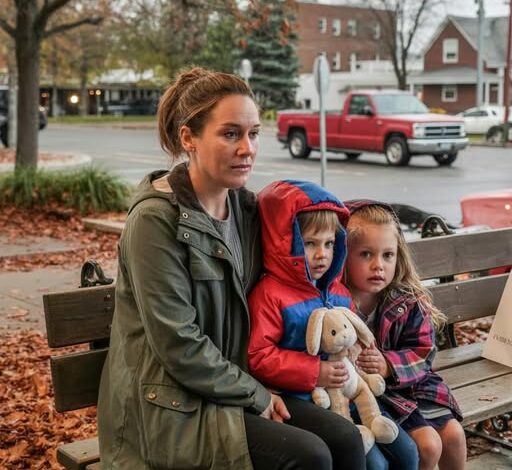
The red light pulsing from within the ear of a worn out stuffed rabbit was the last thing I ever expected to see. For nine days, my two daughters and I had been living in a state of primal terror, sleeping in the front seats of a cramped car, eating dollar store snacks in the dark, and listening to every passing engine with the desperate, jagged heartbeat of a hunted animal. I had fled my home under the cover of a Tuesday morning, fueled by a single, terrifying moment when my husband put his hand around my wrist and told me I did not get to leave. I had taken nothing but emergency cash and my children, terrified that he would find us, and for nine days, I had convinced myself that invisibility was our only path to survival. I believed that if I made myself small enough, if I didn’t reach out for help, if I stayed silent, we would eventually vanish into the background of a world that didn’t care to notice us. I was wrong.

We were sitting on a cold park bench in November, my daughters huddled against me for warmth, when a woman named Denise Harlan sat down at the far end of the bench. She was a poised, silver-haired woman with the steady posture of someone who has spent decades acting as a sanctuary for those in crisis. At the time, I didn’t know she was an emergency room nurse and a former school counselor who volunteered her time to look for women in exactly our situation. I only knew that the air around her felt different—composed, purposeful, and profoundly safe. She watched us with a quiet, observant gaze that felt like a lifeline. She tried to strike up a conversation by telling me my daughter’s shoe was untied, even though it was double-knotted. I realize now she was testing me, checking to see if I was too fractured by fear to respond. When I didn’t snap, she offered us a warm restroom in the nearby nature center. I was about to refuse, crippled by the paranoia that any interaction was a risk, when my young daughter Ruthie held up her stuffed rabbit and said, Mommy, Bunny has a light.

I looked down, and my blood turned to ice. From the longer ear of the rabbit, a small, rhythmic pulse of red light was blinking. It was a tracking tag, and in that moment, the red pickup truck I had been tracking in my peripheral vision for the last ten minutes took on a sinister, inevitable shape. The predator had been watching us all along. Denise didn’t hesitate. She didn’t ask if I was sure or try to rationalize the light away. She processed the threat in the space of a single breath, stood up, and signaled for us to follow her with the practiced efficiency of a woman who had rehearsed this life-saving procedure a thousand times. We moved through a side door of the nature center while Denise spoke into her phone, her voice an anchor of calm in the midst of my collapsing reality. She wasn’t just helping us; she was handling us, guiding us through the fog of my panic with the steady hand of someone who knew the terrain of domestic violence intimately.

Denise locked the office door, looked my daughters in the eyes, and told them she needed quiet feet and brave hearts. While I stood in a daze, she cut open the seam of the rabbit’s ear with a tiny pair of scissors from her keychain, tipped the stuffing into her palm, and revealed the button-sized tracker. She didn’t throw it in the trash; she tucked it into a bin in the lost-and-found and had it moved to the other side of the building to misdirect our pursuer. That was when I finally understood that my survival didn’t require invisibility—it required being seen by the right person. Denise looked at me, not as a problem to be managed, but as a person capable of making a choice, and asked, Do you want help, Shelby? That simple, present-tense question broke the dam of my restraint, and I finally understood that hiding from danger and hiding from help are two very different things.

The shelter we were taken to was an old brick building on the west side of town, smelling of coffee and laundry detergent—a place built deliberately from the remnants of other people’s worst moments. Denise sat with me for hours as I wrote down every detail of my life with Trent, the man I had married when I was twenty-four and grieving the loss of my mother. I wrote about how he had walked into the void my mother left behind, paying attention to me in a way that felt like recognition, only to slowly turn that care into a cage. I wrote about the first time he pushed me, the holes he punched in the walls beside my head, and the terrifying, conversational tone he used when he told me, Look what you make me do. I wrote about the systematic erosion of my identity—how he took the bank accounts, how he managed the phone plan, how he made me stay home until I had no professional life and no money of my own. I wrote about the constant, humming danger of a life organized around the anticipation of his weather, the broken dishes, and the apologies that sounded like weather patterns rather than remorse.

The legal process that followed was brutal, but for the first time, I had a team. Mireya Salas, a legal advocate at the shelter, turned my frantic memories into a cohesive pattern of coercive control. She documented the texts where Trent transitioned from pleading to threatening, and she helped me find the words for the subtle violence that doesn’t leave bruises but destroys a person from the inside out. But it was my daughter, Hadley, who delivered the final piece of evidence we needed to secure our freedom. She had been taking photographs of clouds with a broken school tablet for months, and on the day I fled, she happened to be recording when Trent began an argument. Forty-three seconds of audio captured his voice, cold and measured, telling me that our daughters should watch what happens when I don’t listen.

That recording was the key that unlocked our future. It was not just an act of violence; it was the chilling, unmistakable proof of a man who believed he operated beyond the reach of the law. Standing in the courtroom, listening to the evidence mount, I finally realized that the silence I had maintained for years had only served to protect him. By speaking out, by letting Denise see us, and by trusting in the patterns Mireya helped me build, I had stepped out of the shadow of his control. We were not going back. We were not disappearing. We were living, and for the first time in my life, I knew that the truth was stronger than any secret he could ever devise. My daughter had saved us with a photograph of the sky, and in doing so, she had given us the chance to finally walk into the light.

0 comments:

Post a Comment

Top Ad 728x90