The Unprecedented Legal Firestorm Facing Donald Trump Will Define The Future Of American Democracy
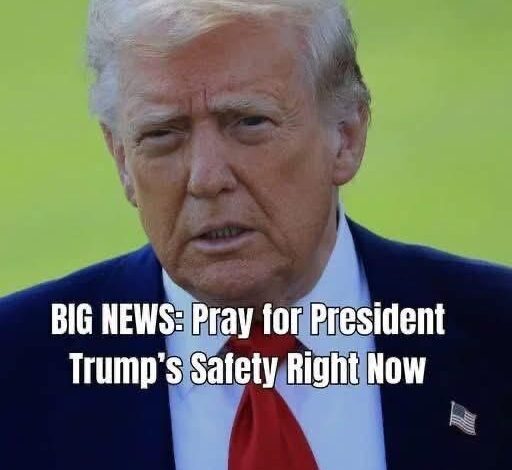
When federal prosecutors filed their sweeping indictment, the political landscape of the United States shifted with a sudden, seismic force. This was not a collection of minor procedural footnotes or bureaucratic oversights; it was a direct, targeted legal assault on a former president of the United States. The charges brought forth—conspiracy to defraud the federal government, conspiracy to obstruct an official proceeding, obstruction of justice, and conspiracy to violate constitutional rights—represent a watershed moment in American history. These accusations, articulated with dense and deliberate legal precision, weave together a narrative that federal investigators argue moves well beyond the realm of standard political theater and into the territory of systematic criminal conduct.
To grasp the true magnitude of this legal battle, one must transport themselves back to the volatile atmosphere that permeated the United States in the final weeks of 2020. The nation was fractured, with partisan tensions humming like a high-voltage wire. While ballots were still being processed in critical jurisdictions, claims of widespread electoral fraud began to surge, amplified by relentless repetition across social media platforms, television interviews, and massive public rallies. The singular, resounding message presented to millions of supporters was that the democratic process had been corrupted and that the election had been stolen.
However, the indictment provides a jarring, contradictory glimpse into what was occurring behind the scenes. Prosecutors present evidence that senior campaign advisors, cybersecurity experts, high-ranking government officials, and legal counsel repeatedly cautioned the former president that there was no credible evidence to support these pervasive fraud claims. Despite these internal warnings, the public messaging remained unchanged; if anything, it intensified. The core of the government’s fraud charge rests on this documented disconnect—that the former president, allegedly fully aware that his public claims were unsubstantiated, continued to push them as the centerpiece of a strategic effort to overturn the certified results. The indictment portrays these actions not merely as the rough-and-tumble of political pressure, but as a deliberate and methodical attempt to deceive both the American public and the very government institutions tasked with the peaceful transition of power.
The scope of the case expands further into the events of January 6, typically a day of symbolic and procedural certification that was transformed into a target for intense political maneuverings. Prosecutors argue that the objective was to stop or significantly delay the joint session of Congress. This effort allegedly involved several distinct but coordinated branches of action. One such branch was the assembly of so-called alternate electors in several key swing states. These individuals signed official-looking documents asserting their legitimacy, despite the fact that their respective states had already certified their results in favor of Joe Biden. The indictment posits that this was not a symbolic protest, but a calculated effort to manufacture chaos, provide a pretext for political pressure, and potentially create a path to shift the electoral outcome.
Simultaneously, the case highlights an aggressive campaign to pressure state-level authorities—governors, secretaries of state, and election boards—to reject or re-examine results they had previously certified. The indictment weaves together public phone calls, private meetings, and urgent messaging, creating a mosaic of a coordinated push to convince local officials to find missing votes or reject established counts. The obstruction charges are inextricably linked to these efforts. Prosecutors argue that the ultimate intent was to disrupt the joint session of Congress. While the indictment does not claim the former president personally breached the Capitol, it posits that his persistent insistence that the certification could be halted played a fundamental role in cultivating the volatile environment that eventually boiled over into violence.
One of the most legally novel aspects of this case is the conspiracy to violate civil rights, a law rooted in the post-Civil War era originally intended to protect the voting rights of newly freed slaves. In this modern context, prosecutors argue that the attempts to nullify lawful election results amounted to an effort to deprive millions of voters of the integrity and value of their ballots. While this application of law is untraditional, it reflects the gravity with which the government views the alleged interference with the foundational democratic right of a citizenry to determine its own leadership.
Throughout these proceedings, the accused has maintained that his actions were entirely lawful. He argues that he was not undermining election integrity, but actively defending it, standing up for the rights of voters rather than attacking the democratic process. He has consistently framed the investigations and subsequent indictments as a form of political persecution, a coordinated attempt by a federal establishment to silence him and the populist movement he represents. This sentiment is shared by a significant portion of his supporter base, many of whom view the federal justice system as inherently biased, regarding the charges as the latest chapter in a long-running feud between Trump and the institutional establishment. Conversely, his critics argue that the principles of the rule of law require that no president, past or present, should enjoy immunity from accountability. For them, this case is not about partisan politics, but about the preservation of the basic, non-negotiable rules that keep the American electoral process functioning.
Caught between these two deeply polarized camps is the justice system, tasked with navigating a case of unprecedented political volatility. It is a grueling balancing act: maintaining the integrity of evidence, managing witness testimony, and executing a sophisticated legal strategy under the unrelenting glare of a public that has already solidified its opinions. From a legal standpoint, conspiracy charges are often formidable because the government does not necessarily need to prove that the conspiracy succeeded in its ultimate goal—only that an agreement was formed and that overt steps were taken to carry it out. Consequently, internal communications—emails, text messages, drafts of statements, and private memos—will likely become the crucible of this trial.
The hurdles for the prosecution, however, remain significant. They must establish intent beyond a reasonable doubt, proving that the former president genuinely knew his fraud claims were false and proceeded with them regardless. His defense will likely focus on his subjective belief, arguing that he sincerely believed that irregularities existed. If the defense can create even a shred of doubt regarding his state of mind, the foundation of the government’s criminal charges could be weakened.
As the indictment moves toward the next phase, the country faces an unavoidable reality of hearings, motions, and an unprecedented avalanche of media coverage. The trial will not unfold in a vacuum; it will happen before a nation already saturated with noise, bias, and conflicting realities. Beyond the partisan soundbites and the political rhetoric, the case ultimately forces a profound national reflection on a simple yet monumental question: when a president refuses to accept the verdict of the electorate and uses the full machinery of his office to fight that result, where exactly is the line between aggressive political pressure and criminal conduct? The courts, in the coming months, will be the sole arbiters of this answer. Regardless of the verdict, the nation is bracing for an extended period of conflict. An American president facing such serious charges is unprecedented, and witnessing the collision of justice and politics in real time is a historic development that will alter the trajectory of the country for generations to come.


0 comments:
Post a Comment